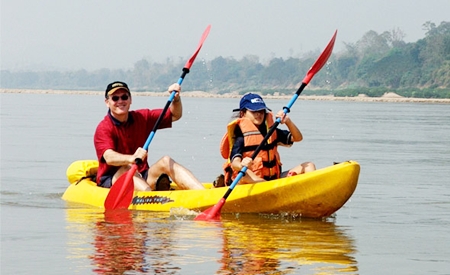
The original locals of the Americas, Canada, and Europe
used canoes and kayaks for travel and lived their lives beside rivers and
seas. Later canoes and kayaks were used in sports and tourism.
Presently in Thailand, canoeing and kayaking are
eco-adventure-tourism activities that are very popular among tourists
because of the excitement and challenge in exploring and touring the scenery
of coastal areas, islands, mangrove forests, bays, lakes, and rivers. They
are also used in still waters; such as at reservoirs and dams as well as
cave exploration without causing pollution or environmental harm.
Most of the accommodation providers have equipment and
services for the guests to enjoy nature because kayaks and canoes can be
used in both the sea as well as rivers. These are either free of charge, or
rented hourly or daily.
The following is our first stop on our Thailand kayaking
tour:
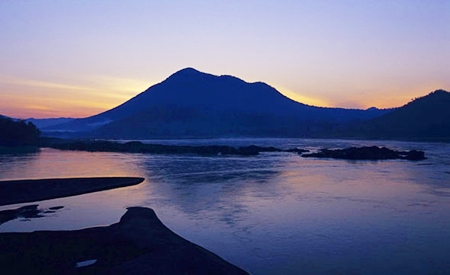
Kaeng Khutkhu, Mekong River
Tourists in Chiang Khan can now enjoy kayaking along the
Mekong River from Chiang Khan (Wat Si Khun Mueang Pier) to “Kaeng Khutkhu”,
a total of about 5 km. The kayaking usually starts at dawn. This part of the
river is about 1 km wide. At some parts of the river, you can see rock
plates, rocks, sandbars and huge dunes creating a charming classic view.
Many people name this area the “Sahara of Thailand”. The
other good thing is you don’t have to put much effort into kayaking. You can
just let the kayak float along the water flow while you are enjoying nature
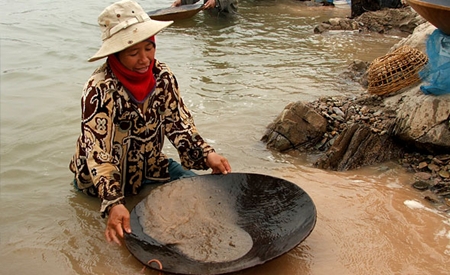
and the raft people’s lifestyle along the Khong River, which includes
fishing and even panning for gold. You can also see the scenic Sana Kham
town (Chanasongkhram) of Laos on the other side, and the shady rain trees.
After enjoying the surrounding view for a while, you will
soon reach “Kaeng Khutkhu”, a group of large rocks standing in the middle of
the Khong River. Kaeng Khud Khoo is almost large enough to connect two sides
of the river, so it leaves only a little space for the water to flow. This
point is the end of 2 hours kayaking before you head back to Chiang Khan.
Kayaking along Khong River is a new activity; so there
are only a few experienced providers of this activity. For your safety,
kayaking should be supervised by experts who know the water and the
intensity of water flow, and have all necessary tools. You should never
kayak alone. To kayak, you have to purchase a touring program from the
provider.
Know Before You Go: In the rainy season, all rocks
will be submerged. You should come after the rainy season around December to
May.
Recommendation: The trip must be booked in advance.
If you are a real river adventurer, you can continue paddling further to Pak
Chom.
Please: Since Chiang Khan is a small town; it does
not have a sophisticated waste disposing system. So if it is possible,
please dispose any bottle or plastic bag at Loei town.
Travel Info: From Loei town, take Highway 201 until
the riverfront and then turn left to Wat Si Khun Mueang Pier. It is where
the journey starts; however, you need to reserve this activity in advance
with the Mekong Culture & Nature Resort.
GPS Location: N17ฐ 53.635ฐ, E101ฐ 39.149’
Contact: Mekong Culture & Nature Resort, +66 4282
1457, +668 9569 3470.
Facilities & Services: Guide, kayak, long-tail boat,
accommodation, restroom and restaurant. (TAT)
Thailand Tourism Standards for Kayaking-Canoeing
To ensure the safety of tourists who choose to
participate in Kayaking-Canoeing, the Department of Tourism, Ministry of
Tourism and Sports, has issued the Thailand Tourism Standards for
Kayaking-Canoeing operators and sites to provide guidelines on the sport
with emphasis on safety for participants. For more information, visit
http://www.tourism.go.th
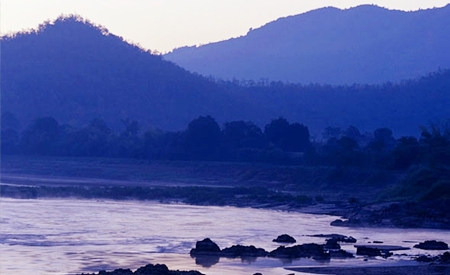
Kayaking and
Canoeing
Regulations and Advice
Before getting into a kayak / canoe, proper preparations
should be made for the trip so that enjoyment as well as safety can be had
without affecting the natural environment.
If planning your own trip, you must ask permission from
the authorities responsible for the area; such as the Royal Forest
Department.
If choosing to use a tour operator, make sure to pick a
company that is registered as such and check the itinerary and various
agreements; such as insurance, equipment, and other services.
Know your travel route and the direction of the waterway
as well as the tides.
Always wear a helmet and life-vest when on a boat.
Bring only the necessities and prepare plastic bags or
water-proof packs to put them in.
Follow the advice of the guide.
Be mentally prepared for possible obstacles and problems
that may happen on your trip.