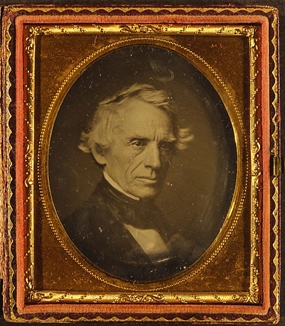
Photography has been around for a lot longer than most people imagine. We are
used to the fact that the automobile has been with us 137 years and aeroplanes
around 110 years, but photography, or the ability to record images, actually
began 186 years ago.
The first person to record an image was a Frenchman Nicephore
Niepce in 1826 and the shutter speed for that epic shot was eight hours. Yes,
eight hours, not an 1/8th second.
The French were at the forefront and a historical overview of
the birth of photography and its progress will show the French were very well
represented! Now, with the very rapid advances in photography and the recent
digital technology, I felt it was worthwhile us all stopping to see just where
photography has come from in the last 186 years.
That first known “photographic” image was recorded in 1826 by
the French gentleman called Nicephore Niepce (not Pierre Kodak). Nicephore
managed to capture the view from his window, producing the image on a bitumen
covered pewter plate. The exposure time for this epic making picture (or should
that be “epoch” making?) was a record breaking eight hours! What took poor old
Nicephore eight hours to produce, you can do in 1/125th of
a second.
Monsieur Nicephore then teamed up with another Frenchman,
Louis Jacques Mande Daguerre (1759–1851) and the pair of them worked on trying
to make “photography” a little bit easier. Nicephore expired in 1833, turning up
at the pearly gates with his pewter plates under his arm, but Daguerre continued
in his quest of the Holy Grail, or to photograph it, if nothing else, even
though he was by then 73 years old.
By 1839 when he was 80 years old, he had managed to produce
images on highly polished silvered copper plates and released the details in
August of that year, but only after obtaining a lifetime pension for himself
from the French Government. Daguerre was no dunce! Neither was the French
government, as it knew Daguerre’s “lifetime” would not be too long!
Now while these images were much better than Nicephore’s
originals, they still took forever in the camera. Exposure times were far too
long to make portraiture a reality. “Just hold zat pose for six hours, Madame!”
However, while the French were exposing themselves and their
plates to the sun, an Englishman by the name of William Henry Fox Talbot
(1800–1877) was experimenting exposing silver impregnated paper and produced the
first “negative”. By then exposing his sensitized paper to the negative he had
made previously, he managed to produce positive copies. Now, more than one image
could be made from the one photographic session. Think about it, this was
ground-breaking stuff.
However, Fox Talbot did nothing about his new process until
he heard from France about Louis Daguerre’s “invention”. In the same year (1839)
he then rushed into print with details of his process. This was the start of
modern photography.
Exposure times were still an hour or so, but in 1840 the
simple photographic lens was improved by Josef Petzval allowing 16 times more
light into the camera and exposure times dropped to around 4 to 5 minutes.
Portraiture had arrived! The impact of Petzval on photography is often
forgotten, but his improvement to the optical lens had actually much more of an
effect than the slow improvements in the sensitivity of the film plates of the
day.
For the next four decades photographers spent their time
refining the “negative” process; however, it took an American to bring
photography within the reach of the masses. His name was George Eastman
(1854–1932) and he was an inventor and an industrialist.
In 1888 he introduced the small box camera with a 100
exposure roll film inside, but he was unsure of what to call it. The marketing
gurus told Eastman that a good catchy name should have K’s in it. And so “Kodak”
was born.
From there it was really refinement of the silver halide
processes, until the digital era came upon us, in which we stand right now. The
next round of advances will certainly not take 186 years, I can assure you.