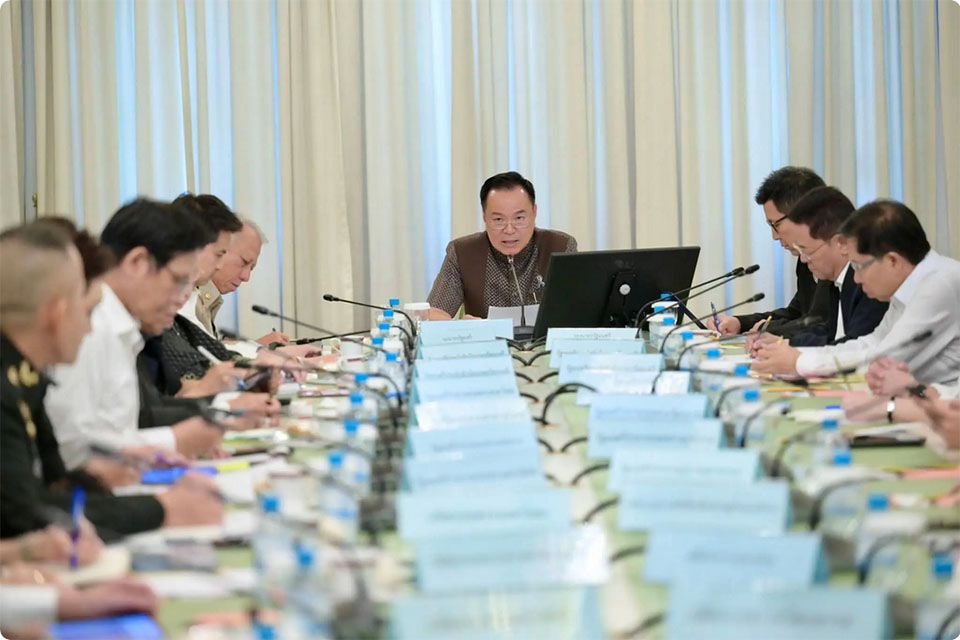
BANGKOK, Thailand – The Joint Management and Monitoring Center for the Situation in the Middle East said the government has approved a broad package of measures to address rising energy costs and ease pressure on households and businesses following a special Cabinet meeting chaired by Prime Minister Anutin Charnvirakul. The briefing was delivered by senior officials, including Deputy Prime Minister and Finance Minister Ekniti Nitithanprapas, Commerce Minister Suphajee Suthumpun, Energy Minister Auttapol Rerkpiboon, and other top officials from the energy, transport, and finance ministries.

Energy officials reported that fuel prices have risen by about 6 baht per liter, with the Oil Fuel Fund facing continued strain from subsidy costs and a growing deficit. Refineries are operating at full capacity, with diesel production and distribution exceeding normal demand levels. Authorities said the adjustment aligns domestic prices with global conditions, reduces pressure on the fund, and discourages hoarding.
The Ministry of Commerce is tightening oversight of essential goods, maintaining control over 59 items while preparing to expand the list. Some products require prior approval before price increases, while others require advance notice. Additional items under review include bottled water, seasoning products, and plastic resin, alongside measures to ensure fertilizer supply and support farmers through cost reductions and alternative inputs.
To address the cost of living, the Cabinet approved seven key measures, including a planned adjustment to fuel excise taxes and increased support for vulnerable groups through the state welfare card system. Monthly assistance will rise from 300 to 400 baht for an initial period, while targeted support will extend to the transport, agriculture, fisheries, and small business sectors. Soft loans totaling 10 billion baht will be made available to small and medium-sized enterprises to support liquidity.
Additional measures include subsidies for public transport operators, truck drivers, and motorcycle taxi services, with support calculated using GPS-based fuel usage data. Farmers will receive fertilizer subsidies and support for alternative inputs, while the fisheries sector will gain access to lower-cost B20 diesel. Government contractors will receive timeline extensions and cost adjustments to ease operational pressures.
Transport authorities are preparing for increased travel during the Songkran holiday, with expanded capacity across public transport systems and steps to ensure sufficient fuel supply nationwide. Plans include designated fuel stations for public transport in each province and closer coordination between agencies to manage demand.
Officials are also encouraging greater use of public transport to reduce fuel consumption, alongside broader energy-saving practices. Enforcement will continue against hoarding, price manipulation, and refusal to sell goods, with violations subject to legal penalties. (NNT)