10 tips for better portraits
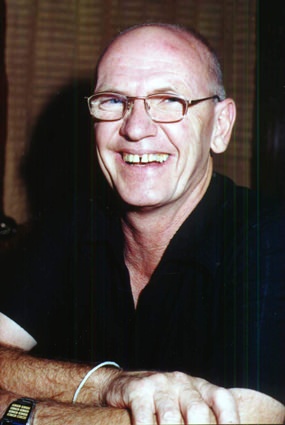
The most photographed subjects for amateur photographers are family members.
However, if your family members include some Thai ladies, the most photographed
subject is themselves, taken with phone cameras and called “selfies”. You can
recognize these very quickly as you get a mis-shapen arm in the photo as well,
but I shall ignore that type of “photography” as being not worthwhile
discussing.
However, good portraits can be achieved by any amateur photographer, with a
‘real’ camera (even a point and shooter), but you need to follow some
directions. Here are 10 tips for better portraits.
Tip 1. Walk in closer. It is the single most important tip to better portraits.
Even with a point and shoot compact, walk in till the subject fills the
viewfinder from the chest up. Talk to the subject and click when they least
expect it to get a “natural” look.
Tip 2. If you have a camera with a “portrait mode” then use it! This is one area
where I and the manufacturers agree. The portrait mode with modern cameras does
work. It maximizes the settings to produce the most pleasing effect, gets rid of
backgrounds and sets the exposure to allow for the best skin tones. Use it.
Tip 3. Use the flash in daylight. If you have a fancy camera with “Fill Flash”
facility, then turn it on and you will see the final images you get have now got
sparkle and punch. If you have not, but have a flash you mount on top of the
camera, use it, and turn it to around f2.8 to f4. This will not overpower the
daylight, but will give catch-lights in the eyes.
Tip 4. Watch for horrible backgrounds. It is so easy to concentrate so hard on
the subject that you do not really “see” the background, which can be confusing
and cluttered. Try to keep the subject as far away as possible from all
backgrounds and if you have manual mode or aperture priority mode, then set the
aperture f stop at around f 4. Also get the subject to stand/sit at an angle to
you - not straight on, and only then to look at the camera.
Tip 5. Shoot in the early mornings or in the late afternoons. At both of these
times the light is more flattering than it is at mid-day, when you will get
harsh shadows cutting across the face from the nose.
Tip 6. If you have a zoom or a telephoto lens then now is the time! Using around
135 mm, this is called by some people the ideal ‘portrait lens’, then you again
flatter the face and help throw the background out of focus - particularly if
you have followed Tip number 4.
Tip 7. Turn the camera on its side so you have the viewfinder in portrait mode
as well. People are taller than they are wide, so it makes sense to have the
maximum dimension vertically, doesn’t it! By all means, take a couple of shots
in the so called horizontal “landscape” view, but the majority should be
verticals.
Tip 8. The nose is not the central point of any portrait. In the center of the
viewfinder there is generally a small area which you can use for getting the
focus point. After you have set the focus, move the central point off the
person’s nose! The more likely central point will be the mouth or chin.
Tip 9. Super trick! Use a gold colored reflector to give the skin that healthy
glow. Just glue some gold wrapping paper to a piece of cardboard about 1 meter
square and get an assistant to move it so it reflects “golden glow” into the
subject. This is particularly flattering for pale skinned folk.
Tip 10. With older subjects stretch a piece of nylon stocking tightly across the
lens. This will act as a soft focus filter and smooth out many of the wrinkles
we like to pretend we haven’t got!
Follow those ten simple hints and you will soon be taking shots as good as, if
not better than, the local neighborhood portrait photographer. After all, he’s
only following those 10 steps as well.