
By Carl Meyer
For the uninitiated, Lou Reed appeared to be a shady
character Ziggy Stardust brought with him, hitting the charts out of
nowhere in early 1973. David Bowie and Mick Ronson had sprinkled their
recognizable sound over the album “Transformer” and it made Lou Reed a
rock’n’roll star. But for those who knew Reed’s Velvet Underground past
it was no surprise that he would make a u-turn. on “Berlin.” And he did
just that to leave his newly won fans in total confusion.
The Spider-rock of “Transformer” was nowhere to be found, no suggestive
magic on par with “Walk On The Wild Side”. Some critics called it a
disaster.
“Berlin” is a piece of work that is almost standing still. It’s a song
cycle about perishing in a grainy daylight of decadence and drugs. A
concept album as we say, portraying the fate of Caroline: A young mother
and drug addict who is no longer capable of taking care of herself or
her children, and who’s love life is crippled beyond repair.
From song to song Reed leads us deeper into despair and hits the
heartbreaking rock bottom in “The Kids”, a super slow tune where the
children’s cries for mom and Reed’s deadpan reciting of the painful
lyrics embodies the ultimate tragic horror when the authorities arrive
to take her children away. After this there is only one way out for
Caroline.
Her epitaph, the slowly moving “Sad Song” is so sad
you actually feel physical pain. Reed’s sympathy is with her, he knows
her, he knows where she is coming from, but in no way does he try to
embellish her life and fate: he blames no one, he tells her story, no
romanticizing, just plain realism, but with reverence for the human
existence.
Lou Reed devoted his art to the back alleys and dark dungeons of life.
It was a recurring theme in all his work. But never did he do it with
such tenderness as he does on “Berlin”. This was Caroline. She existed,
she lived, she perished. She was a human being. Remember her. Leonard
Cohen touches something similar in his wonderful “Seems So Long Ago,
Nancy”.
There is not much rock’n’roll on the album. Reed is content with playing
acoustic guitar and leaves the responsibility for the arrangements to
producer Bob Ezrin. He brought in a group of outstanding musicians,
giving them silence as their main task. Only occasionally, when the
narrator’s grief turns to anger, they are allowed to kick in with some
punch. But those moments are brief. Most of the time the gifted
musicians restrain themselves, they are very conscious on letting the
arrangements breathe, what they don’t play is as important as what they
do play. Even when the orchestra and brass arrive, the main impression
is as naked as a sigh of sorrow.
Several of the songs are old acquaintances from both Velvet Underground
and his first solo-album. However, they are re-written and
re-constructed to suit the story he wants to tell.
“Berlin” was not a big seller, no wonder as there are thousands of more
pleasant ways to spend three quarters of an hour, but over time it
became very apparent how unique the album is, and how relevant. The
critics tore it to pieces in 1973. 40 years later they hail it as a
masterpiece.
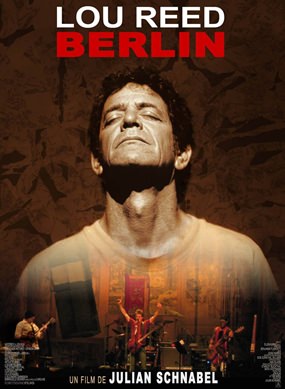
Originally Lou Reed and Bob Ezrin planned to adapt “Berlin” for stage
and take it out on the road. Poor sales and bad reviews made them shelve
the plans. However as the album’s status gradually grew, they decided to
do it after all, and finally in 2007 Reed toured the album with a
30-piece band and 12 choristers, resulting in the 2008-release “Berlin:
Live At St. Ann’s Warehouse”.
On October 27, 2013 Lou Reed died at the age of 71 from liver disease.
He left us with a legacy that includes some of rock’s finest moments,
“Berlin” being the finest of them all. Remember him this way.
Released in July 1973
Produced by Bob Ezrin
(All tracks composed by Lou Reed)
Side One
1. “Berlin” 3:23
2. “Lady Day” 3:40
3. “Men of Good Fortune” 4:37
4. “Caroline Says I” 3:57
5. “How Do You Think It Feels” 3:42
6. “Oh, Jim” 5:13
Side Two
1. “Caroline Says II” 4:10
2. “The Kids” 7:55
3. “The Bed” 5:51
4. “Sad Song” 6:55
Personnel:
Lou Reed – vocals, acoustic guitar
Bob Ezrin – piano, mellotron, production, arrangement
Michael Brecker – tenor sax
Randy Brecker – trumpet
Jack Bruce – bass; except “Lady Day” & “The Kids”
Aynsley Dunbar – drums; except “Lady Day” & “The Kids”
Steve Hunter – electric guitar
Tony Levin – bass on “The Kids”
Allan Macmillan – piano on “Berlin”
Gene Martynec – acoustic guitar, synthesizer and vocal arrangement on
“The Bed,” bass on “Lady Day”
Jon Pierson – bass trombone
Dick Wagner – background vocals & electric guitar
Blue Weaver – piano on “Men of Good Fortune”
B.J. Wilson – drums on “Lady Day” & “The Kids”
Steve Winwood – organ & harmonium
Steve Hyden, Elizabeth March, Lou Reed, Dick Wagner – choir
Bob Ezrin – producer
Jim Reeves – engineer
Allan Macmillan – arrangement