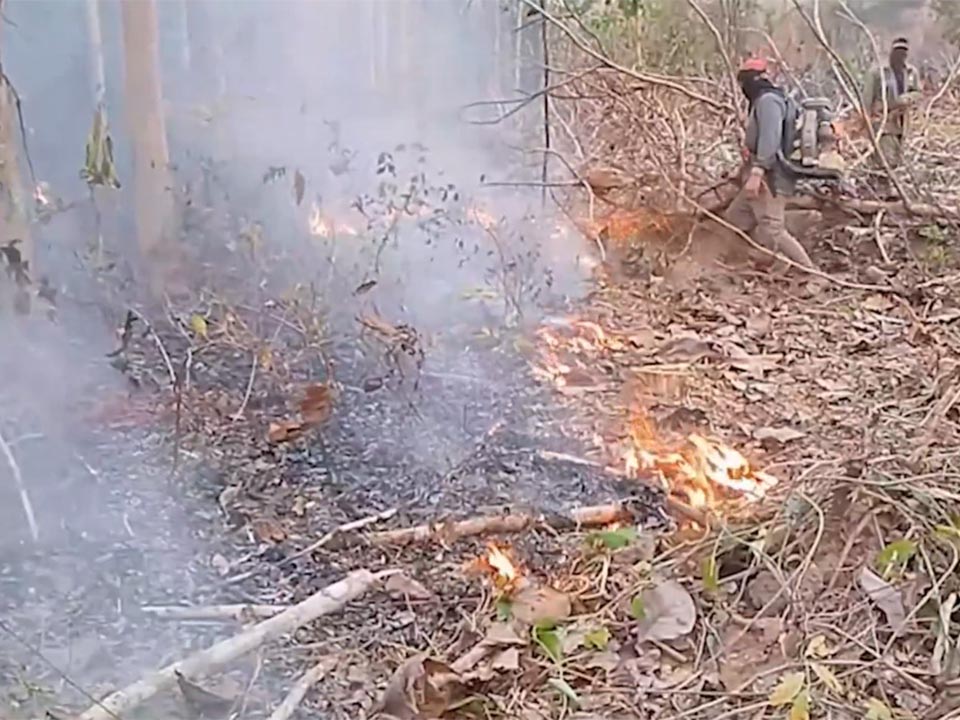
LAMPANG, Thailand – Wildfires have swept through nearly every district in Lampang province, destroying more than 300 rai of forest land and plunging air quality into unhealthy levels.
Monitoring centers reported a surge in thermal hotspots across the northern region on Sunday, with 78 hotspots detected during the morning session alone. The most significant activity was concentrated in the Mueang and Chae Hom districts.
The fires have gutted significant portions of protected conservation areas, including the Tham Pha Thai National Park. Emergency crews spent over seven hours battling a major blaze in the park that decimated 130 rai before being contained late Sunday afternoon.
Meanwhile, in the Mae Phrik National Forest Reserve, specialized “Fire Hawk” units and local volunteers scrambled to extinguish multiple fires that destroyed approximately 120 rai across three separate locations.

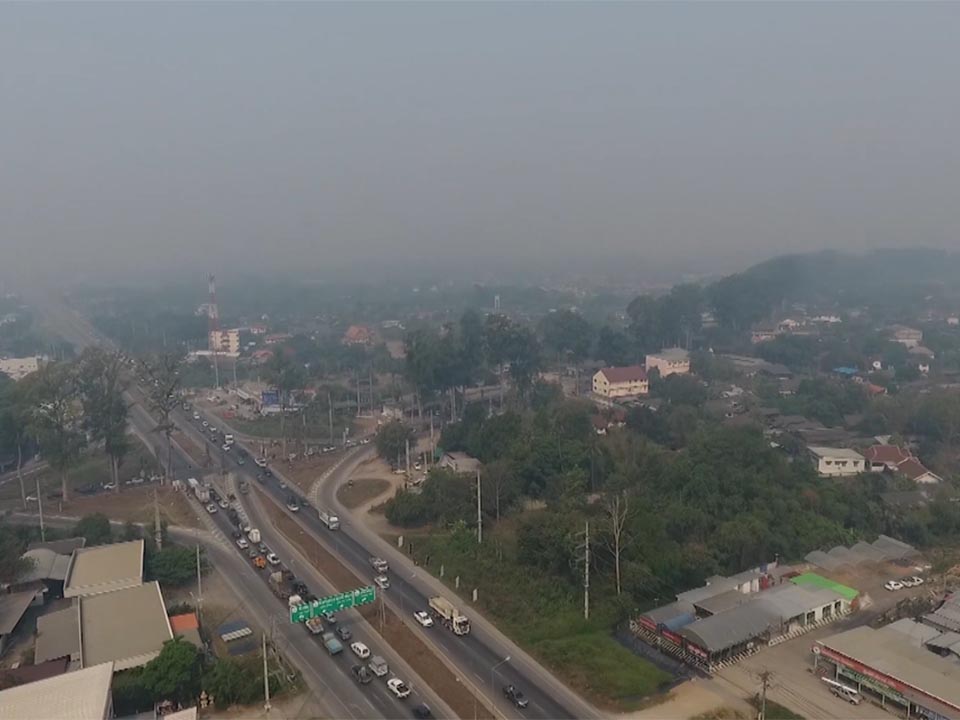
The environmental toll has extended to neighboring Chiang Mai, where a thick blanket of white smog has reduced visibility and pushed PM2.5 pollutants into “orange” and “red” health-impact zones. Regional data shows 51 hotspots across five districts in Chiang Mai, with the vast majority—roughly 76.5%—occurring in conservation forests. Omkoi district was the worst hit, reporting 16 hotspots as smoke continues to settle over the mountainous terrain.
In response to the deteriorating air quality, the Chiang Mai Provincial Public Health Office issued an urgent advisory urging residents to avoid outdoor exercise and remain indoors. Health officials emphasized that vulnerable groups and those with chronic respiratory conditions should wear N95 masks if they must go outside.
While the causes of several fires remain under investigation, authorities continue to monitor the region as high temperatures and dry conditions persist. (TNA)