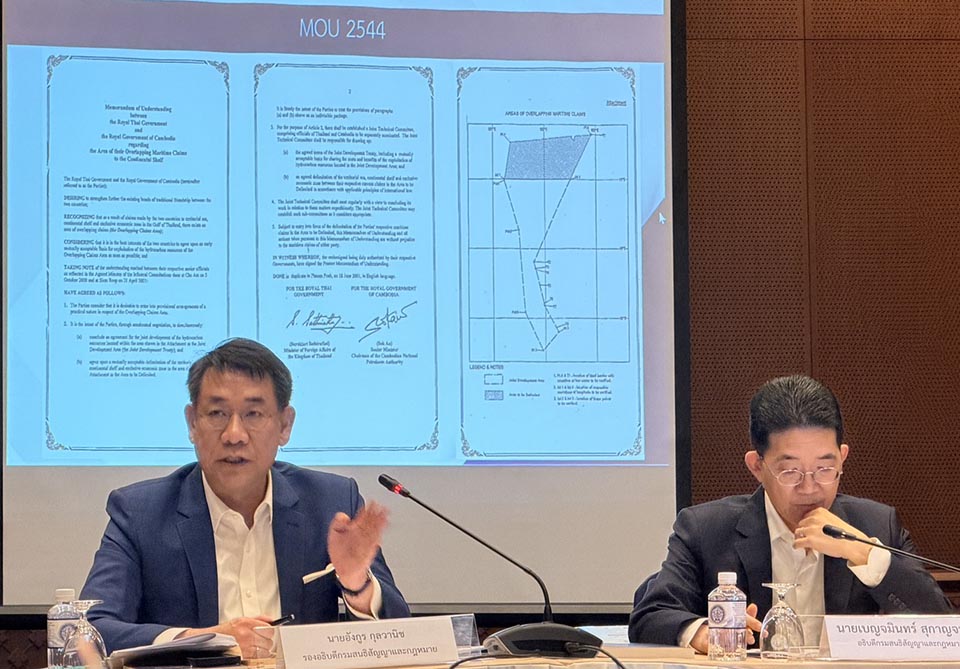
BANGKOK, Thailand – Thailand’s Ministry of Foreign Affairs is preparing to scrap a 20-year-old maritime memorandum with Cambodia in favor of international law, officials said Thursday. The move signals a strategic shift aimed at breaking a decades-long deadlock over energy-rich overlapping claims in the Gulf of Thailand.
Strategic Shift to UNCLOS
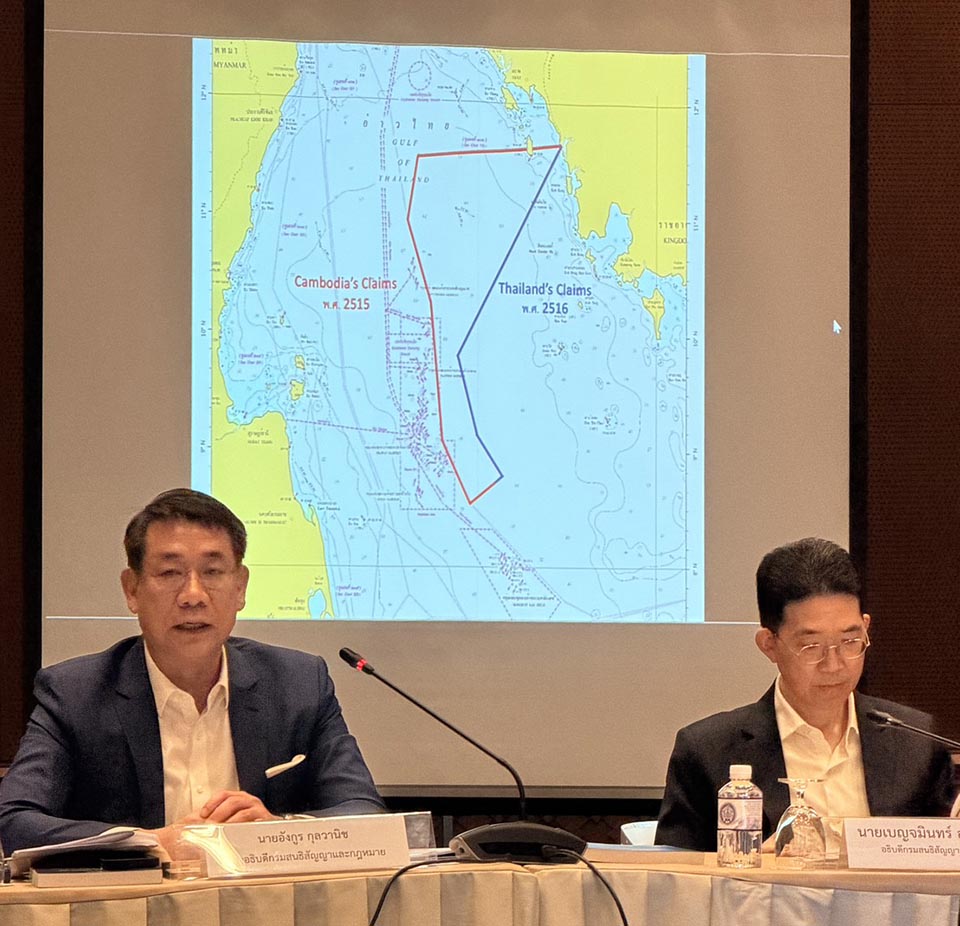
The Department of Treaties and Legal Affairs confirmed the government’s intent to revoke the 2001 Memorandum of Understanding (MOU44). Officials cited a persistent lack of progress in negotiations over the 26,000-square-kilometer Overlapping Claims Area (OCA).
“Boundary issues with neighbors are matters of state sovereignty,” said Benjamin Sukanjanajtee, Director-General of the Department. He emphasized that future diplomacy will shift toward the United Nations Convention on the Law of the Sea (UNCLOS), an international framework that provides a more definitive legal basis for resolution than the previous bilateral MOU.
A “New Legal Reality”
This policy shift follows Cambodia’s accession to UNCLOS on February 6, 2026. Thai officials point out that this creates a “new legal reality.” While MOU44 was a temporary bilateral arrangement, UNCLOS is a robust multilateral treaty with over 300 articles governing maritime boundaries.
UNCLOS provides a clearer, standardized framework, said Deputy Director-General Angkura Kulvanij. As both nations are now members, Cambodia can no longer bypass international standards.
The current administration reaffirmed that its foreign and security policy remains anchored by three core pillars. First, the government remains committed to multilateralism, prioritizing the upholding of international law specifically within the United Nations framework. Second, it emphasizes border security by enhancing stability along national frontiers. Finally, the administration continues to pursue peaceful resolutions, utilizing established bilateral channels and diplomatic means.
The Road to Revocation
The National Security Council (NSC) approved the proposal to terminate MOU44 on April 23. Officials stated that 25 years of talks under the old mechanism failed due to “inconsistent relations” and a “lack of sincerity” from negotiating partners.
The Director-General highlighted that UNCLOS is a “comprehensive law,” containing both legal provisions and implementation procedures within a single convention. This aligns with the vision of Sihasak Phuangketkeow, Deputy Prime Minister and Minister of Foreign Affairs, who seeks an atmosphere conducive to a step-by-step restoration of ties.
Next Steps
The proposal will be submitted to the Cabinet for final approval. Once cleared, Thailand will issue a formal notification to Phnom Penh officially terminating the MOU. Regional observers are now closely watching for Cambodia’s response to Thailand’s insistence on strictly adhering to international maritime law over old bilateral arrangements. (TNA)