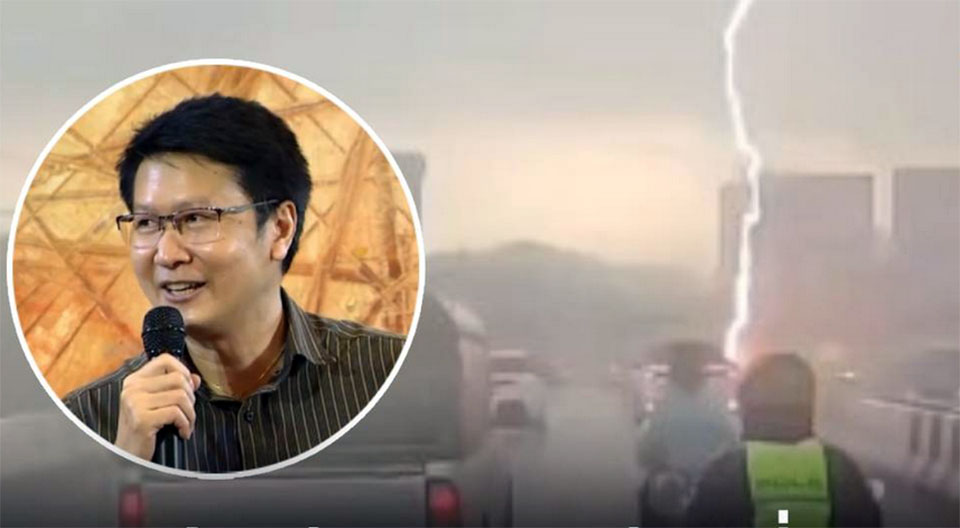
BANGKOK, Thailand – A Thai scientist has dismissed claims that a metal necklace, helmet, or mobile phone caused a motorcyclist to be struck by lightning while riding through heavy rain on an elevated roadway in Bangkok, explaining that the incident was primarily due to the rider’s exposed position on high ground during a thunderstorm. The comments came from Jessada Denduangboripant, a lecturer in the Department of Biology at Chulalongkorn University and a well-known science communicator, June 3.
The incident occurred on the Ratchavipha elevated flyover above Vibhavadi Rangsit Road as the motorcyclist was traveling toward the Ratchayothin intersection during a rainstorm. The lightning strike caused the rider to lose control of the motorcycle and crash, leaving him seriously injured.
Reports indicated that the victim suffered burns around his neck corresponding to the position of a stainless-steel necklace. Burn marks were also found on his ear and head, while the amulet attached to the necklace was reportedly thrown onto his chest during the incident. Jessada explained that neither the necklace, the motorcycle, nor the rider’s helmet attracted the lightning.
“None of these objects acted as a lightning magnet,” he said, noting that the rider was simply unfortunate to be traveling across a highly exposed elevated bridge at the moment the lightning struck. Had another vehicle been in the same location at that instant, it could just as easily have been hit. He added that the burn marks along the victim’s neck were not evidence that the necklace attracted the lightning. Instead, the metal necklace conducted electrical energy from the strike, generating intense heat that caused severe burns on the skin.
The scientist compared the phenomenon to cases in which mobile phones are scorched or damaged after a lightning strike. Such damage is caused by electrical current passing through or near the device, not because the phone attracts lightning. Jessada also warned that motorcyclists face significantly greater risks than car occupants during thunderstorms. When a car is struck by lightning, the vehicle’s metal body typically channels the electrical current around the exterior and safely into the ground, helping protect those inside. Motorcycles, however, provide no such protective enclosure, leaving riders more vulnerable to injury.
As Thailand’s rainy season intensifies, he advised motorcyclists to avoid riding on exposed elevated roads, bridges, and open areas such as isolated highways or agricultural fields during thunderstorms.
If severe weather develops, riders should seek shelter in a sturdy building or beneath a solid bridge structure. He cautioned against taking refuge under trees or near large advertising signs, which may themselves be struck by lightning or collapse in strong winds. The incident serves as a reminder of the dangers posed by thunderstorms and the importance of seeking proper shelter when lightning activity is present. (TNA)