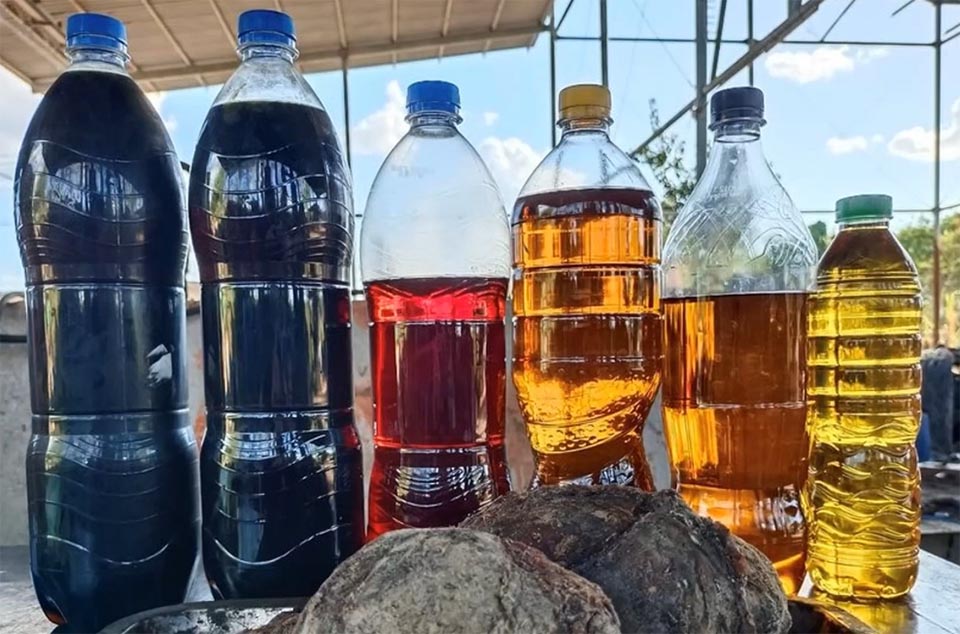
KHON KAEN, Thailand – Researchers at Khon Kaen University are calling on the Thai government to ease energy regulations to allow communities to produce and sell alternative fuels, as Middle East tensions drive global oil prices higher.
The university’s Faculty of Science is pushing to revive a project that converts rubber waste into fuel via pyrolysis. The technology, which breaks down rubber structures into vapors that condense into diesel and gasoline substitutes, has faced a three-year standstill due to strict refinery-standard laws.
“The biggest obstacle isn’t the technology; it’s the energy laws,” researchers said, noting that legal “unlocking” would enable sustainable community-based energy businesses under controlled standards.

The rubber-derived fuel has been successfully tested in motorcycles and agricultural machinery, including water pumps and generators. However, experts noted technical limitations regarding carbon residue, cetane levels, and corrosion, adding that the process is only cost-effective if using waste rubber.
The struggle for local innovation was highlighted by a previous case in Sakon Nakhon province, where an inventor developed a “B100” rubber diesel for 4 baht per liter. Despite initial official interest, the project lacked support, leading the inventor to sell the technology to neighboring Laos instead.
Local farmers, some consuming over 20 liters of diesel daily for irrigation and plowing, expressed growing concern over rising costs. Meanwhile, political figures and cassava farmers in Ubon Ratchathani are also urging the government to promote ethanol and other crop-based energies, arguing that raw material prices should rise in tandem with oil markets. (TNA)