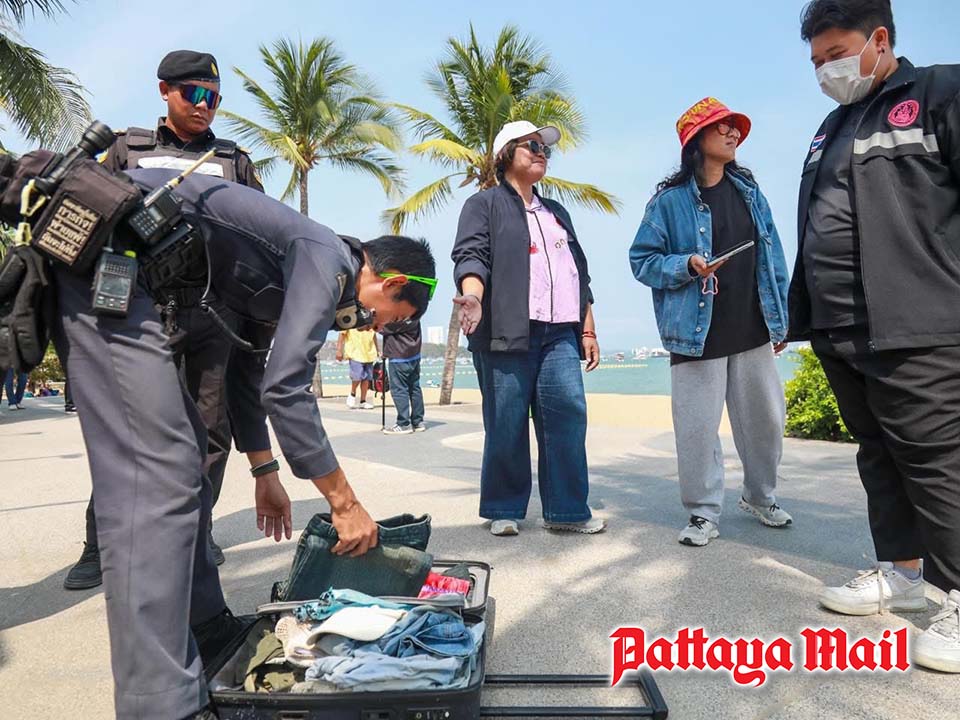
PATTAYA, Thailand – As Pattaya continues to grow as one of Thailand’s most visited coastal cities, a quieter issue is becoming more visible in its public spaces: people living on the streets, particularly in high-traffic tourist zones such as beaches, sidewalks, and transport hubs.
The rise in visible homelessness is not unique to Pattaya, but it is increasingly noticeable in areas where tourism, informal work, and migration intersect. According to recent local observations and municipal operations, individuals end up in public spaces due to a mix of factors including economic hardship, job instability, mental health challenges, substance dependency in some cases, and the high cost of living relative to income opportunities in the city.
Who is responsible? Not a simple answer
The question of “who is to blame” is not straightforward.
Local authorities are responsible for maintaining public order and safety, especially in tourism zones. At the same time, social welfare systems are responsible for providing support pathways such as shelters, treatment, and reintegration programs.
But critics argue that enforcement often focuses on moving people out of sight rather than solving the underlying causes—creating what some describe as a cycle of removal and return rather than long-term resolution.
Urban growth itself also plays a role. Pattaya’s expansion as a tourism and service economy attracts both opportunity seekers and vulnerable populations from other regions. Without sufficient affordable housing and social safety nets, some inevitably fall through the gaps.
Do they affect the city’s image? Yes—but the issue is more complex
There is no denying that visible homelessness can affect how tourists perceive a destination. In a city built heavily on tourism branding, appearance matters.
Business operators and visitors sometimes express concern that sleeping areas on sidewalks or beaches can impact feelings of safety and comfort.
However, experts caution that framing the issue purely as an “image problem” risks oversimplifying a deeper social reality. Visibility is not the root problem—it is the outcome of structural gaps in housing, healthcare, and economic security.

Why public spaces like Pattaya Beach matter
Public areas such as Pattaya Beach are designed as shared spaces for tourism, recreation, and local commerce. City regulations typically prioritize safety, accessibility, and cleanliness in these zones.
That is why authorities often relocate individuals from high-density tourist areas—not necessarily as punishment, but to maintain access routes, hygiene standards, and emergency safety conditions.
Still, critics argue that relocation alone does not solve the issue if there is nowhere stable for people to go afterward.
The real issue: systems, not individuals
- Ultimately, the growth of visible homelessness in Pattaya is less about individual fault and more about systemic pressure:
- uneven income opportunities in a tourism-driven economy
- limited long-term shelter capacity
- rising urban living costs
- gaps in mental health and addiction support systems
- migration from other provinces seeking work
Without coordinated long-term policy, the issue tends to reappear in cycles across the same public spaces.
Pattaya’s challenge is not simply about removing people from beaches or sidewalks. It is about balancing two realities: maintaining a world-class tourism image while addressing the human conditions that make public space survival a last resort.
As the city continues to evolve, the harder question is not “why are they there?”—but “what system keeps bringing them back?”