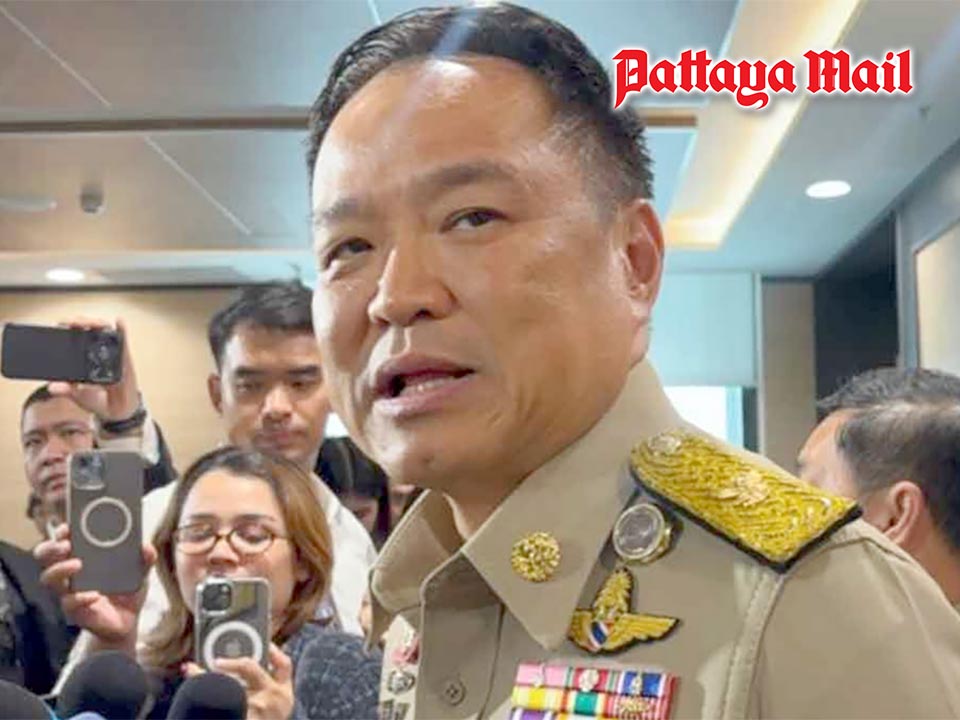
PATTAYA, Thailand – Prime Minister Anutin Charnvirakul has defended his government’s anti-corruption campaign amid mounting concern from the private sector over bribery and abuse of influence inside state agencies, insisting the administration is pursuing a far more aggressive crackdown on corruption than in previous years. Speaking on May 16 at the 2nd Infantry Division headquarters in Bangkok, the Prime Minister said corruption remains deeply rooted in parts of Thai society and government administration, but stressed that his government is attempting to dismantle entrenched networks tied to bribery, organized crime, illegal business operations, and influential figures operating across the country.
Anutin stated that since taking office in October, the government has intensified enforcement operations involving police, military units, provincial authorities, and anti-corruption agencies. He cited major crackdowns targeting scammers, drug trafficking, human trafficking, illegal gambling dens, nominee business structures, and local power brokers accused of corrupt ties with officials.
“We are not operating with a wink-and-nod system,” the Prime Minister said, insisting that state agencies are now working together with a shared objective to restore public confidence and enforce the law more seriously. The remarks followed concerns raised by Thailand’s Joint Standing Committee on Commerce, Industry and Banking (JSCCIB), which recently highlighted public concerns over bribery within state institutions and released perception-based rankings involving agencies viewed as vulnerable to corruption.
Anutin responded by arguing that public perception surveys alone cannot serve as legal proof of wrongdoing. He emphasized that government investigations rely on evidence, financial trails, witness testimony, and formal legal procedures rather than opinion polls or emotional sentiment.
However, the Prime Minister also warned that individuals or organizations publicly accusing agencies or officials of corruption must be prepared for legal consequences if allegations are unsupported.
“If you publicly accuse someone of corruption, you must also be prepared to be sued in return,” Anutin said, describing it as a matter of fairness and legal accountability.
At the same time, he acknowledged that corruption perception itself remains a major problem damaging Thailand’s reputation domestically and internationally. He described the issue as a “stain from the past” that the current government has inherited responsibility to clean up.
“It is the burden and responsibility of this government to erase that stain, not deepen it,” he stated.
The Prime Minister pointed to several recent provincial investigations as evidence that authorities are now pursuing wider corruption networks instead of limiting punishment to low-level officials. He referenced a land-rights case in Chiang Mai where investigators allegedly expanded probes beyond a district chief to examine broader organized involvement, as well as action taken against a local subdistrict chief in Nakhon Pathom.
Anutin also highlighted ongoing operations targeting influential figures in tourism-driven regions including Phuket, Koh Phangan, and Koh Samui, where authorities have increasingly scrutinized allegations involving land encroachment, nominee businesses, illegal operations, and corrupt relationships with state officials. According to the Prime Minister, some criminal or business groups were previously able to operate because they allegedly provided benefits, land, or other incentives to officials in exchange for protection or inaction. He said the government is now using disciplinary transfers, investigative panels, criminal proceedings, and coordinated enforcement operations to dismantle those systems. The issue carries growing significance for Thailand’s economy and international image, particularly as the country seeks to attract foreign investment, expand tourism confidence, and strengthen ties with international institutions. Concerns about corruption and regulatory transparency have increasingly become part of discussions involving investors, foreign chambers of commerce, and long-term economic competitiveness.
Anutin argued that Thailand cannot credibly position itself as a modern investment destination or pursue closer cooperation with organizations such as the Organization for Economic Co-operation and Development while allowing corruption to persist unchecked. The Prime Minister concluded by insisting the administration will continue tightening oversight and enforcement measures, saying corruption, bribery, and abuse of authority “must eventually disappear” if Thailand hopes to restore public trust and strengthen confidence among residents, businesses, and international partners alike.