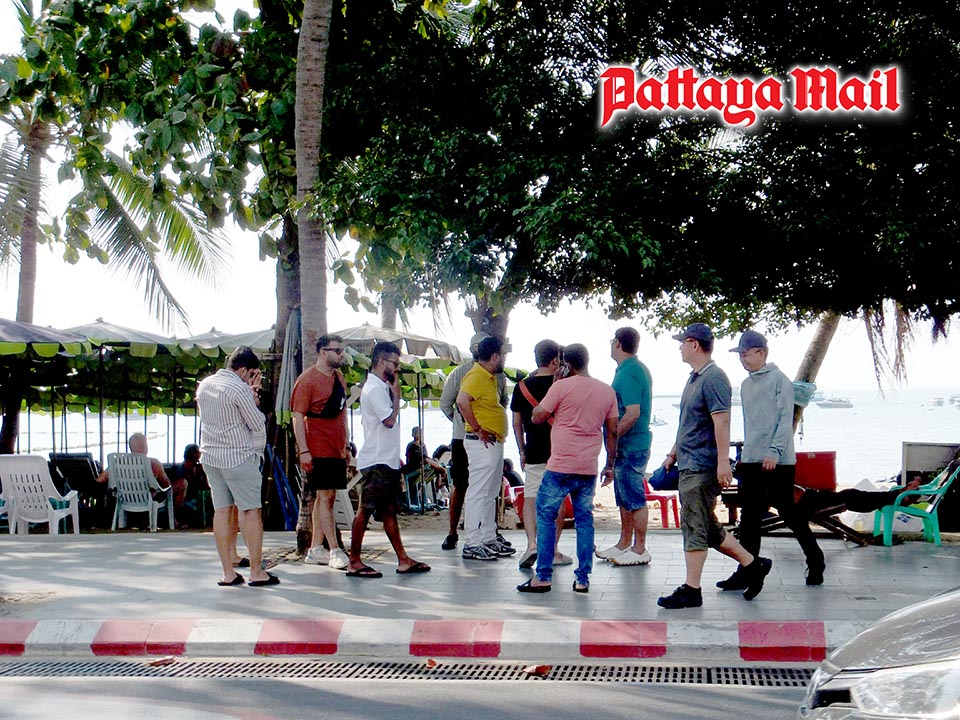
PATTAYA, Thailand – Pattaya remains a major tourism hub on Thailand’s eastern seaboard, with steady visitor traffic along its beachfront, entertainment districts, and commercial zones. Yet beneath the constant movement of tourists and nightlife activity, a more subtle change is emerging in how visitors use the city and how the local tourism economy is adjusting to shifting spending behaviour and rising cost sensitivity. Across key areas such as Pattaya Beach Road, Walking Street, Soi Buakhao, and Jomtien, a growing number of foreign tourists are choosing to pause on sidewalks, compare prices, and discuss options before deciding where to go next. Rather than committing early to bars or clubs, many now appear more cautious, weighing budgets and evaluating value before entering venues that traditionally formed the core of the city’s nightlife experience.
This behavioral shift is also visible in how people move through the city. Instead of spending entire evenings inside entertainment venues, more visitors are opting to roam in small groups, couples, or alone, moving between beaches, street food areas, cafés, convenience stores, and open public spaces. The emphasis for many has shifted from fixed nightlife spending to flexible, lower-cost exploration throughout the night. Visitors themselves point to rising costs as a key factor, particularly higher prices for drinks, entertainment charges, and additional fees inside some venues. Long-stay travellers and repeat visitors say the city feels noticeably more expensive than in previous years, and that this has led them to reduce time spent in bars or avoid certain areas altogether unless pricing feels justified by the experience offered.
At the same time, many workers within Pattaya’s tourism and service economy say they continue facing financial pressure despite the city’s ongoing visitor flow. Employees in hospitality, cleaning, security, and entertainment-related roles often rely on modest base wages supplemented by tips or variable income, while also dealing with rising living costs, rent, and daily expenses in a highly competitive tourism environment. This has created a widening gap between customer perception and operational reality. Businesses facing higher overheads such as rent, utilities, staffing, and licensing costs often respond by adjusting prices upward. However, some visitors respond by reducing spending or shortening their nights out, creating a cycle where higher prices do not always translate into stronger overall revenue or improved worker conditions.
As a result, parts of Pattaya’s tourism economy are beginning to show a more fragmented pattern of behavior. Some areas remain busy, but customer dwell time in entertainment venues appears shorter, and more spending is concentrated on essential services, food, and low-cost leisure rather than extended nightlife experiences. This shift is gradually reshaping expectations on both sides of the tourism equation. For Pattaya, the long-term challenge lies in maintaining its identity as a global nightlife destination while adapting to a more price-sensitive and selective visitor base. The city continues to attract millions of tourists, but the question increasingly being raised is not about arrivals, but about how comfortably visitors feel spending once they are there — and whether that balance can be sustained without eroding the city’s broader appeal.