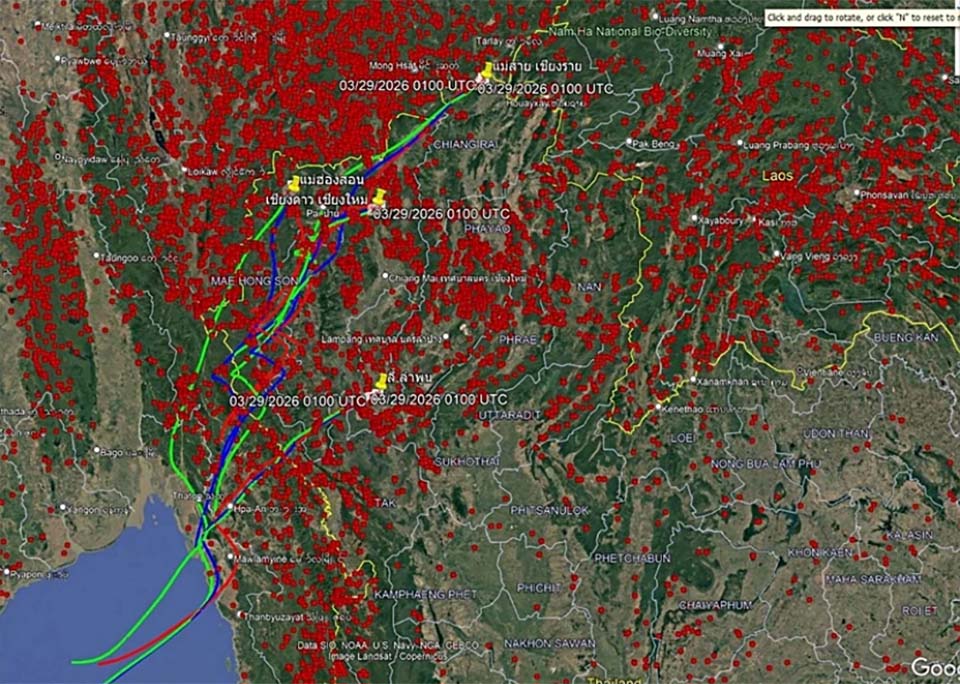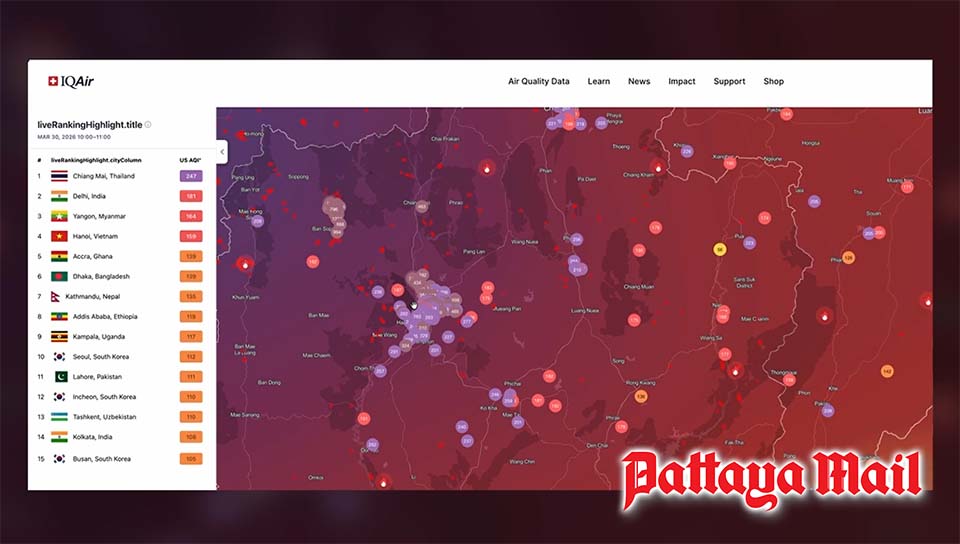
PATTAYA, Thailand – Chiang Mai has once again climbed to the top of the world’s worst air quality rankings on March 30, with pollution levels reaching alarming and dangerous extremes — raising concerns that other parts of Thailand, including Pattaya, could soon feel the impact.
A thick blanket of toxic haze has engulfed the northern city, turning skies into a dense white-grey blur. Visibility has dropped so severely that buildings are barely visible, while even aircraft passing overhead appear faint, almost ghost-like behind the pollution.

On the ground, conditions are just as grim. Roads are filled with smog as residents move through the city wearing masks, scarves, and protective eyewear. Many report burning eyes and nasal irritation after prolonged exposure.
In Chiang Dao district, the situation has reached critical levels. PM2.5 readings have surged past 900 micrograms per cubic meter, more than 20 times higher than safe standards — among the most severe levels recorded.
For those working outdoors, the crisis is unavoidable. Food delivery riders say they have no choice but to continue working long hours in the toxic air.
“It’s been bad for days now,” one rider explained. “My eyes burn, my nose burns — but I still have to work. I have a family to support.”
Data from Chiang Mai University’s climate monitoring center shows all 111 air quality monitoring stations across the province have entered the red zone, indicating hazardous conditions across the entire region.
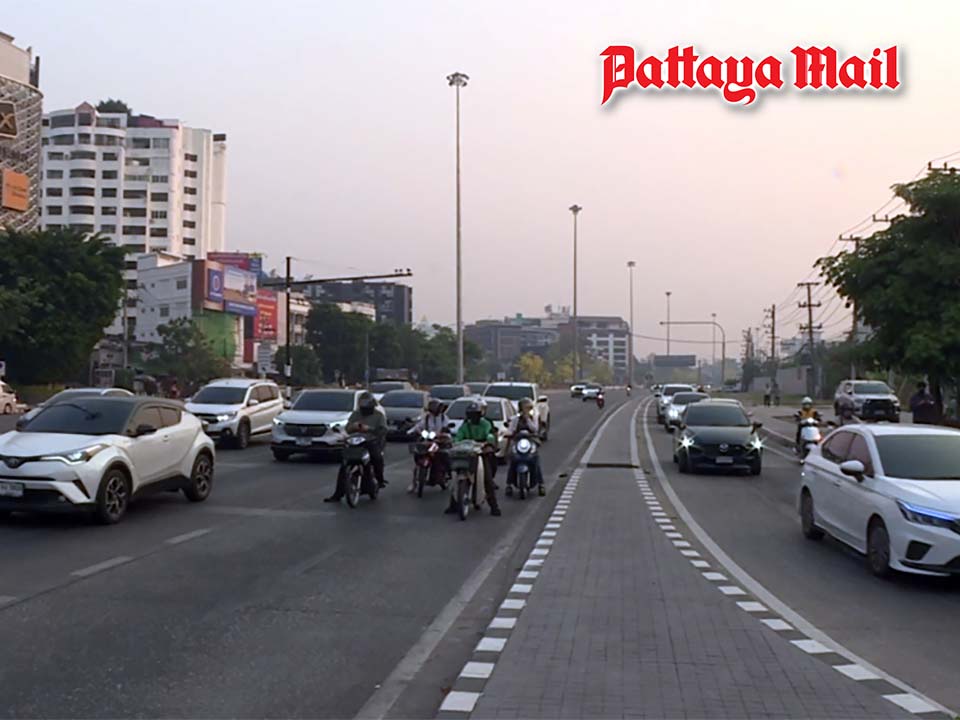
Pattaya watching closely
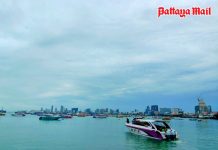
While Pattaya has so far avoided such extreme levels, the situation in the north is putting local authorities and residents on alert.
Seasonal haze, shifting wind patterns, and agricultural burning can quickly spread pollution across regions. If conditions worsen or winds change direction, eastern provinces like Chonburi could see declining air quality in the coming days.
For now, health experts are urging residents — especially those in coastal cities like Pattaya — not to be complacent.
Monitoring air quality, limiting outdoor activity during spikes, and preparing protective gear such as N95 masks could become necessary if the situation escalates.
The scenes from Chiang Mai serve as a stark warning: Thailand’s air pollution crisis is not isolated — and it can intensify rapidly.