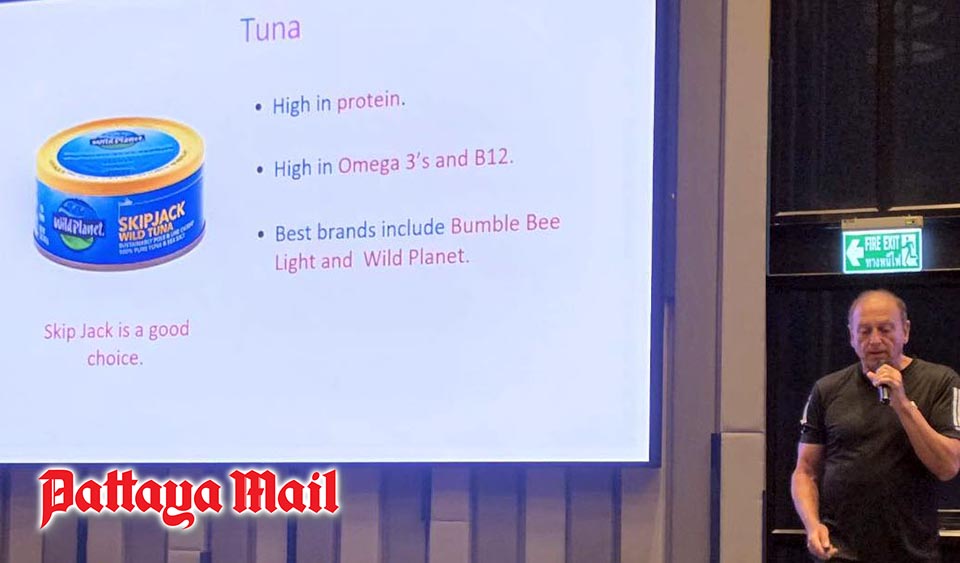
PATTAYA, Thailand – A standing‑room audience at the Wednesday, March 4, meeting of the Pattaya City Expats Club (PCEC) was encouraged to rethink nutrition not as dieting, but as a daily commitment to supporting cellular health during a presentation by Curtis Arnold, best‑selling author and founder of the Palm Beach Center for Health and Longevity. His talk, “A New Way to View Nutrition – Why 37 Trillion Cells Need Your Help (Part 2),” explored how food choices influence cellular energy, metabolic function, and long‑term disease risk.
Patcha (Chacha) Ingkudanonda, a Thai tax consultant specializing in international and Thai tax law, was the next speaker and reported on the results of Thai Revenue Department (TRD) audits of Expats transferring funds into Thailand, and offered advice for to other Expats residing in Thailand using Long Term Resident Visas (LTR).

Curtis began by describing highlighting the key points of his previous talk (part 1) to the PCEC. He noted that many widespread illnesses – heart disease, cancer, diabetes, and Alzheimer’s are metabolic disorders rooted in cellular dysfunction. Poor food choices, he explained, impair mitochondria, the cell’s energy producers, gradually weakening the body. “Food is energy,” he said, emphasizing that every bite either supports or undermines cellular performance. He urged the audience to view nutrition as “cellular energy management,” not a short‑term weight‑loss strategy.
A major focus of the talk was how the body uses fuel. Curtis explained that humans run on glucose from carbohydrates or ketones from fats, noting that ketones provide a steadier, more efficient energy source. Excess carbohydrate intake, he said, drives insulin resistance, fat storage, and the accumulation of belly fat. When cells become resistant to insulin, glucose cannot enter them, forcing the body to store excess energy as fat.
Curtis was critical of conventional diets, citing high dropout rates and frequent weight regain. He attributed these failures to restriction, lack of personalization, and unrealistic expectations. Instead, he recommended creating individualized food plans based on foods people already enjoy—listing common foods, categorizing them, removing poor choices, and rotating a small set of preferred meals. Sustainable change, he emphasized, happens gradually.
Intermittent fasting was presented as a key strategy for improving metabolic health. Curtis outlined fasting schedules such as 12:12, 14:10, and 16:8, highlighting benefits including lower insulin levels, increased fat burning, and enhanced autophagy. He also shared a daily routine emphasizing hydration, delayed coffee intake, and protein‑rich meals, along with evening supplements to support sleep and recovery.
He also provided several recommendations on food types that should be eaten versus those that should not. He concluded by stressing that nutrition must be personalized and lifelong. “This is your job,” he told attendees; reminding them that supporting cellular health is an ongoing responsibility. . To view a video of his presentation on the PCEC’s YouTube channel, visit https://www.youtube.com/watch?v=imNilrA-7uA.
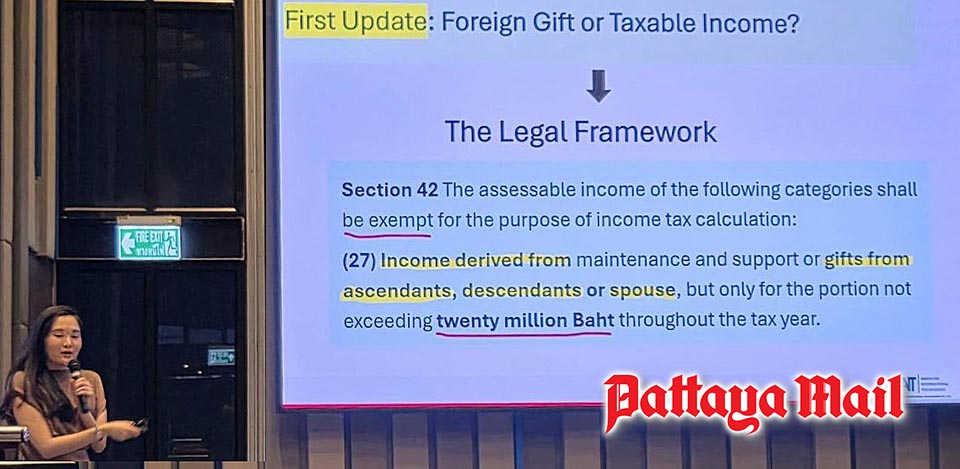
Following Curtis, Chacha noted that the TRD is intensifying scrutiny of foreign income, large transfers, and treaty‑protected pensions. She then spoke on the TRD audit results for two cases involving large transfers as gifts and one case involving pensions. She further provided some tax advice to LTR visa holders.
Chacha described a case in which a son received about nine million baht from his father abroad. Although Thai law allows up to 20 million baht per year in tax‑exempt gifts from parents, children, or a legal spouse, the exemption is not automatic. Taxpayers must prove the transfer is a genuine gift, and revenue officers place the burden of proof entirely on the recipient. In the case she cited, even a birth certificate was deemed insufficient. Thus, she warned that without strong supporting documents, such transfers can be reclassified as taxable income, potentially resulting in millions of baht in tax plus an 18 percent annual surcharge.
Chacha also highlighted how relationship status affects tax treatment. In one ruling, money sent from a foreign partner to a Thai girlfriend was taxed because the couple was not legally married. She noted that Thailand’s participation in international information‑exchange agreements makes cross‑border transfers increasingly visible to authorities.
Foreign pensions were another concern. Chacha described cases where Thai officers incorrectly taxed Swiss AHV pension transfers. By invoking the non‑discrimination clause of the Thailand–Switzerland Dual Tax Agreement (DTA), she argued successfully that the pension income was the same as Thailand’s social security. Thailand’s social security payments are by law exempt from Thai income tax. Under the non-discrimination clause of the DTA, Thailand is required to treat the foreign taxpayer the same as a Thai national, thus the same exemption would apply.
Her advice for LTR visa holders was for careful keeping. She referenced Royal Decree No. 743 which exempts them from Thai income tax on foreign sourced income. Although this exempt foreign income generally does not require filing a Thai tax return, she recommended retaining copies of Royal Decree No. 743 in case the TRD should later raises questions.
Chacha concluded that many remittances can be tax‑free if handled properly. Early planning, solid documentation, and awareness of treaty protections remain the best safeguards against unexpected tax assessments. To view a video of her presentation on the PCEC’s YouTube channel, visit https://www.youtube.com/watch?v=MgUC-NCwg_0&t=25s.
Following the presentations, MC Ren Lexander brought everyone up to date on upcoming events followed by the Open Forum portion of the meeting where questions are asked and comments made about Expat living in Thailand, especially Pattaya. To learn more about the PCEC, visit their website at https:/pcec.club.