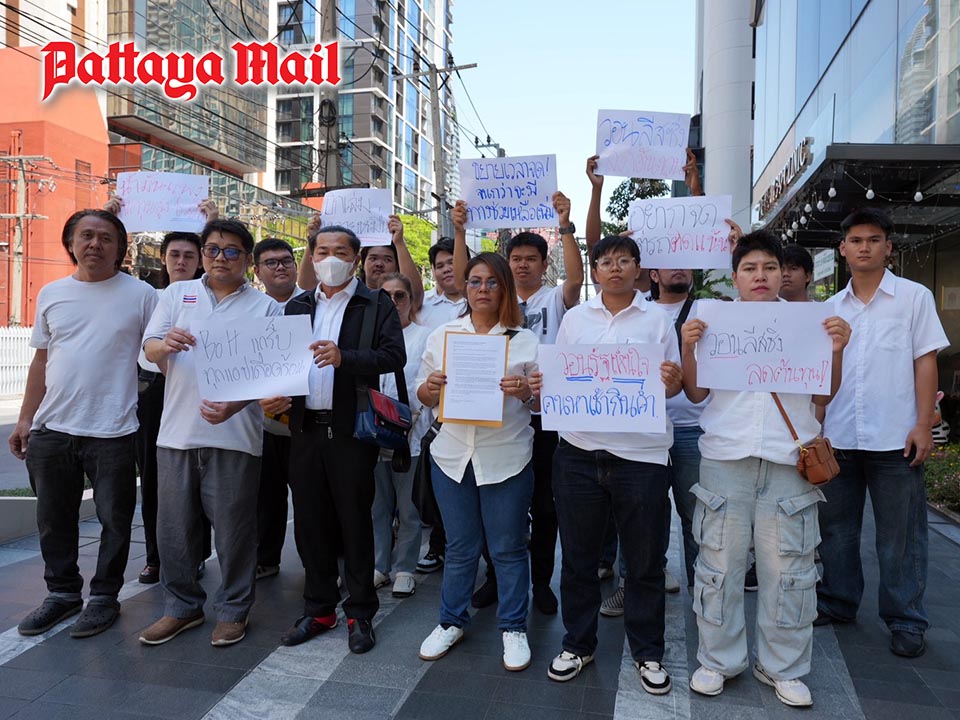
PATTAYA, Thailand – Representatives of app-based ride-hailing drivers have called for urgent changes to registration rules and financing conditions as thousands struggle to legally register their vehicles as public transport ahead of a government deadline.
The group, represented by the Thai Hire Purchase Association and driver representatives Witsarut Puthom and Jiraphat Sopalai, recently submitted a letter to the association in Bangkok seeking support and assistance in negotiating with leasing companies and financial institutions.
Drivers say they want to comply with the law by registering their vehicles under the Ror Yor 18 category — the official registration for ride-hailing passenger cars — but many face obstacles including complex procedures, insurance requirements, and rising financial costs.

According to the drivers’ group, many leasing companies increase loan interest rates when vehicles are converted to the RY.18 category. Drivers are asking the association to negotiate with lenders so that existing interest rates remain unchanged after registration.
Another major concern involves insurance requirements. Some leasing firms require drivers to purchase first-class insurance policies costing between 40,000 and nearly 70,000 baht per year. Drivers are requesting greater flexibility, proposing that third-class insurance be permitted for ride-hailing vehicles in order to reduce operating costs while still complying with legal coverage requirements.
The group also asked authorities to allow drivers to use photocopies of vehicle registration documents during the process. Many say obtaining the original registration book from leasing companies involves additional fees and time-consuming procedures that reduce their ability to work and earn income.
“In the current economic climate, everyone is struggling with rising living costs and fuel prices,” said Witsarut Puthom, one of the driver representatives. “We simply want to earn an honest living by transporting passengers through ride-hailing apps and still be able to make our car payments on time. But the conditions set by leasing companies have become a major obstacle.”
Drivers say converting a vehicle to RY.18 registration can cost between 50,000 and 80,000 baht per vehicle, creating a heavy financial burden for many workers who rely on ride-hailing services as their main source of income.
Data from the Department of Land Transport shows that 36,896 drivers are currently registered in the Driver Verify system operated by the Electronic Transactions Development Agency (ETDA), which certifies ride-hailing drivers. However, fewer than half — 14,918 drivers — have completed the full legal registration process required to operate as public transport.
Authorities have set a March 31, 2026 deadline for drivers to complete registration. After that date, enforcement will be stepped up. Drivers using private vehicles to carry passengers without registration could face fines of up to 2,000 baht, while those operating public vehicles without the proper public driver’s license could face fines of up to 1,000 baht or up to one month in jail.
To assist drivers, the Department of Land Transport has established “One Stop Service” centers where drivers can complete the entire registration process in one location, including document verification, vehicle inspections, registration changes, and payment of fees and taxes.
However, drivers say the system still struggles to keep up with demand. In Bangkok, officials can currently process only about 500 vehicles per week, meaning thousands of drivers could face waiting periods of up to two years before completing the process.
Ride-hailing drivers in tourist destinations such as Pattaya say the issue is particularly important in cities that rely heavily on visitors. Many drivers there provide transportation for tourists moving between hotels, beaches, and entertainment areas.
Driver groups say the financial barriers and slow registration process risk pushing many drivers out of the system, potentially affecting transportation options for residents and tourists alike.
They are now urging authorities to consider extending the registration deadline and easing financial conditions to allow more drivers to transition into the legal system.