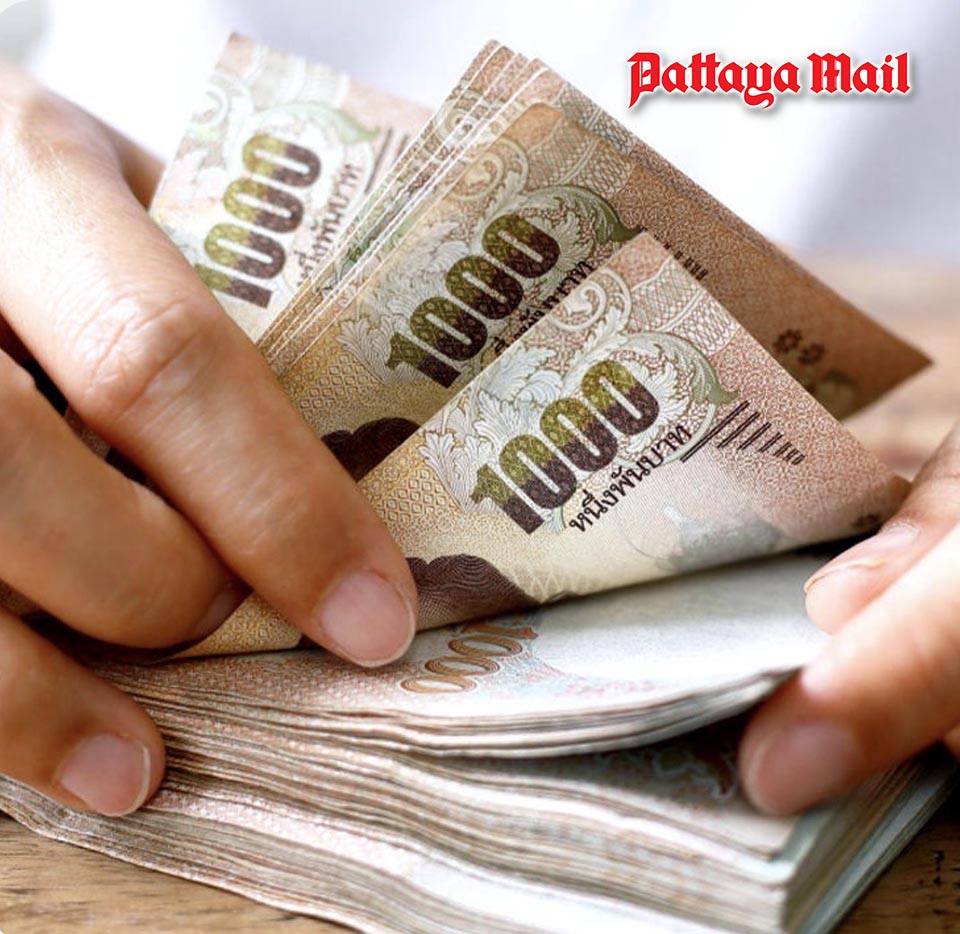
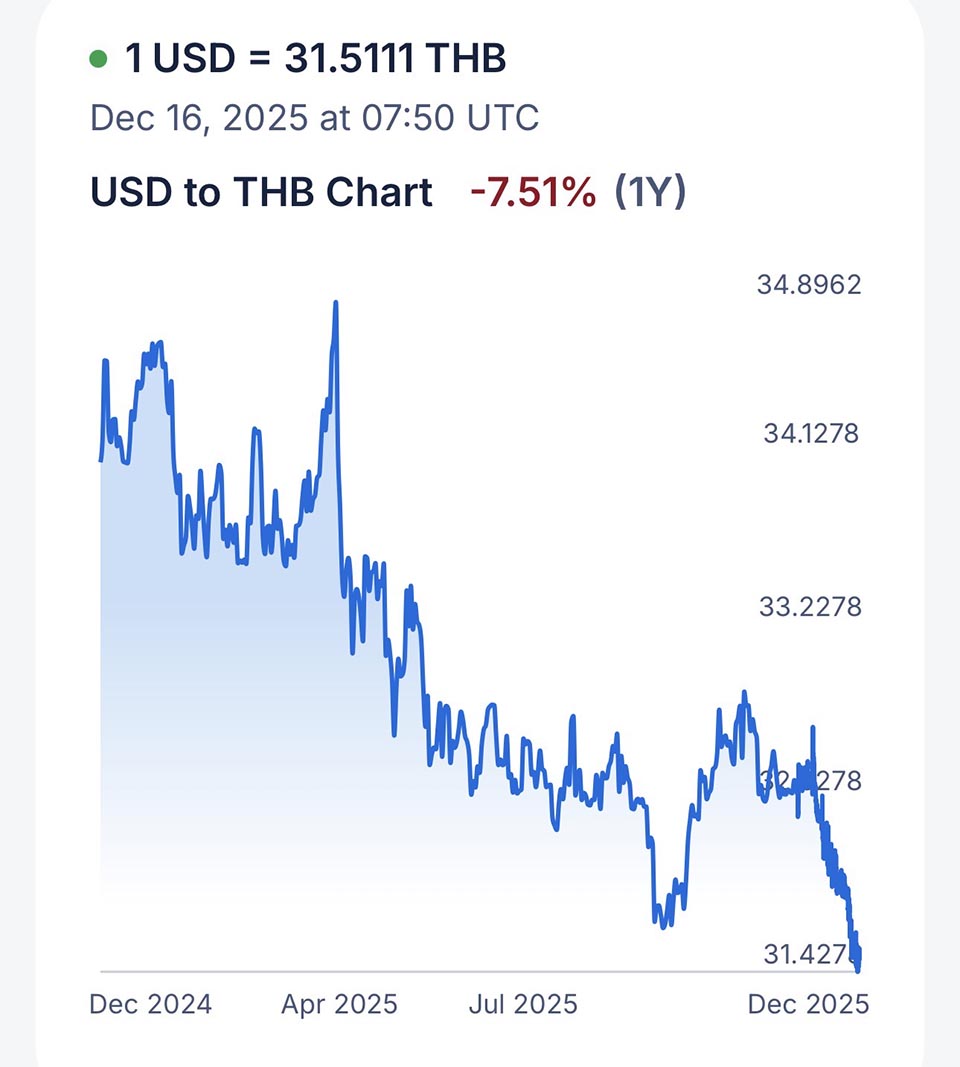
BANGKOK, Thailand – As Thailand enters the height of the travel season, the strengthening baht has once again become a focal point of discussion across the tourism industry. Trading recently between 31.4 and 31.8 to the US dollar, the firmer currency has raised familiar concerns: will a stronger baht deter visitors, or does it reflect a deeper shift in how Thailand is positioning itself on the global tourism stage?
At first glance, there is little evidence of a slowdown. International arrivals remain solid, flights are busy and hotels in key destinations continue to report healthy occupancy levels. Beneath the surface, however, spending patterns suggest a more complex picture. For price-sensitive travellers from long-haul markets such as the United States, Europe and parts of the developing world, exchange-rate movements are being felt more acutely. With fixed travel budgets, a stronger baht often means fewer restaurant visits, scaled-back excursions or, in some cases, shorter stays.
Those most affected include backpackers, families and first-time visitors, followed closely by long-stay retirees, digital nomads and winter escapees. These groups play a vital role in sustaining off-peak economies in destinations such as Pattaya and Hua Hin. Local operators note that while visitor numbers have not collapsed, discretionary spending has softened. The issue, they say, is not a lack of tourists, but tighter spending habits.
Perception also matters. A stronger baht comes alongside rising operating costs, higher service charges and lingering concerns over dual pricing. For repeat visitors who remember a significantly weaker currency, Thailand can feel less of a bargain than it once was. Secondary destinations often experience this shift first, as non-essential spending tends to decline more quickly outside premium resort areas.
Yet arrivals continue to hold up, largely due to changes in market composition. Travellers from higher-income and short-haul markets – including Singapore, Japan, South Korea, Hong Kong, Australia and the Gulf states – are generally less sensitive to currency fluctuations. Their travel decisions are driven more by experience, safety, wellness, gastronomy and service quality than by price alone. Demand from these markets has remained resilient despite the baht’s recent strength.
On the currency front, global factors are also at play. A softer US dollar, driven by expectations of interest rate cuts and easing inflation, has reduced dollar dominance. At the same time, Thailand’s baht has been supported by strong tourism receipts, steady foreign investment inflows and a relatively stable external position. As global investors diversify away from the US, regional currencies such as the baht have found renewed support.

A stronger baht, however, is not necessarily bad news for tourism. Rather than acting as a barrier, it functions as a filter. Ultra-budget travel may ease, while higher-value, experience-driven tourism gains traction. This shift aligns closely with Thailand’s long-term ambition to move from volume to value, attracting visitors who stay longer, spend more consciously and seek deeper cultural and sustainable experiences.
For destinations like Pattaya, the transition brings challenges. Businesses reliant on high-volume, low-margin models feel the pressure first. Yet it also presents an opportunity to reposition, improve product quality and diversify offerings. Crowded beaches and busy streets do not automatically guarantee strong revenues; long-term success depends as much on spending power as on visitor numbers.

Looking ahead, if the baht remains in the 31–32 range to the US dollar, Thailand is unlikely to lose its appeal as a global destination. What will continue to evolve is the profile of the visitor. The task for policymakers and industry leaders is to manage this shift carefully, ensuring that infrastructure, transparent pricing and service standards meet the expectations of a more discerning traveller.
Viewed through this lens, a firmer baht is not simply a threat to tourism. It is a signal that Thailand may be moving beyond bargains, towards a future defined by experience, quality and lasting value.


About the Author
Andrew J. Wood has lived in Thailand since 1991 and has more than four decades of experience in the international hospitality and tourism industry. He is a former Director of Skål International, Past President of Skål International Asia, Past President of Skål International Thailand, and a two-time Past President of Skål International Bangkok. A British-born travel writer, hospitality consultant and former hotelier, he has held senior management roles across Asia and Europe and writes regularly on tourism trends, sustainability, policy and destination development across the Asia-Pacific region.