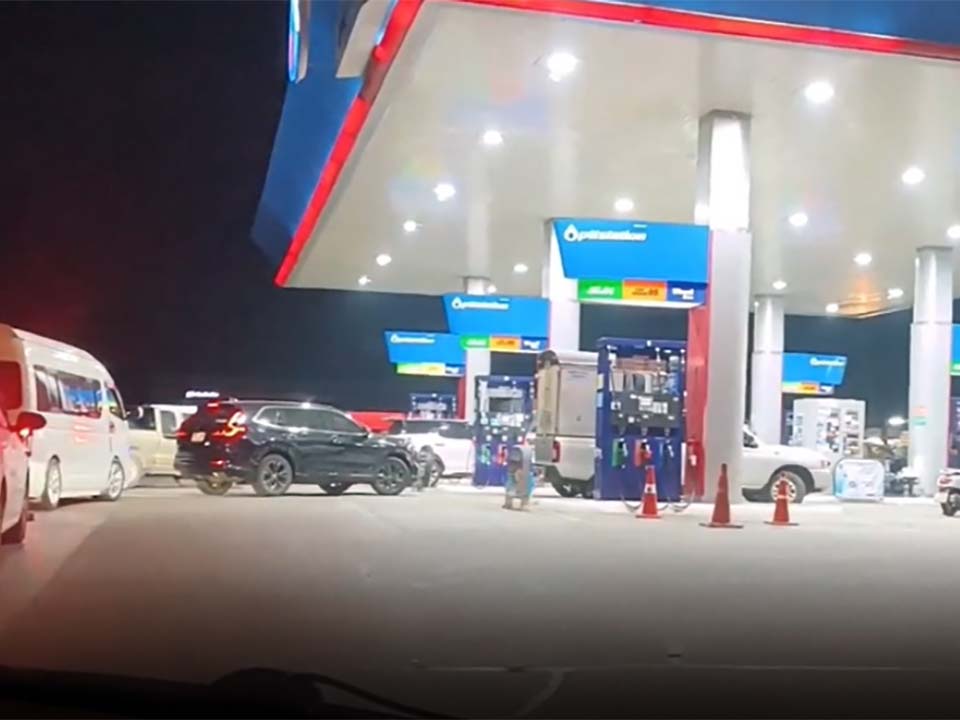
UDON THANI, Thailand – Long queues formed across fuel stations in Udon Thani as residents rushed to fill up their tanks before a new round of fuel price increases took effect, highlighting growing concerns over rising living costs and financial pressure on daily wage earners.
Following the announcement that diesel prices would increase by 3.50 baht per litre and petrol by 1.20 baht per litre, effective from early morning on April 2, large numbers of motorists quickly headed to gas stations late at night to beat the price hike.

At one busy PTT station on Udon Dutsadi Road, cars, pickup trucks, heavy vehicles, and motorcycles formed long queues stretching deep into the forecourt as anxious residents waited their turn to refuel. The rush created congestion across the area, with many motorists describing the situation as unavoidable amid already tight household budgets.
For many, the price adjustment is more than just an inconvenience — it is a direct hit to their income.
One resident, a 37-year-old marble worker, said he has been sleeping at the gas station for several consecutive nights instead of travelling home to a nearby district, explaining that the cost of commuting daily would consume most of his wages. The distance between his workplace and home is around 50 kilometres, making fuel expenses a significant burden compared to his earnings.
Another worker, a bus attendant known locally as “Nong Four,” said she earns around 500 baht per day only on operating days, but food expenses alone can reach 200–300 baht. With fuel prices rising, she said she has had to reduce motorcycle use and now often walks short distances instead.
Residents widely expressed concern that the latest fuel price increase will further strain the cost of living, especially for those dependent on transportation for work and daily survival. (TNA)