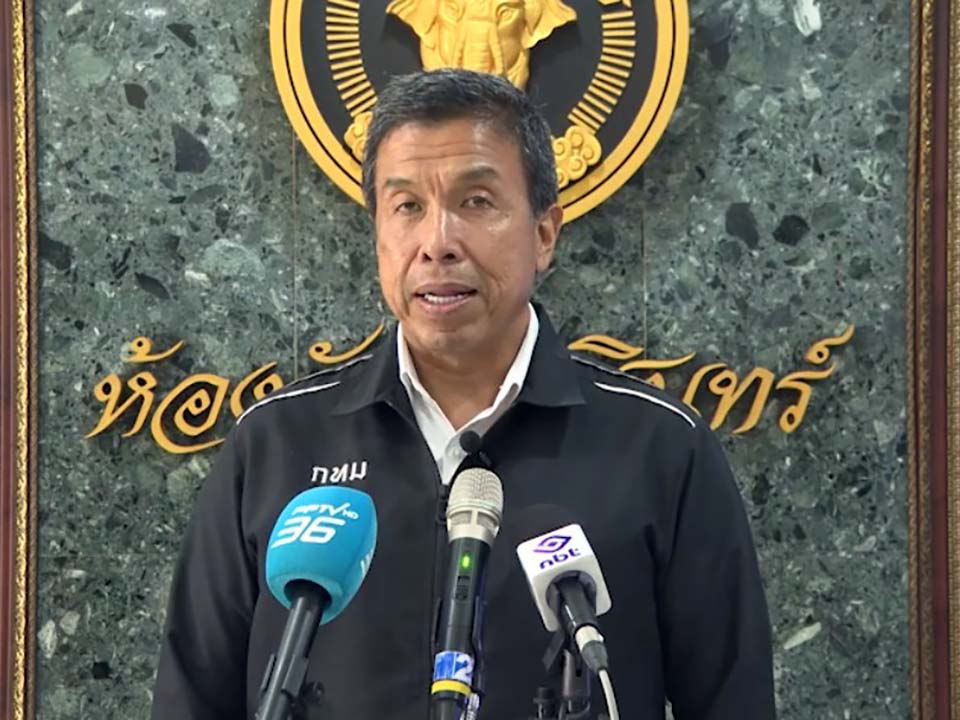
BANGKOK, Thailand – The governor of Bangkok, Chadchart Sittipunt, said that PM2.5 pollution from northern Thailand is currently not affecting the capital due to changing wind directions, while authorities continue to closely monitor air quality conditions.
Speaking to the media on April 2, he explained that seasonal wind patterns are now blowing from the south, bringing air from the Gulf of Thailand toward the north. As a result, haze from northern regions is not drifting into Bangkok at this time, although conditions could change if wind direction shifts again.

He added that Bangkok has strengthened its air quality monitoring system by installing advanced “Super Station” sensors, supported by China, which can identify pollution sources in real time — distinguishing between vehicle emissions and biomass burning. One of these systems has already been installed at Kasetsart University, improving the city’s ability to track and manage pollution more precisely.
According to city data, the overall air quality situation this year has improved, with the number of days exceeding safe PM2.5 levels falling by around 50 percent. Officials attributed this to tighter vehicle emission controls, increased inspections of black smoke vehicles, improvements in fuel and engine maintenance standards, and cooperation with surrounding agricultural areas to reduce open burning.
The governor also emphasized that air pollution is not only an environmental issue but also an economic one, noting that lower-income groups often have limited alternatives to older vehicles or agricultural burning due to cost constraints. He called for the long-delayed Clean Air Act to be passed, arguing it would help establish a dedicated funding mechanism, enforce polluter responsibility, and give local authorities more power to address pollution effectively.
He also expressed concern for residents in northern Thailand currently facing severe haze conditions, sending encouragement and support to affected communities.