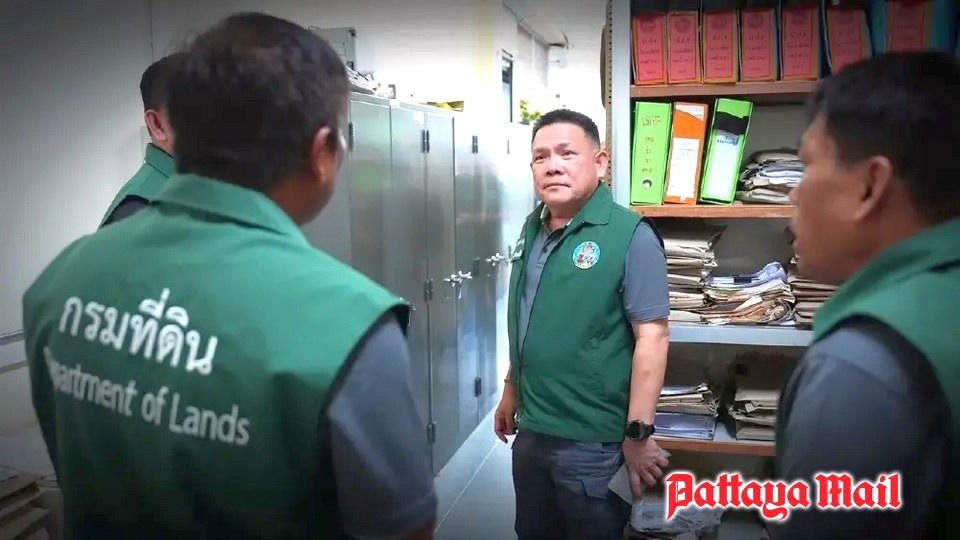
PATTAYA, Thailand – Over the past week public attention has centered on the coordinated efforts of security agencies and government officials inspecting foreign investors and unlawful nominee networks on strategic tourism islands including Koh Phangan Koh Samui and recently Phuket. This thorough sweep across those major areas marks only the beginning of definitive government action. Currently the focus has shifted to land offices nationwide which are now taking a proactive role as the primary frontline gatekeepers implementing strict proactive and deep scrutiny both before and after the registration of land rights.
Victor Law Firm Pattaya as a legal counsel closely monitoring regulatory updates presents an in depth look at how land offices currently enforce these measures to prevent unlawful foreign land ownership through nominees under a systematic collaboration with the Department of Special Investigation and the Anti Money Laundering Office.
1. Pre-registration measures rigorous screening from the start
Land offices have been instructed to elevate their standard of investigation and request comprehensive additional documentation. They are focusing particularly on two high risk scenarios.
The first scenario involves Thai nationals purchasing land when married to foreign spouses. Land officials now focus heavily on proving the source of funds. The Thai spouse must present clear evidence that the money used for the purchase is personal property or independently earned income. The funds must not be a loan or a concealed gift from the foreign spouse. Additionally both the Thai citizen and the foreign spouse must sign an official declaration before land officials confirming that the foreigner waives any claim and possesses no ownership interest in that specific property.
The second scenario involves land holding corporate entities with foreign shareholding structures. For limited companies where foreigners hold shares even when the ratio does not exceed the legal threshold of 49 percent officials now conduct deep background checks on the corporate structure. They trace the financial sources of every Thai shareholder to verify whether they have genuine income investment capacity or bank statements that align with the value of the shares they hold. This step directly prevents the hiring of Thai citizens to act as proxy shareholders.
2. Post Registration measures shifting to proactive surveillance
A notable shift in the current strategy is that land offices no longer merely wait to receive external complaints. Instead they use continuous monitoring mechanisms.
The first mechanism is quarterly monitoring. Local land officials are responsible for tracking how the land is utilized. They coordinate corporate data with the Department of Business Development every three months to verify whether there have been subsequent changes in shareholders directors or management control designed to benefit foreigners unlawfully.
The second mechanism is the suppression of illegal advertisements. Specialized teams now monitor advertisements for housing projects real estate developments or pool villas in major tourist destinations. If advertisements suggest that foreigners can obtain direct ownership of land or contain suspicious legal conditions the properties are immediately flagged for a deeper investigation.
3. Tripartite enforcement collaboration between the Land Department DSI and AMLO
This regulatory escalation overcomes previous limitations regarding the investigative authority of the Land Department. It integrates data sharing and divides operations according to the expertise of three major agencies. The Land Department serves as the frontline gatekeeper to screen transactions and forward suspicious activities. The Department of Special Investigation handles complex cases involving large networks or high asset values that qualify as special crimes. The Anti Money Laundering Office traces financial trails which can lead to the seizure and asset forfeiture under anti money laundering laws.
4. Summary of legal penalties and enforcement measures
The Land Code prescribes severe criminal penalties for violators which can be summarized based on the categories of offenders.
For foreigners who purchase or hold land unlawfully the penalty includes imprisonment for a term not exceeding two years or a fine not exceeding twenty thousand Baht or both. Additionally the foreigner must dispose of the land within a specified period of not less than 180 days but not exceeding one year. If the foreigner fails to comply the Director General of the Land Department has the authority to forcibly sell the land.
For Thai citizens or nominees who hold land on behalf of foreigners or assist them the penalty includes imprisonment for a term not exceeding two years or a fine not exceeding twenty thousand Baht or both. These individuals face criminal prosecution as accomplices and can be subject to asset seizure under joint investigations with the Anti Money Laundering Office.
Business operators must remain highly cautious. In cases where the offense is committed on behalf of a corporate entity corporate directors managers or any individuals responsible for issuing orders or operating the corporation will also face personal criminal liability.
Conclusion from Victor Law Firm Pattaya
The transition of land offices into a proactive and deep inspection mode represents a major turning point for real estate developers and foreign investors alike. Traditional legal transactions that once relied on regulatory loopholes now carry a very high risk of being rejected during registration or being investigated retroactively. Such scrutiny can result in criminal lawsuits and forced asset sales.
Real estate business operations and property transactions must now be established on absolute transparency and adhere strictly to the true intent of the law. Engaging in thorough corporate legal audits from day one is essential to prevent long term damage to corporate assets and reputation.