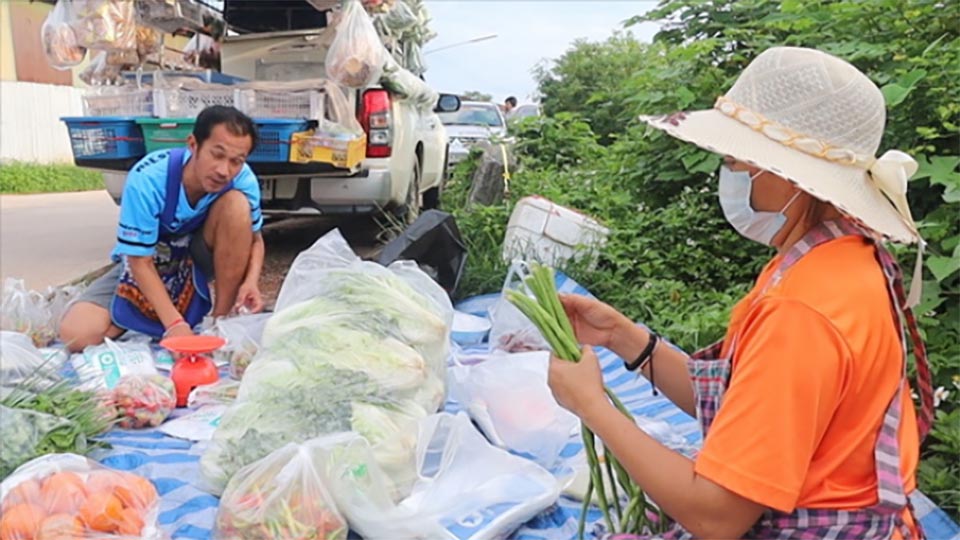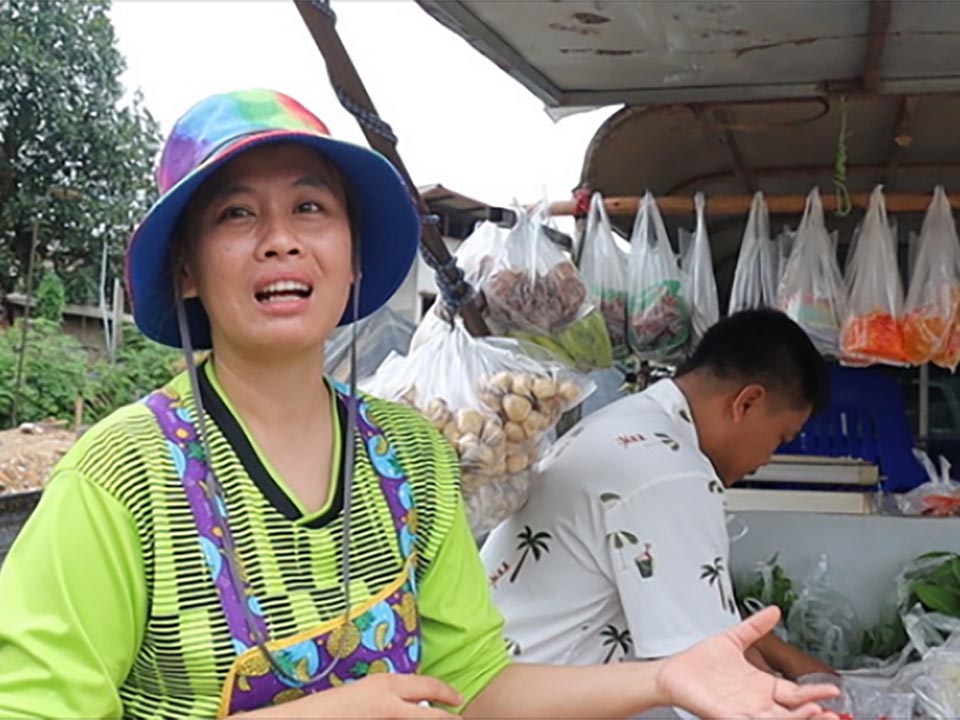
LOEI, Thailand – Mobile “Pum Puang” vendors in Loei province say they are being pushed to the brink as soaring fuel costs, rising product prices, and weakening consumer spending devastate their livelihoods. Ms. Pancake, a longtime mobile pickup-truck vendor who travels through villages in Muang Loei district and nearby communities selling vegetables, fresh food, kitchen items, and household essentials, said business conditions have sharply deteriorated over the past two years.
Every morning, she loads her truck with fresh produce and daily necessities including basil, Chinese morning glory, kale, chilies, tomatoes, eggplants, herbs, and cooking ingredients before driving from village to village to sell directly to residents. “Business is very difficult now. The economy is bad and people have little money,” she said. “Compared to one or two years ago, everything has changed completely. I’m getting deeper into debt while customers themselves are also struggling.” She revealed that unpaid customer debts have accumulated to around 20,000–30,000 baht, as many villagers ask to buy on credit because they cannot afford basic necessities.
According to the vendor, skyrocketing fuel prices have become one of the biggest burdens. At the same time, wholesale product prices continue fluctuating daily, making it nearly impossible to maintain profits. “In the past, we could still make some money because living costs were lower. Now everything is expensive,” she explained. “But if we raise prices too much, customers simply cannot buy.” She said many customers in rural communities are elderly residents and children with limited financial support. As a result, vendors are often forced to keep prices low, offer extra goods for free, or even sell at a loss just to help local people survive.
The vendor estimated her income has fallen by more than 50 percent, while customers who once spent hundreds of baht per visit now spend only a few dozen baht on essential items. Despite government efforts to introduce programs such as “Thai Chuay Thai Plus,” Ms. Pancake said she remains uncertain whether joining would truly help small mobile vendors with unstable daily incomes. “For us, if we stop working even for one day, our income immediately drops to zero,” she said.