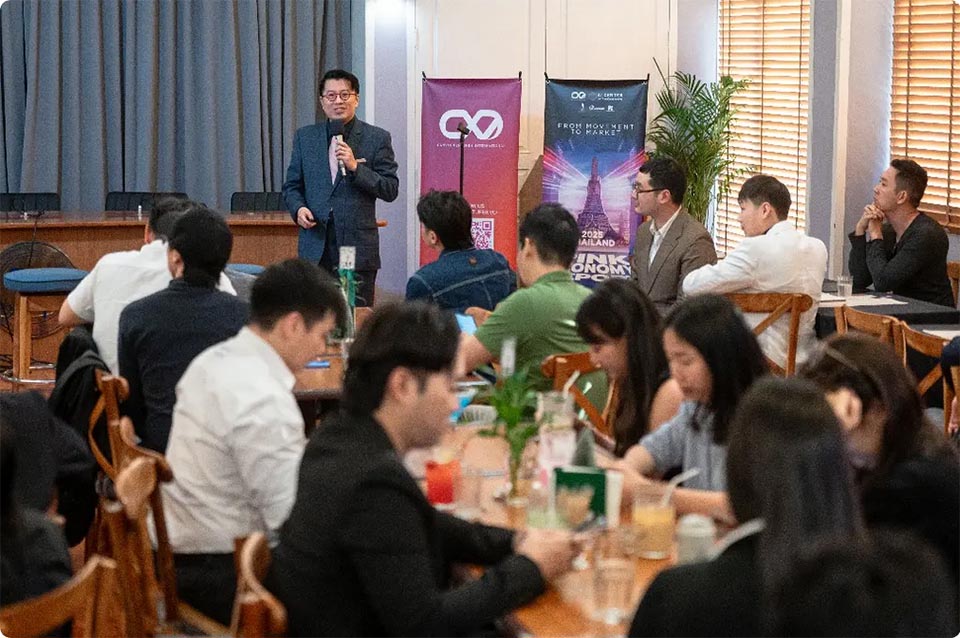
BANGKOK, Thailand – Thailand’s LGBTQ+ economy has rapidly become one of the country’s most reliable growth engines, now valued at USD 10.3 billion, according to the Thailand Pink Economy Report 2025 by Canvas Ventures International (CVI). The report positions this sector as a strategic pillar of Thailand’s long-term economic trajectory, driven by policy certainty, demographic shifts, and emerging Pink Tech industries.
CVI identifies the Marriage Equality Act, enacted on January 23, 2025, as the moment that reshaped regional competition. By granting full legal recognition to same-sex marriages, Thailand delivered the kind of long-horizon policy stability investors seek. This clarity lifted GDP by an estimated 0.3 percent and solidified Bangkok’s status as Asia’s leading Pink City, attracting LGBTQ+ travelers whose annual spending reaches roughly USD 1.5 billion.
New legal certainty is also unlocking highly targeted financial and insurance products tailored to LGBTQ+ households. These necessity-driven segments represent up to USD 73.9 million in new market value and offer businesses predictable and de-risked revenue streams under clear regulatory frameworks.
Demographic trends strengthen the outlook. Research indicates that 32.9 percent of Thai Gen Z identifies as LGBTQ+, giving Thailand one of the region’s most influential future consumer bases. Women-Loving-Women communities are at the forefront of these shifts, representing 78 percent of early marriage registrations and shaping new cultural and entrepreneurial landscapes.
The report highlights eight high-growth Pink Tech subsectors primed for investment, spanning HealthTech, insurance technology, the Creator Economy, and the formalizing Kathoey Economy. Yet CVI stresses that the Gender Recognition Law remains the pivotal policy needed to unlock full economic participation for trans professionals, many of whom remain excluded from formal employment.
Beyond consumer markets, a significant B2B opportunity is emerging. Most SMEs lack inclusive standards, driving demand for workplace certification, compliance tools, and trusted data systems. CVI notes that these capabilities are essential for attracting corporate and institutional capital, positioning Bangkok as the region’s central hub for Pink Tech investment. (NNT)