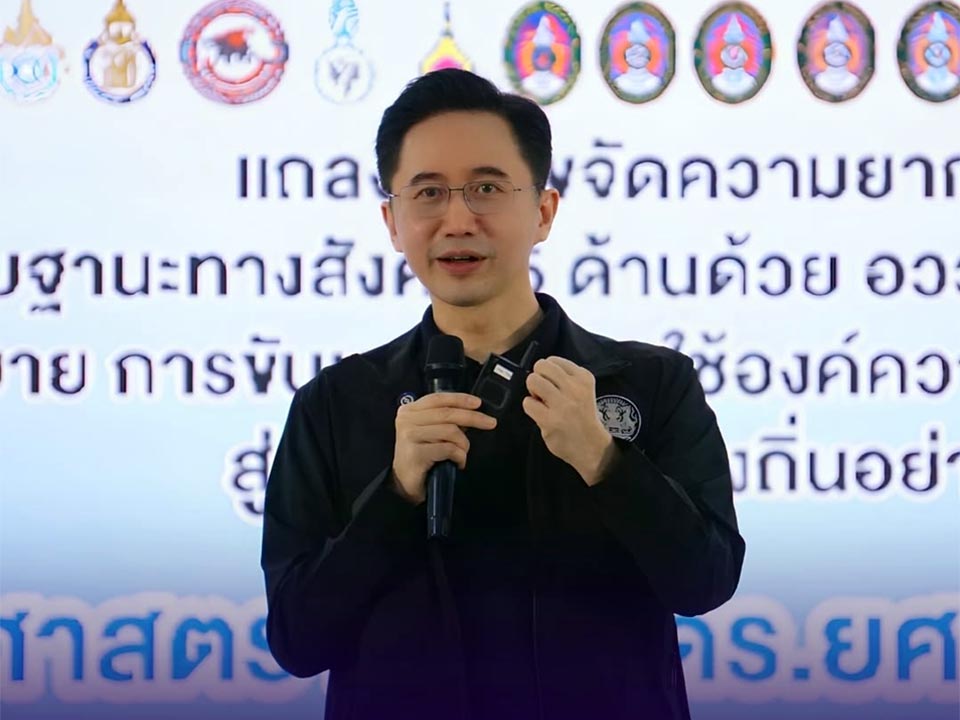
ROI ET, Thailand – The government is moving from short-term poverty assistance to empowering communities to become self-sufficient through science, research, and innovation. Deputy Prime Minister and Minister of Higher Education, Science, Research and Innovation Professor Yodchanan Wongsawat announced the five-part poverty reduction plan in Roi Et on July 18, 2026.
The event took place at Roi Et Rajabhat University, with attendance from Minister of Social Development and Human Security Nikorn Soemklang, Roi Et Governor Chatchawan Benjasiriwong, government officials, university leaders, and local residents.
The plan centers on five pillars of community well-being: human, physical, financial, natural, and social capital. It seeks to accurately assess each community’s needs and match them with suitable technologies that align with local conditions and lifestyles. This approach is intended to address the underlying causes of poverty while helping residents achieve greater long-term stability and self-reliance. The Deputy Prime Minister emphasized the role of local universities, especially Roi Et Rajabhat University, in applying academic knowledge within communities through an Area-Based Lab model.
The university will support higher-value agricultural processing and practical solutions to local poverty. The initiative unites government agencies, educational institutions, and communities to strengthen the grassroots economy. It is expected to help Thailand move beyond the middle-income trap through sustainable, locally driven development. (NNT)