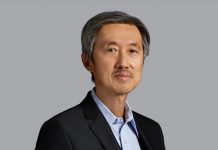
BANGKOK, Thailand – Sirikanya Tansakul, Deputy Leader of the People’s Party and the party’s prime ministerial candidate, has outlined an ambitious plan to reform Thailand’s public sector by making it cleaner, leaner, more transparent, and more efficient.
Speaking on the party’s reform agenda, Sirikanya — who has been designated as a prospective Deputy Prime Minister in charge of state reform — said the core objective is to build a corruption-free, high-performance government that is modern, digitally driven, and responsive to citizens. She stressed that a “Clean” and “Lean” state must go hand in hand.
On efficiency, she proposed cutting unnecessary laws and licenses to eliminate opportunities for rent-seeking and corruption. Central to the plan is “Operation 18,” which aims to complete key reform tasks within 18 months. Under the proposal, if a permit application is delayed due to alleged bribery demands, the license must be issued within 30 days. If no decision is made within that timeframe, approval would be granted automatically.
On corruption punishment, Sirikanya argued that the problem is not weak penalties but weak enforcement. While some parties have called for the death penalty, she noted that few corruption cases have ever resulted in real punishment due to lack of evidence and serious prosecution. Her approach focuses on breaking corruption networks by offering reduced sentences or witness protection to early whistleblowers, while protecting and rewarding honest civil servants who expose wrongdoing.
She also called for full transparency in public procurement, board memberships, shareholdings, and asset declarations, with linked databases to detect conflicts of interest. Procurement practices must move away from tailored or closed bidding processes to prevent bid-rigging. If these loopholes are closed, she said, the savings could be equivalent to raising value-added tax (VAT) by one percentage point.
“Our goal is to make life easier for civil servants, reduce paperwork, and allow them to focus on meaningful work,” Sirikanya said. “We want to return civil servants to serving the people.” (TNA)