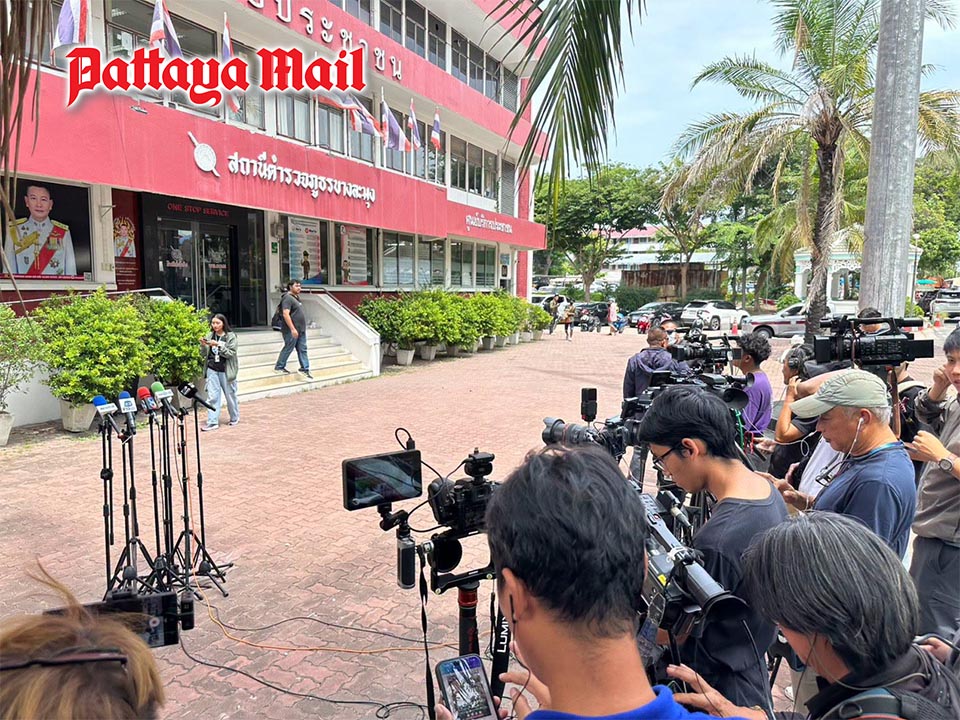
PATTAYA, Thailand – The growing public attention surrounding the Huai Yai murder case has once again raised uncomfortable questions about how quickly and seriously crime complaints are handled in Thailand — especially when early warnings or missing-person reports do not receive the urgency many families expect. As reporters gathered at Banglamung Police Station following new developments linked to a missing woman case near Khao Chi Chan, public interest quickly returned to a familiar concern: how many cases remain unanswered until they attract widespread media attention?
The criticism is not aimed at every police officer or every investigation. Many officers work under difficult conditions, often with limited resources and heavy workloads. However, repeated public concerns over delayed investigations, unanswered complaints and families having to repeatedly seek attention have created a perception problem that the police institution cannot ignore. The recent Huai Yai murder case, involving the deaths of two Russian nationals and a Thai family, has intensified those questions. The case received immediate national attention, leading to a major police response, daily updates and strong pressure for answers. But it has also prompted the public to ask a difficult question: would the same level of urgency have existed if the victims had not been foreigners or if the case had not gained national attention?
For many families of crime victims, the biggest frustration is not only the crime itself, but the feeling that they must fight to keep their cases alive. Some complaints risk becoming forgotten files, waiting in the background until new evidence appears or public pressure forces renewed action. This is where the role of journalists and independent scrutiny becomes important. The media does not investigate cases in place of police, but it can ensure unanswered questions remain visible and that authorities are held accountable for providing clear explanations. Both national police leadership and local commanders face increasing expectations to explain how complaints are prioritized, how missing-person reports are followed up and what systems are in place to prevent cases from being overlooked.
Public confidence is not built only when high-profile cases are solved. It is built when ordinary people believe that every complaint matters, every victim deserves attention and every investigation receives the same commitment regardless of media interest. The challenge for Thai police is clear: solving headline-making crimes is important, but proving that every case receives serious attention may be the real measure of public trust.