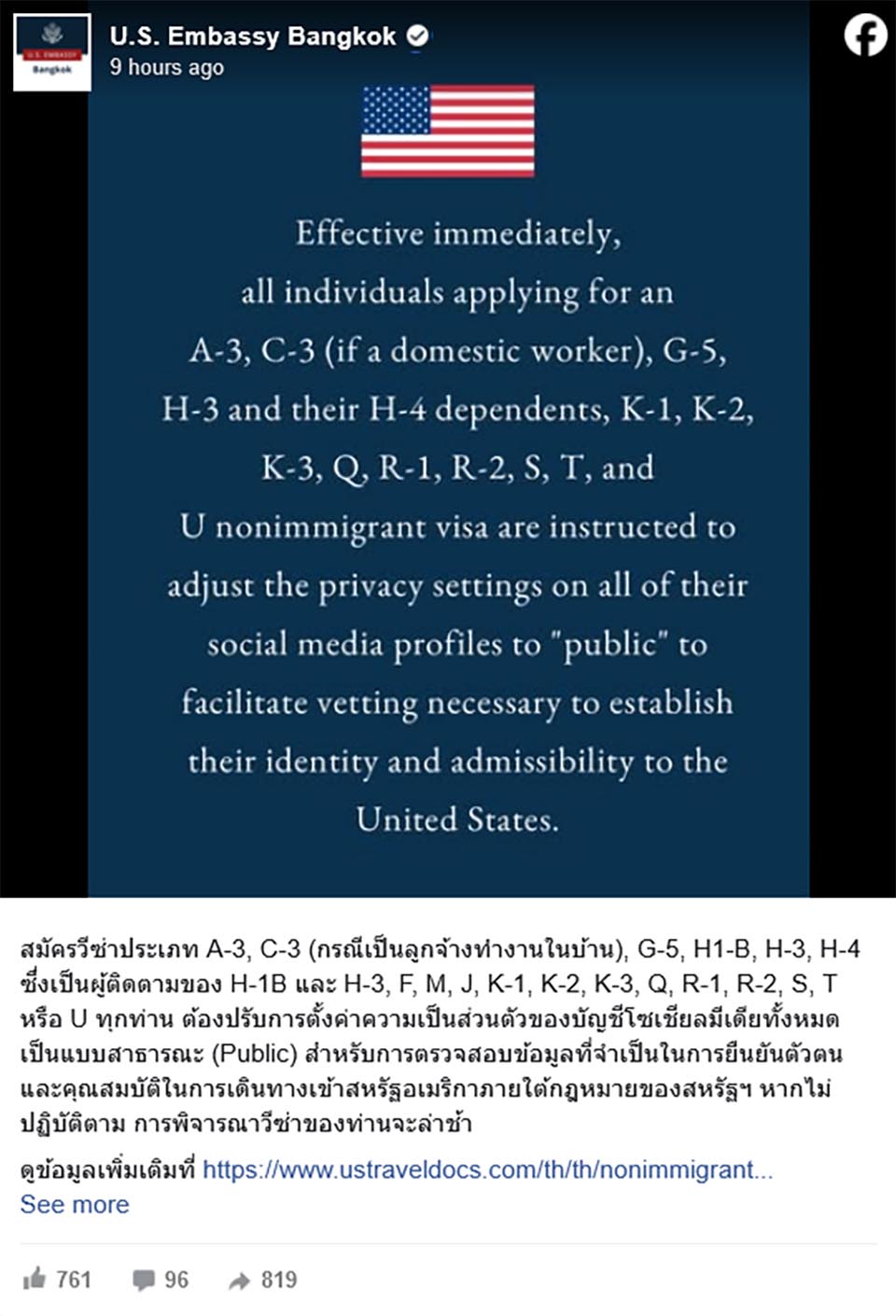
PATTAYA, Thailand – The U.S. Embassy Bangkok has announced that applicants for certain temporary visa categories must now set all of their social media accounts to “public” as part of the visa screening process.
According to a statement posted by the U.S. Embassy Bangkok on April 20, the rule applies to applicants for student visas such as F and M, exchange visas such as J, work visas including H categories and fiancé visas in the K category, along with several other temporary visa types.
Applicants are being told to adjust the privacy settings on all of their social media profiles so consular officers can review their online presence when determining visa eligibility under U.S. immigration law.
According to the embassy, applicants must also list all social media usernames, handles and identifiers they have used over the past five years on their visa application forms. Officials warned that omitting social media information could lead to visa delays, denial or ineligibility for future visas.
The policy was first introduced for student and exchange visas in 2025 and has since expanded to cover more temporary visa categories from March 30, 2026.
The expanded rules now also apply to visa categories including A-3, C-3 domestic worker visas, G-5, H-3 trainee visas, H-4 dependents of H-3 visa holders, K-1, K-2 and K-3 fiancé and spouse visas, Q cultural exchange visas, R religious worker visas, as well as S, T and U visa categories.
The embassy warned that applicants who fail to make their social media accounts public may face delays because officers will be unable to complete the required background checks. Officials may also review social media usernames, online activity and other publicly available information during the screening process.
Applicants can review the full list of affected visa categories and further guidance through the official visa information website.