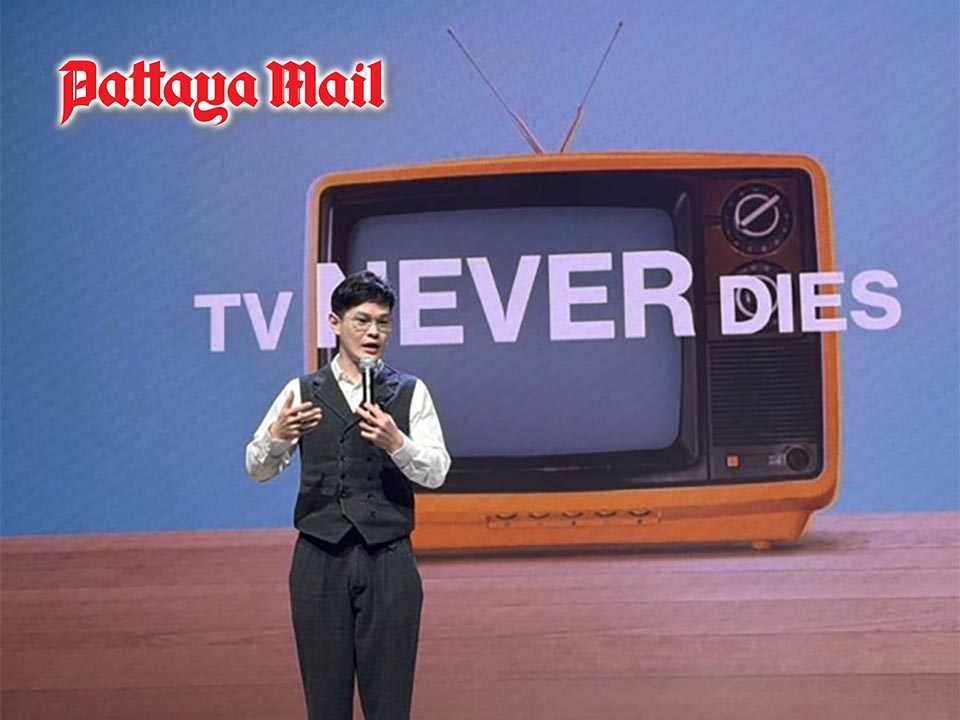
BANGKOK, Thailand – The Marketing Association of Thailand (MAT) says television is not dying but undergoing a major transformation, shifting from a traditional focus on ratings to becoming a “Demand Generator” that creates consumer demand, builds trust and delivers long-term brand value.
Speaking at the TV Demand Generator 2026 forum, organized by the Digital Television Association (Thailand), the Federation of Radio and Television Professional Associations and the Broadcasting Professional Council of Thailand, MAT President Assoc. Prof. Dr. Eak Phattarathanakul said new media technologies have repeatedly been predicted to replace older platforms, but instead have forced them to adapt and take on new roles.
He said television still has advantages in a digital world where consumers have hundreds of content choices, highlighting three strengths that online media cannot fully replace.
The first is Universal Media, with television able to create a shared experience by bringing large audiences together to watch the same event at the same time. Major news events, live sports and large entertainment programs can create common conversations and shared experiences among viewers.
The second is Companion Media. Unlike smartphones, which are personal devices, television remains a shared household device. Many people leave the TV on while eating, doing household chores or carrying out other activities, allowing brands to become familiar parts of consumers’ everyday environments.
The third is Trusted Media. While online platforms can deliver information and reach audiences quickly, they also face growing concerns over fake news, AI-generated content and anonymous accounts. Television’s editorial and verification processes can help provide greater credibility, making trust increasingly valuable to brands.
Eak said television should not simply be measured by ratings or short-term sales. Its role should evolve toward generating consumer demand and building long-term brand equity, with television used to establish credibility while online platforms help convert that interest into sales.
“I don’t think television will never die, but television will definitely change,” Eak said, stressing that the future lies in combining offline and online media rather than treating them as competing platforms.