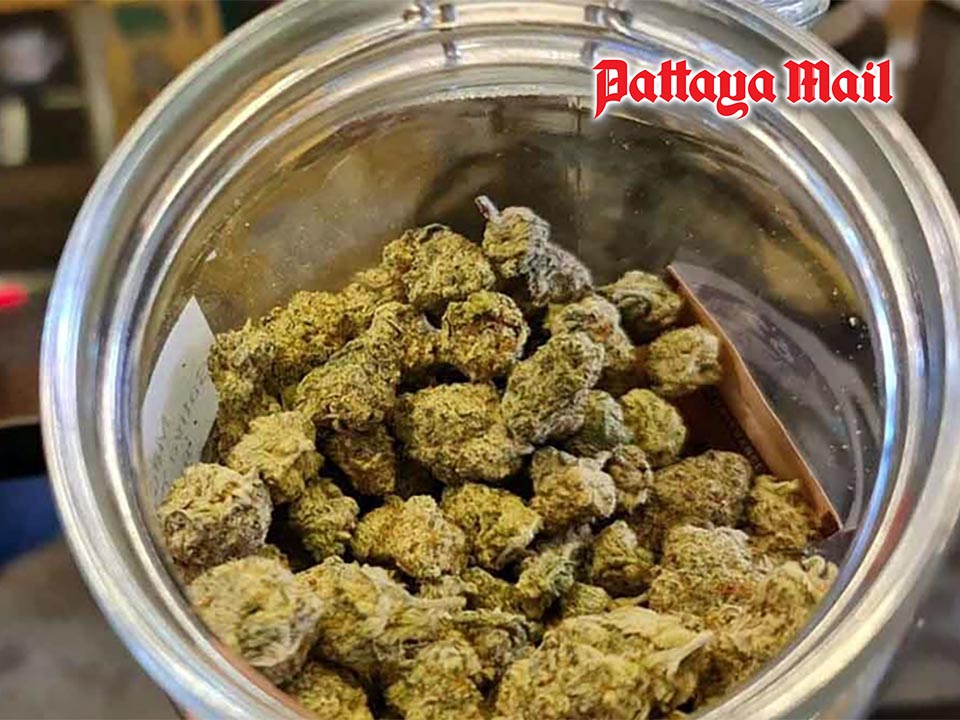
PATTAYA, Thailand – The Ministry of Public Health has officially enforced a new ministerial regulation in 2026 tightening controls over cannabis, aiming to establish clearer rules and stronger safeguards for public safety while maintaining its use in medical treatment. Dr. Thewan Thaneerat, Deputy Director-General of the Department of Thai Traditional and Alternative Medicine, said the new regulation on the licensing of research, export, sale, and processing of controlled herbs has been updated to ensure stricter and more transparent management of cannabis under a medical framework.
Under the new rules, only properly licensed facilities such as hospitals, clinics, pharmacies, and registered herbal product shops are allowed to apply for permission to handle cannabis-related activities. Authorities say this is intended to keep cannabis strictly within professional healthcare and regulated commercial systems. However, medical use of cannabis flower remains permitted. Thai traditional medicine practitioners, applied Thai traditional medicine practitioners, and folk healers can still use cannabis inflorescences to treat patients, but under strict conditions.
These include the requirement of controlled herbal prescriptions (Form Phor.Thor. 33), limited dispensing not exceeding 30 days per prescription, and mandatory record-keeping at the facility for at least one year for inspection purposes. Facilities must also have trained personnel who have completed approved cannabis medical training courses, and must ensure proper separation and secure storage of cannabis flowers. Storage must prevent direct contact with the floor and include effective odor and smoke control systems to avoid disturbing the public. Regarding enforcement, officials warned that if a license has previously been suspended or revoked, authorities may consider refusing renewal of that license in the future.
Dr. Peeracha Khukasemkij, Director of the Cannabis Medical Division, added that the department oversees only the “cannabis inflorescence” as a controlled herbal substance. Any entity wishing to research, export, sell, or process it must obtain official permission from the Department of Thai Traditional and Alternative Medicine or provincial public health offices, depending on the location.
He further explained that any export or sale of cannabis flowers must comply with approved cultivation and harvesting standards certified by the department.
Officials stressed that the regulation is not intended to restrict medical access, but to strengthen safety standards, improve credibility, and support sustainable development of Thailand’s herbal medicine industry under legal oversight. For more information, the public and operators can contact the Cannabis Medical Coordination Center Call Center at 0 2257 7042, available Monday to Friday from 08.30–16.00.