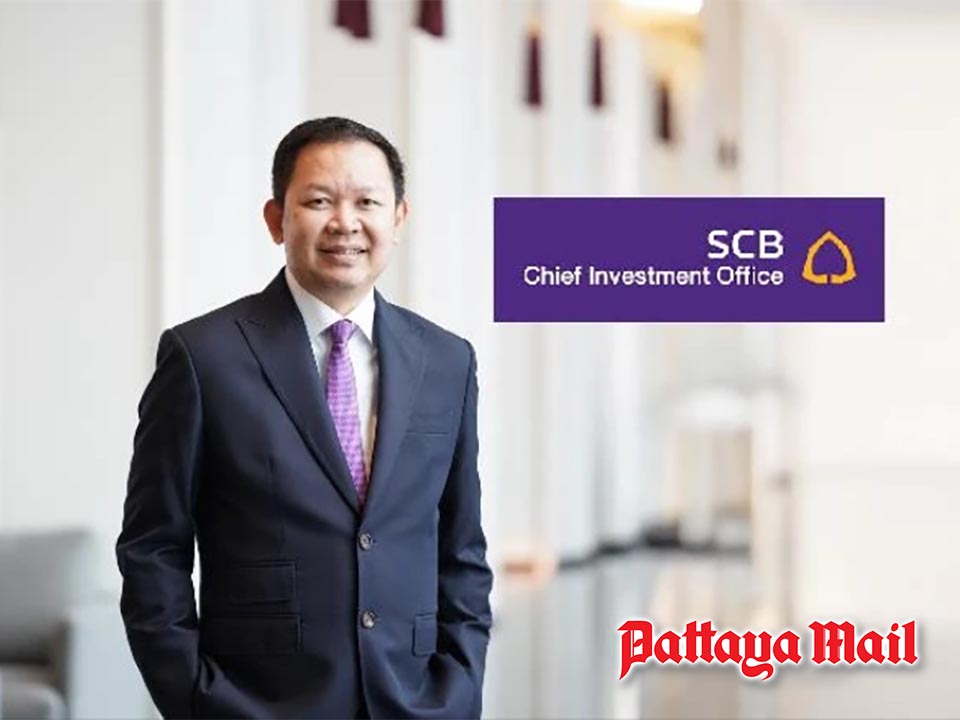
PATTAYA, Thailand – SCB Chief Investment Office (SCB CIO) believes the global cycle of aggressive interest-rate cuts is coming to an end, advising investors to shift their focus toward fiscal policy, economic data and selective opportunities linked to artificial intelligence (AI), particularly in emerging markets.
Mr. Sornchai Suneta, CFA, Senior Executive Vice President and Head of Wealth & Investment Product at Siam Commercial Bank, said SCB CIO recently exchanged investment views with BlackRock, one of the world’s leading asset managers. The assessment suggests that in 2026, policy rates in major economies will move closer to normal levels, with the peak of rate cuts already passed in 2025. As a result, monetary policy is expected to have a smaller influence on investment decisions compared with the previous year.
Markets expect the U.S. Federal Reserve to cut interest rates twice in 2026, bringing the policy rate to around 3.0–3.25%. The European Central Bank is expected to keep rates at 2%, while the Bank of Japan could raise its policy rate from 0.75% to 1% within the year. In the first quarter of 2026, the Fed, ECB and BoJ are all expected to hold rates steady, prompting investors to place greater weight on fiscal policy and economic indicators.
Fiscal policy is seen playing an increasingly important role in shaping market direction. Budget deficits as a percentage of GDP in many countries during 2022–2025 have exceeded pre-COVID levels and are expected to rise further in 2026–2027. High public debt, especially in Japan and the United States, raises long-term sovereign risk and increases investor demand for higher term premiums on long-term bonds, putting pressure on long-dated government bonds and currencies such as the U.S. dollar and Japanese yen.
SCB CIO therefore expects continued pressure on long-term government bonds, the U.S. dollar and the yen. In contrast, emerging markets with relatively lower public debt constraints, such as China and India, could benefit from a weaker dollar. Fiscal policies in major economies are largely focused on economic growth and strategic competitiveness, particularly in AI development and national security, which should support economic activity and corporate earnings. Rising global defense spending reflects heightened geopolitical risks and strengthens the case for greater allocation to gold as a diversification tool.
Financial markets are also becoming more sensitive to economic data, especially as the U.S. Federal Reserve has adopted a more meeting-by-meeting policy approach with less forward guidance. Combined with declining market liquidity and structural fragilities, even modest surprises in economic data could trigger outsized asset price movements.
Despite elevated geopolitical uncertainty, SCB CIO maintains a positive outlook on risk assets. The firm continues to favor U.S. equities under the AI investment theme, alongside selective opportunities in emerging markets, while recommending gold as a portfolio stabilizer against macroeconomic and geopolitical risks.