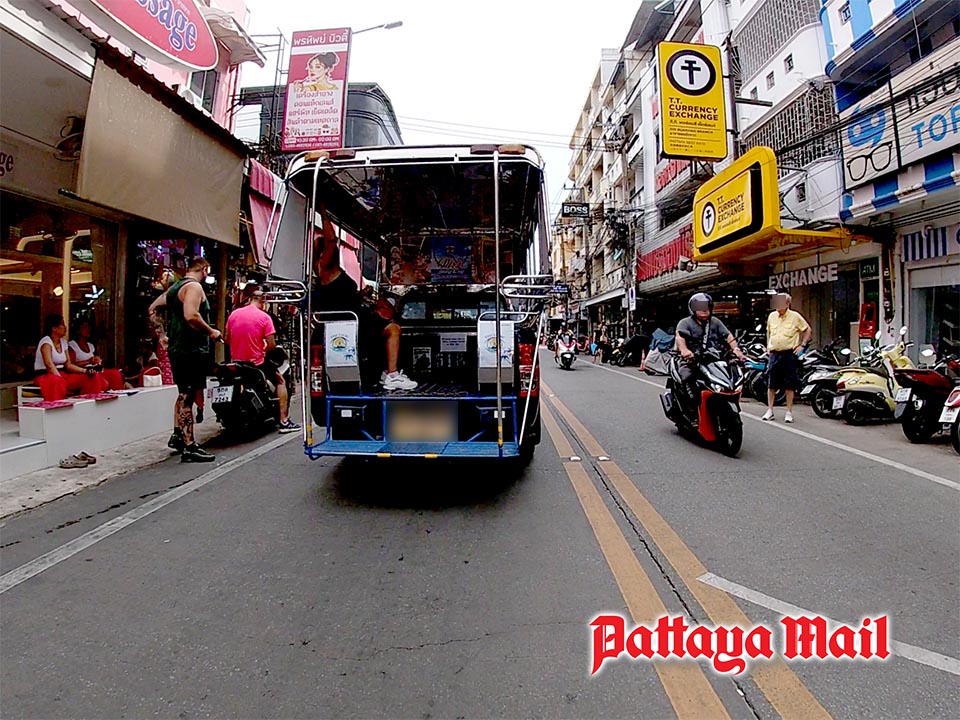
PATTAYA, Thailand – Love them or complain about them, Pattaya’s iconic blue songtaews or baht-buses have survived almost everything — changing tourism trends, ride-hailing apps, traffic chaos and four decades of city transformation. For more than 40 years, these converted pickup trucks with two rows of bench seating have remained one of the city’s most recognizable sights. They may not have air-conditioning, luxury seats or a digital booking system, but they continue to carry thousands of residents, tourists and long-term visitors across Pattaya every day.
To many visitors arriving for the first time, the songtaew can feel like stepping into a moving adventure. The sudden stops, quick turns, unexpected U-turns and drivers who appear to know every shortcut in the city are all part of the experience. Passengers quickly learn that the blue trucks operate with their own rhythm. A songtaew may slow down without warning when someone waves from the roadside, stop in the middle of traffic to pick up passengers, or suddenly change direction when a driver decides there is a better route. For pedestrians, however, they remain one of Pattaya’s greatest allies. Walking from one end of the city to another under the tropical heat can be exhausting, and a passing songtaew offers a simple escape — just step aboard, find a seat and let someone else deal with the traffic.
They are also a blessing for families and groups. A family of five, six or even more can often travel together far more easily than trying to find multiple taxis or private vehicles. For many visitors travelling on a budget, the songtaew remains the most practical way to explore Pattaya. But like any long-running Pattaya tradition, there are frustrations. One of the biggest complaints from newcomers is confusion over fares. The standard shared-route fare has changed over the years, and visitors unfamiliar with local practices can sometimes find themselves quoted higher prices, especially when they approach a parked vehicle rather than using it as a regular route service.
Tourists should always ask the price before boarding if they are unsure, especially when hiring a songtaew privately. A truck operating as a shared public route and one hired exclusively for a group are two very different services. Another common complaint is driving behavior. Some passengers joke that a Pattaya songtaew ride can include a free “city tour” of sudden braking, sharp corners and impressive confidence in narrow streets. While many drivers are experienced and helpful, safety concerns remain when vehicles stop abruptly, passengers stand on the back steps or traffic rules appear to become flexible suggestions.
Yet the songtaew business has also shown its ability to adapt. In recent years, many vehicles have turned their large side panels and rear areas into advertising space, creating an additional source of income for drivers while transforming the trucks into moving billboards travelling throughout Pattaya. From restaurants and hotels to local businesses and tourism services, these colorful advertisements have become another familiar feature of the city streets. The humble songtaew, once simply a way to get from A to B, has found a new role as both public transport and mobile marketing.
Despite the criticism, removing songtaews from Pattaya’s streets would leave a major gap. They are more than just transport — they are part of the city’s character. Modern apps may offer convenience, but a songtaew offers something different: a shared ride with strangers, a chance to see the city at street level and a small piece of old Pattaya that has survived generations. After 40 years, Pattaya’s blue trucks are still noisy, sometimes unpredictable and occasionally frustrating — but for many people walking the city’s streets, they remain a trusted friend waiting around the next corner.