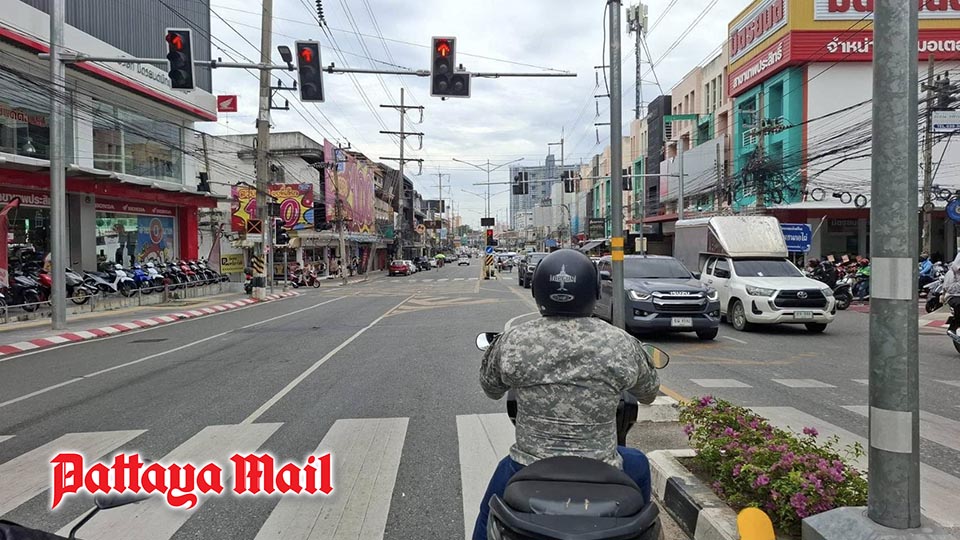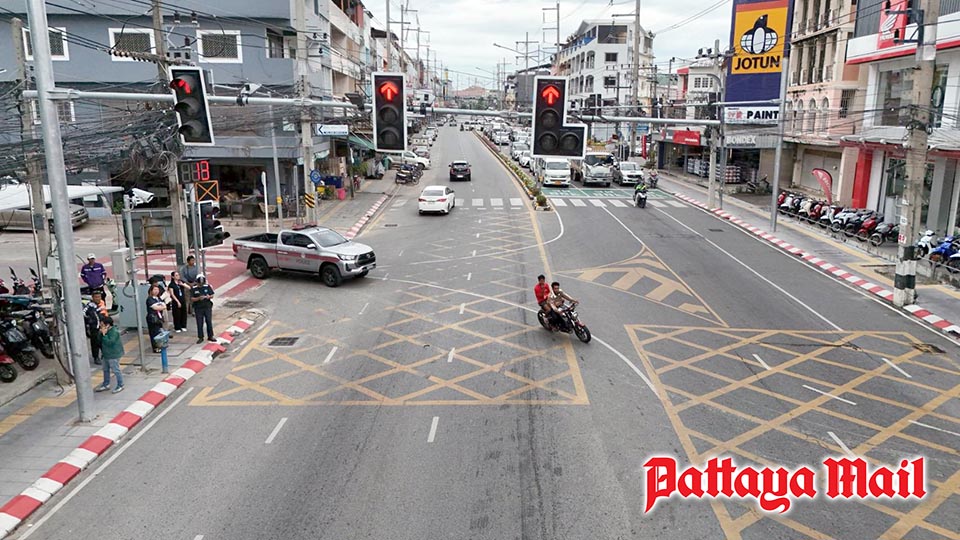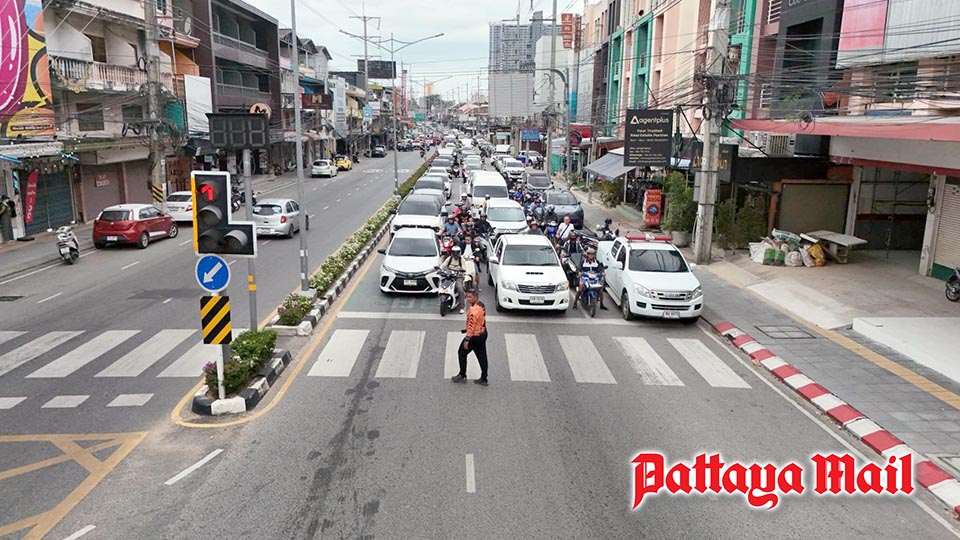
PATTAYA, Thailand – Pattaya city’s recent trial of traffic lights at the Thepprasit-Koh Phai intersection is drawing criticism from motorists, residents, and daily commuters, who report severe congestion and frustration. The test, aimed at improving traffic flow and safety, appears to have had the opposite effect, leaving many stuck in traffic for hours.
Residents quickly took to social media to voice their complaints. One motorist noted that “with three lanes—one for U-turns, one for parking—vehicles have only one usable lane, forcing drivers who don’t intend to turn to squeeze through. Traffic simply doesn’t move.” Another commuter lamented that “I take this route daily to drop my kids at school. Today it took two hours to pass a stretch that usually doesn’t get congested.”
Several commenters highlighted broader design and enforcement issues. “People ignore yellow lights and drift into red lights on the other side, causing a cascade of stoppages. The system is well-designed, but drivers just don’t follow it,” said one frustrated resident. Others warned that the new lights could create dangerous situations for pedestrians. “Try walking on the footpath—it’s blocked, uneven, and unsafe,” wrote another.
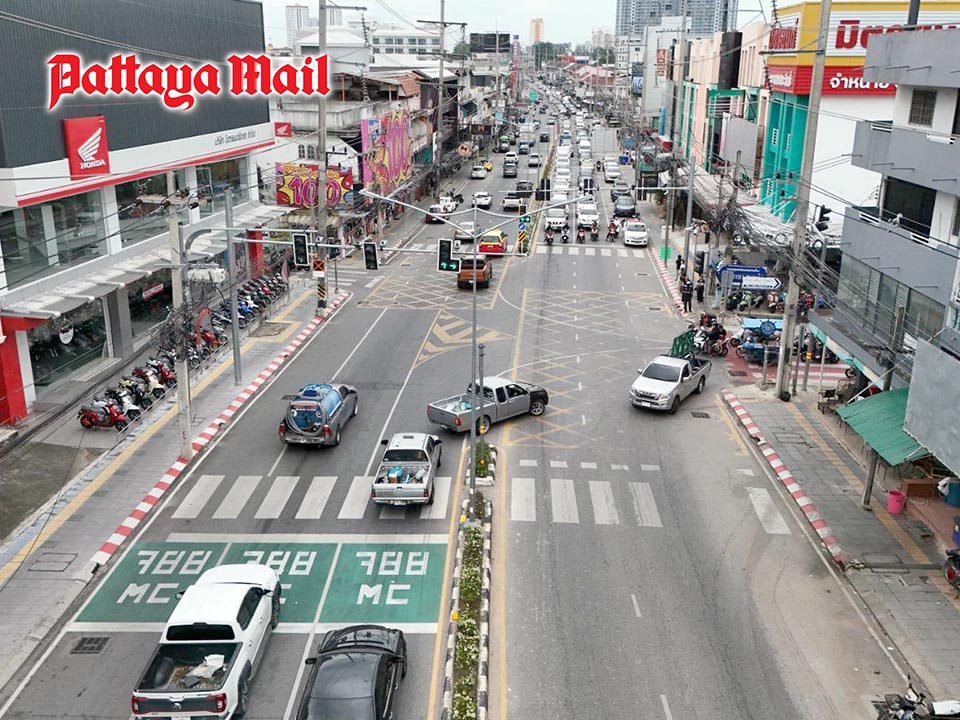
Critics argue that the city should have conducted more thorough studies before implementing the lights. “It’s called ‘forcing through’—they didn’t check traffic patterns and now they’re stuck defending it. Sometimes, human traffic controllers would have been better than this automated system,” commented a local.
Despite the criticism, some users acknowledged the potential safety benefits. “Accidents happen everywhere. If these lights prevent even one serious collision, it’s worth it,” one resident noted, though added that timing adjustments are desperately needed. Suggestions include synchronizing the three intersections, redesigning U-turn lanes, or removing the median to improve flow.
With public sentiment largely negative, city authorities face growing pressure to review or halt the experiment. Residents argue that traffic management decisions must account for real-world conditions, not just theoretical designs or reports.