
PATTAYA, Thailand — Pattaya authorities recently captured nine stray dogs that had been roaming and reportedly attacking vehicles near private parking lots and cargo piers. The animals were sent to the Pattaya Dog Shelter, while some others reportedly escaped into nearby forests, with officials promising continued efforts to catch them.
The rapid response involved the city’s complaint unit, law and order officers, local administration staff, and veterinary teams from the Public Health and Environment Department. Yet, even as the city acts swiftly, public opinion suggests the approach may be missing the bigger picture.
Residents and expatriates alike have weighed in online, questioning the effectiveness and fairness of current measures. One local asked, “How much taxpayer money do we spend on dog food in the shelter every year?” while another expressed concern for the welfare of mother dogs and puppies abandoned along the coast. Comments also called for better enforcement of pet ownership laws and criticized what they see as arbitrary removal: “These dogs never bite anybody; the only reason you take them is because boat people want them gone. There are 11 puppies — did you take them to die in the shelter?”
Such remarks reveal the tension between public safety, animal welfare, and the practical limitations of Pattaya’s current stray dog strategy. While the shelter provides immediate relief for strays on the streets, critics argue that simply capturing dogs without addressing root causes — uncontrolled breeding, community responsibility, and education — fails to create a long-term solution.
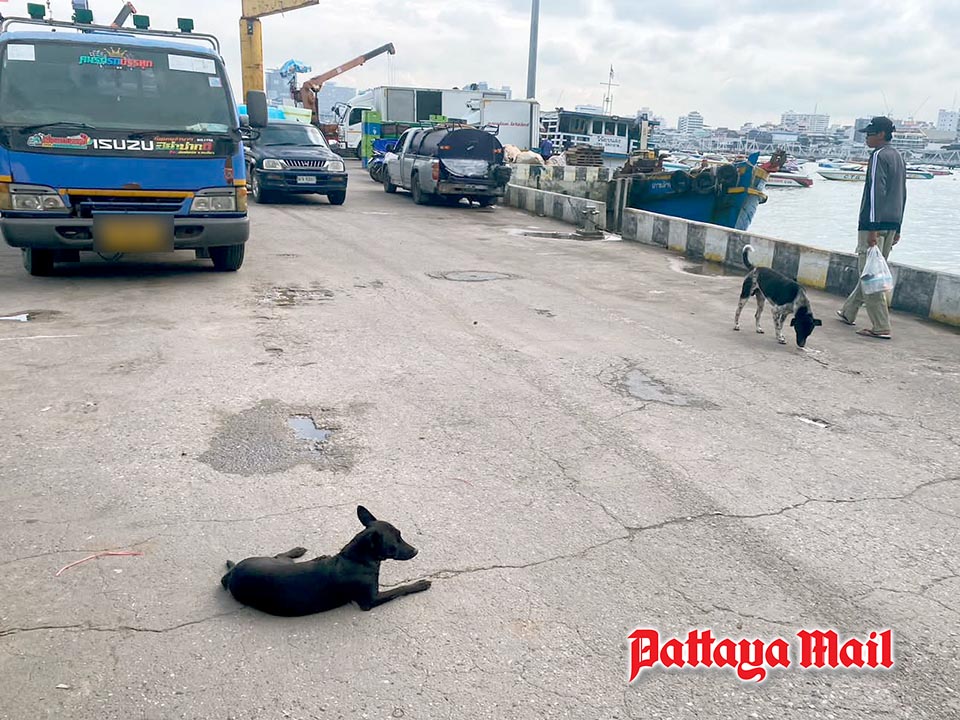
Expats and locals alike have proposed more sustainable approaches, suggesting that mandatory spay and neuter programs, community-driven feeding and monitoring schemes, stricter enforcement of pet ownership laws, and partnerships with NGOs for foster homes and adoption could help. Many point out that Pattaya’s stray dog problem is also a reflection of the city’s status as a tourism hub, where transient populations and local vendors contribute to abandoned pets. A balanced approach, combining humane management with public education and legal enforcement, could help the city maintain safety without harming the animals that have become part of Pattaya’s urban ecosystem.
Residents and expats call on authorities to prioritize dialogue and transparency, showing how each captured or sheltered dog fits into a broader, community-focused strategy — rather than reactive removal that often provokes criticism and moral concern. Pattaya’s stray dog dilemma may be manageable, but only if authorities, locals, and visitors work together to craft a solution that values both safety and compassion. For residents who wish to report stray animals or request assistance, Pattaya City Hall’s 24-hour hotline is 1337.