PATTAYA, Thailand – Pattaya is positioning itself for a major transformation from a tourism-driven city into a regional economic and strategic hub under the Eastern Economic Corridor (EEC), according to Mayor Poramet Ngampichet.
He shared the vision during the Chonburi Real Estate Association’s 2026 annual general meeting and seminar, held under the theme “Adapt, Move Forward, Don’t Wait,” reflecting the region’s response to economic changes driven by the EEC.
The event, held at the Dusit Hotel in Pattaya on April 9, was officially opened by Chonburi Governor Naris Niramaiwong, and brought together stakeholders from across the real estate and business sectors.
Organizers said the meeting highlighted the importance of economic expansion in Thailand’s eastern region, particularly the rapid growth of industrial estates, which is directly influencing the direction of the property market in Chonburi province.
Speaking at the event, the Pattaya mayor outlined a long-term vision for the city as it moves beyond tourism dependence toward a diversified economic structure linked to investment, logistics, and high-value industries.
He said Pattaya’s strategic location—supported by connectivity to Laem Chabang deep-sea port and U-Tapao airport—along with ongoing infrastructure development, positions the city as a future “economic gateway” of the eastern region.
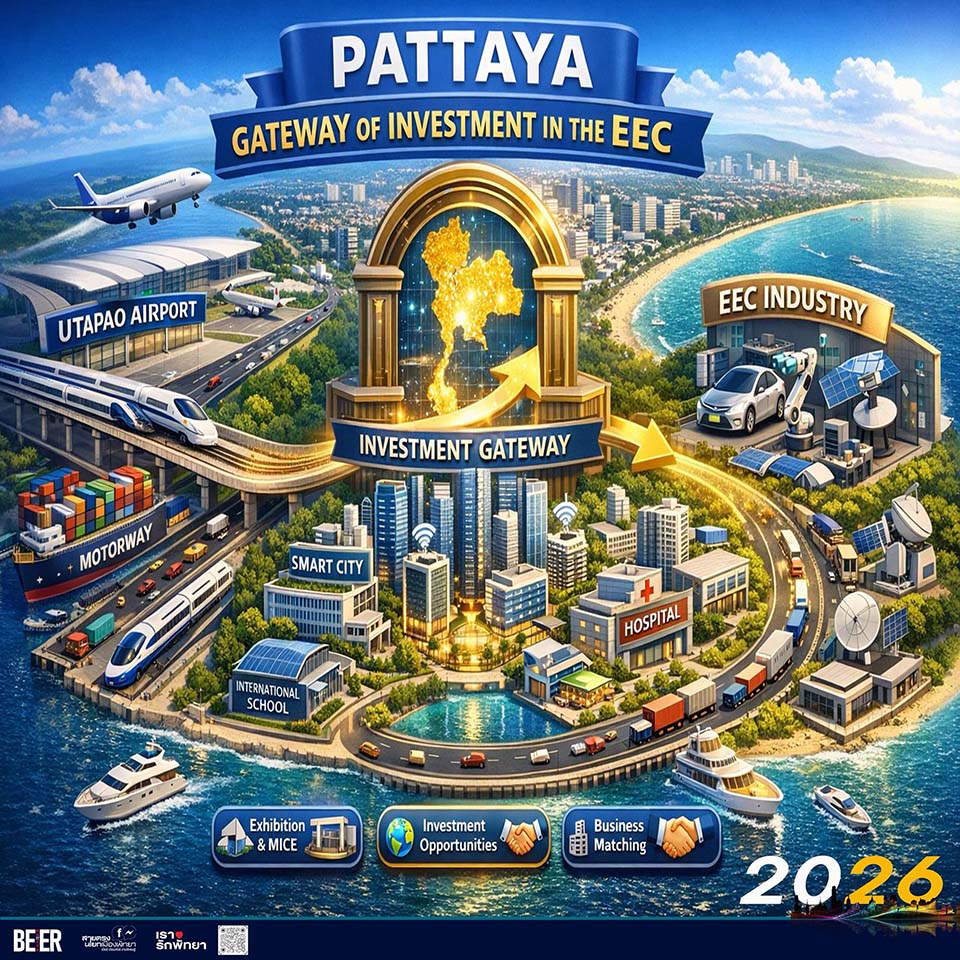
The mayor emphasized that Pattaya must evolve from a “tourism city” into a “living economic city,” where urban systems, infrastructure, and economic activities are integrated to support residents, investors, and visitors alike.
Future development priorities include expanding into high-value service industries such as healthcare, quality tourism, MICE, and the digital economy, while encouraging more diversified investment opportunities.
He also stressed the need to redefine tourism away from volume-based growth toward higher-value, sustainable experiences that balance economic development with social and environmental responsibility.
Improving quality of life for residents remains a core pillar of the vision, including better healthcare access, education, public safety, transport systems, and environmental management. Digital technology was also highlighted as a key tool to improve city efficiency and responsiveness.
However, he acknowledged ongoing challenges such as balancing tourism with livability, addressing uneven economic distribution, and overcoming structural constraints in local governance.
He concluded that Pattaya’s future must create a new balance between growth, fairness, and quality of life, ensuring the city becomes not only a global destination, but also a place where people choose to live long-term.