PATTAYA, Thailand – Motorbike theft has become an increasingly common and deeply frustrating reality for residents across Pattaya and its surrounding districts, with many victims saying that once a bike disappears, the chances of recovery are slim and police follow-up is limited.
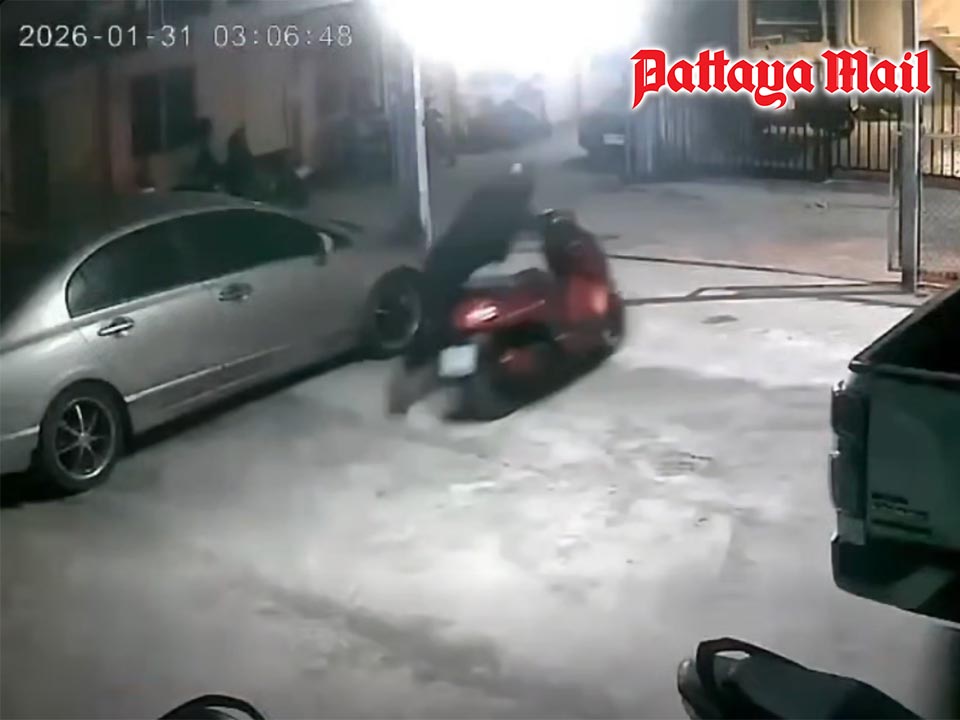
The issue came back into sharp focus after CCTV footage captured two suspects stealing a motorbike in Soi Banglamung 13/1, prompting the victim to appeal publicly for help. What followed was a surge of comments from residents across the city sharing strikingly similar experiences, painting a picture of theft as routine and recovery as rare.
Many residents describe the same sequence of events. A theft is reported, police accept the complaint or record a daily log, and CCTV footage is said to exist. Days turn into weeks, then months, with victims repeatedly told that officers are still reviewing cameras or that certain cameras were not working at the time. In some cases, victims say they were asked to trace CCTV footage themselves.
One resident reported that a motorbike stolen on 24 January 2026 has yet to produce any update, despite the theft occurring at a busy intersection lined with cameras. Others described bikes vanishing within days of purchase, while some said their losses date back years with no resolution. Even when images of suspects are available, residents say investigations often stall.
The problem is not limited to one neighborhood. Residents report frequent thefts in Banglamung, Nongprue, Soi Buakhao, Jomtien, Na Jomtien, Khao Mai Kaew, along Railway Road, Huai Yai, Nong Pla Lai, and Sattahip. Beyond full vehicle thefts, many report stripped parts, stolen helmets, mirrors, wiring, batteries, and bicycles, with some alleging that organized networks dismantle bikes quickly, making recovery nearly impossible.
Underlying much of the anger is the perception of selective enforcement. Many residents say that while parking violations, towing operations, and helmet checks are enforced swiftly, theft cases receive far less urgency. This contrast has fueled frustration and the belief that motorbike theft has become normalized rather than treated as a serious crime.
Some commenters acknowledged that police face heavy workloads and limited resources, but argue that the lack of visible results has emboldened thieves. Several residents openly warned others that once a bike is stolen, it is unlikely to be recovered.
As confidence in enforcement declines, many residents say they have been forced to protect themselves. Parking vehicles indoors, using multiple locks, installing loud alarms, fitting GPS trackers, and avoiding overnight street parking have become common precautions rather than optional safeguards.
Beyond the financial loss, residents say the issue reflects broader concerns about safety in a city that promotes itself as a major international tourist destination. With economic pressures increasing and theft becoming more frequent, many fear the problem will worsen without coordinated action.
Residents are calling for increased patrols, faster coordination of CCTV systems, stronger action against dismantling networks, and clearer accountability. More than anything, they want to see visible results that restore confidence.
For many in Pattaya, the damage goes beyond stolen property. It lies in a growing trust gap between residents and law enforcement, where crimes are reported because they must be, not because victims expect solutions. Until that gap is addressed, motorbike ownership in Pattaya increasingly comes with an unspoken warning — park at your own risk.