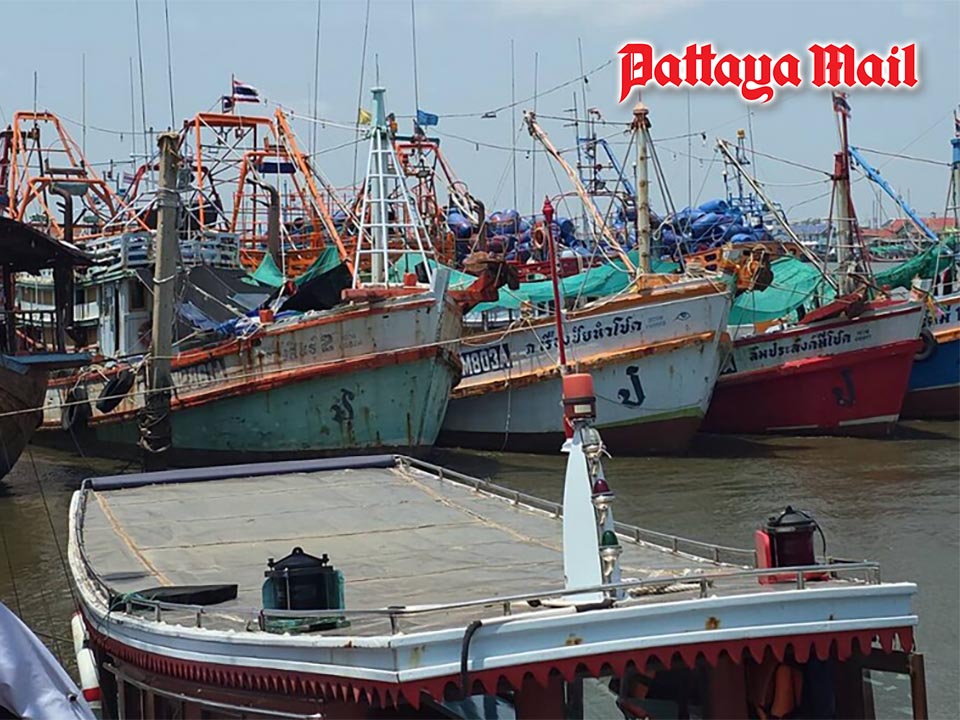
PATTAYA, Thailand – In Pattaya Bay, fishing boats bob idly in the water, their nets untouched, as operators struggle with record-high fuel prices. The stalled fleet reflects a nationwide crisis that threatens both fishermen’s livelihoods and the availability of fresh seafood in Pattaya’s markets and restaurants.
Industry representatives from the Samut Sakhon Chamber of Commerce and the National Fisheries Association report that roughly 30% of the country’s fishing fleet is already docked. Without urgent government intervention to secure fuel for marine and logistics operations, the entire fleet could be forced to suspend activities by the end of March, putting over 100,000 jobs at risk.

Local seafood vendors warn that the disruption will drive up prices and reduce the supply of prawns, fish, squid, and shellfish—key ingredients for Pattaya’s celebrated culinary scene. The shortage could also ripple inland, as fisheries provide raw materials for fishmeal used in pork, poultry, and shrimp farming, further inflating food costs.
Vessel operators describe the situation as critical. Subsidized marine diesel, or “green oil,” has reached record highs of 40.80 baht per liter for cash and 40.90 baht on 10-day credit, making routine operations financially unsustainable. Many boats remain anchored indefinitely, awaiting relief measures.
For Pattaya’s restaurants, markets, and visiting tourists, the fuel crunch threatens not just higher prices but also the reliable availability of fresh seafood, a cornerstone of the city’s identity. Industry leaders are calling on authorities to act swiftly to stabilize marine fuel distribution and prevent a full-scale shutdown that could ripple across the country’s food supply chain.