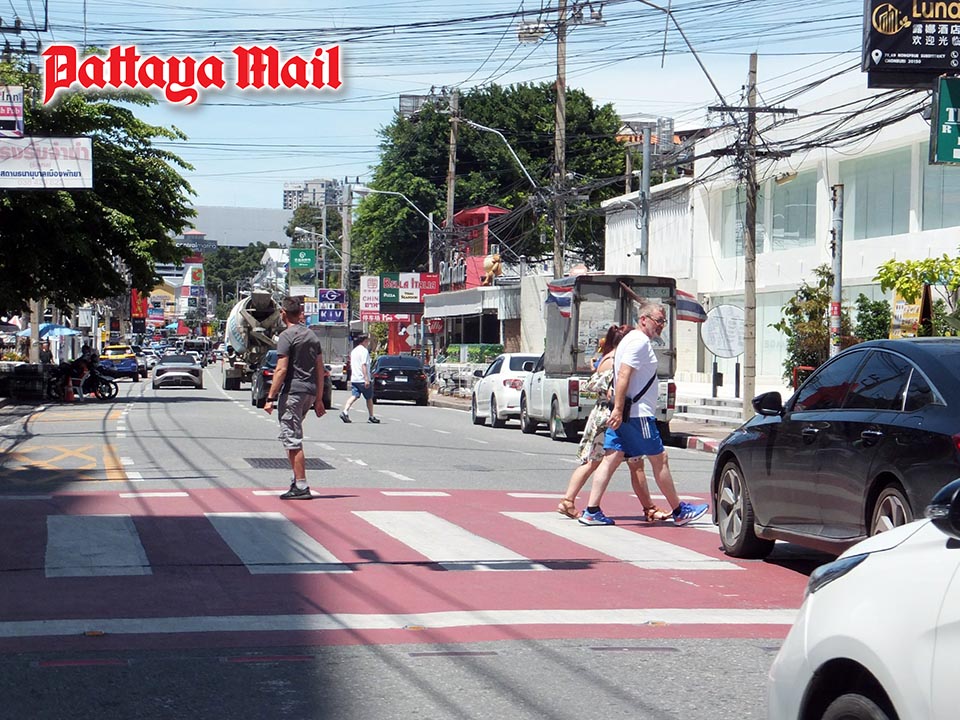
PATTAYA, Thailand – For many foreign visitors and long-term residents, walking in Pattaya has become less about right of way and more about survival. From deafening motorbikes to vehicles driving the wrong way down one-way streets, complaints about road safety — particularly for pedestrians — are growing louder by the day.
Pedestrian crossings, intended to offer a safe passage, are widely dismissed as meaningless. “What pedestrian crossings?” is a common refrain. Many say they are ignored entirely, blocked by parked vehicles, or crossed by traffic even when pedestrians have a green light. Some intersections, such as Thepprasit–Thappraya, are frequently cited as examples where pedestrians and vehicles are given green lights at the same time — sometimes directly beside a police box.
Sidewalks offer little refuge. Visitors complain that they are routinely used as driving lanes or parking areas, forcing pedestrians into traffic. One long-term visitor summed it up bluntly: “Sidewalks are for driving on.”
A major source of anger is enforcement — or the lack of it. Many complain that policing focuses heavily on foreigners’ driving licenses, while large numbers of Thai riders appear to operate without licenses or basic knowledge of road rules. “If you don’t know the rules, that’s not the rider’s fault — that’s the authorities’ fault,” said one frustrated resident, adding that licensing without proper training undermines respect for traffic signs and crossings.
Others point to inconsistent enforcement as the root problem. “Ninety-nine percent of complaints come down to bad policing,” is a sentiment echoed repeatedly. Some even claim traffic enforcement has become more about revenue than safety, describing it as “a cash machine.”
Noise pollution is another flashpoint. Large motorbikes with modified exhausts racing up and down Beach Road, Second Road, and residential streets late at night are described as “unbearable” and “battlefield-level chaos.” Calls for heavy fines and stricter noise laws are common, with many questioning why meaningful action has been so long overdue.
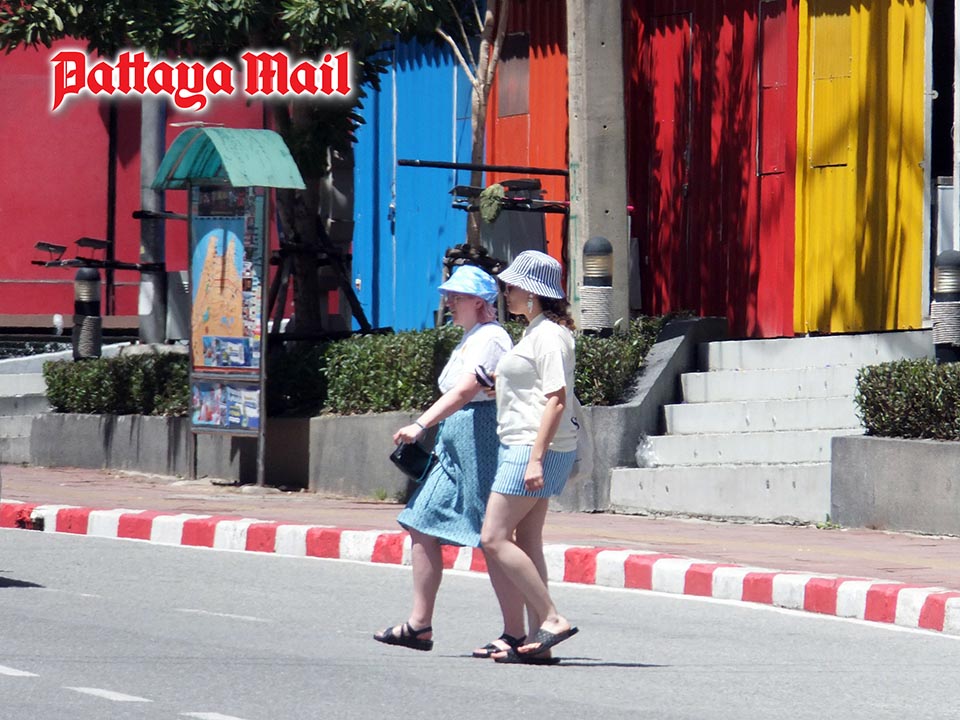
Infrastructure choices also come under scrutiny. Visitors frequently ask why Pattaya lacks pedestrian bridges, especially along Beach Road and Second Road, when Bangkok has long relied on them to separate foot traffic from heavy flows of vehicles. “At least give pedestrians a fighting chance,” one comment read.
The frustration extends beyond Pattaya. Similar complaints are raised about Bangkok and Patong, reinforcing the belief that pedestrian crossings in Thailand are “a waste of paint.” Many say the only way to cross safely is to step out slowly and force traffic to stop — a risky tactic that leaves newcomers especially vulnerable.
Several warn tourists not to assume that crossings or green lights offer protection. “If you trust a pedestrian crossing in Thailand, you’re almost guaranteed to get hurt,” one visitor said. Others caution against confronting drivers directly, warning that challenging reckless behavior can escalate into physical confrontations.
Despite the anger, one message remains consistent: don’t blame the tourists. Many argue the problem lies not with visitors, but with poor traffic management, weak enforcement, inadequate training, and infrastructure that prioritizes vehicles over people.
Until those issues are addressed, pedestrians are advised to rely less on painted lines and traffic signals — and more on constant vigilance — when navigating Pattaya’s streets.