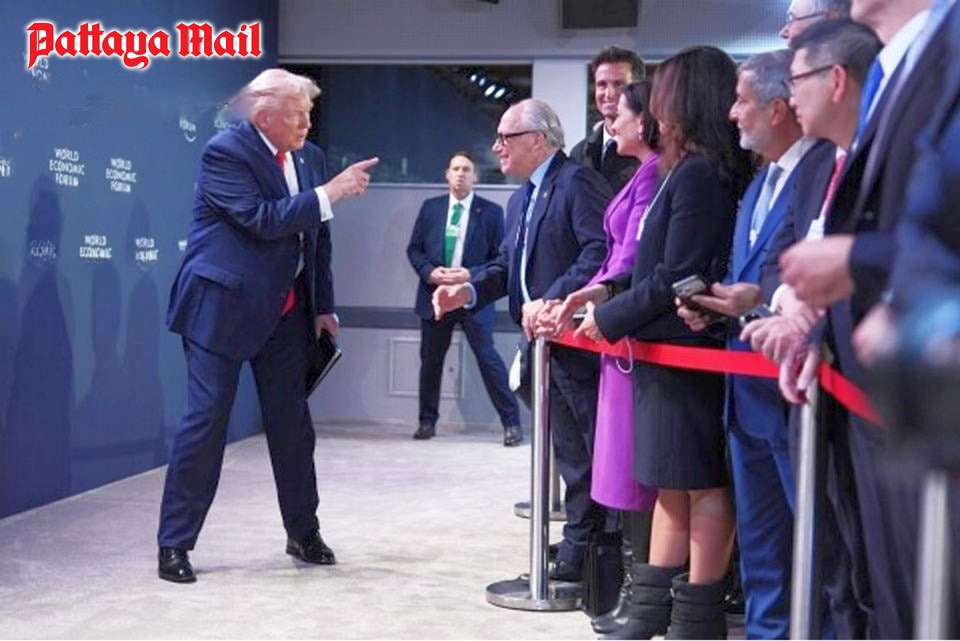
The World Economic Forum 2026 in Davos, Switzerland, held on 21 January, unfolded under an atmosphere far more tense than in previous years. At the center of attention stood U.S. President Donald Trump, whose remarks sent ripples through both international politics and global financial markets. This was not a routine Davos appearance. It was a signal.
Greenland a strategic message, not just a territory
Using the Davos stage, Trump spoke openly about the strategic importance of Greenland to both U.S. and European security. He reaffirmed that the United States intends to pursue negotiations to gain control or influence over the territory in the future. Although he emphasized that military force would not be used, the message was unmistakable. Greenland is now firmly on Washington’s strategic map.
For European nations and NATO allies, this statement created immediate discomfort. Greenland remains a sensitive issue tied to sovereignty and collective security. Even without weapons, the political pressure was real and visible. Trump further highlighted what he described as the unequal financial burden borne by the United States within NATO. Questioning cooperation and burden-sharing, he repeated his long-standing assertion that “the United States gives more than it gets in return.” This rhetoric once again strained relations between Washington and its European partners.
A direct challenge to NATO
Trump’s remarks went well beyond Greenland. They amounted to a direct and forceful critique of NATO itself, one of the core pillars of the Western security framework. By openly questioning the roles, responsibilities, and commitments of member states, Trump prompted strong responses from the European Union and European leaders. As a result, the atmosphere at Davos shifted from dialogue to confrontation. Conversations outside the main sessions, along with dissenting voices among participants, revealed deep fractures in approaches to collective security fractures that are likely to widen in the near future.
Markets react
When Gold Speaks, Fear Is Present. Financial markets reacted quickly and decisively. Gold prices surged past critical psychological levels. In Thailand, gold broke above 70,000 baht per baht-weight, while global prices climbed to over USD 4,800 per ounce, setting new records. This movement reflected a global flight into safe-haven assets, driven by rising geopolitical risk and uncertainty surrounding U.S.-Europe relations. At the same time, stock markets struggled. U.S. and European equities came under heavy pressure, with the Dow Jones Industrial Average dropping more than 700 points. Investors sold off risk assets, the U.S. dollar weakened, and capital continued to flow into gold. This was not speculation. It was protection.
A world entering a phase of uncertainty
The events at Davos reveal several broader trends Global politics are increasingly shaped by confrontation rather than compromise, The United States is asserting strategic power openly and without concession, Relations between the U.S., Europe, and NATO are clearly strained, Greenland has become a symbol of shifting power balances in the Arctic and global security. Markets are responding with caution.
Investors are seeking refuge in safe-haven assets, while volatility in equities and currencies reflects political and economic anxiety occurring simultaneously. Davos 2026 was no longer just an annual economic forum. It became a focal point for geopolitical flashpoints, NATO tensions, and global uncertainty, sending shockwaves across markets worldwide. These developments will influence geopolitics, global trade, currencies, and investment decisions throughout 2026.
Why expats in Thailand should pay attention
What happened at Davos is not distant international news with no relevance to daily life in Thailand. It is a structural warning with direct implications for the financial security and quality of life of expats particularly retirees. Many expats in Thailand rely on pensions, savings, overseas investments, and income denominated in foreign currencies. All of these are closely tied to the stability of the global financial system. In a period of heightened uncertainty, money that once felt secure can suddenly become difficult to access.
Why Cash Matters Again. One message echoed repeatedly at Davos and among global financial advisors “Liquidity matters again” For expats, holding cash does not mean abandoning investments. It means maintaining the ability to function independently without excessive reliance on any single system. Key risks include Currency volatility, Tighter cross-border banking and transfer controls, Sanctions or international financial restrictions, Emergencies requiring immediate access to funds in the country of residence, Maintaining sufficient local cash reserves is not outdated. It is basic risk management.
Modern Conflict Begins With Finance, Not Gunfire. Most expat especially retirees have never experienced a world war firsthand. What must be understood is that modern conflict does not begin with gunfire. It begins with sanctions, payment system disruptions, restrictions on capital movement, and volatility in energy, food prices, and currencies. Even without direct military conflict in Southeast Asia, the economic consequences can quickly affect daily life from rising living costs to uncertainty about accessing one’s own money.
The unavoidable truth is not that the world is collapsing. It is that the rules of the world are changing.