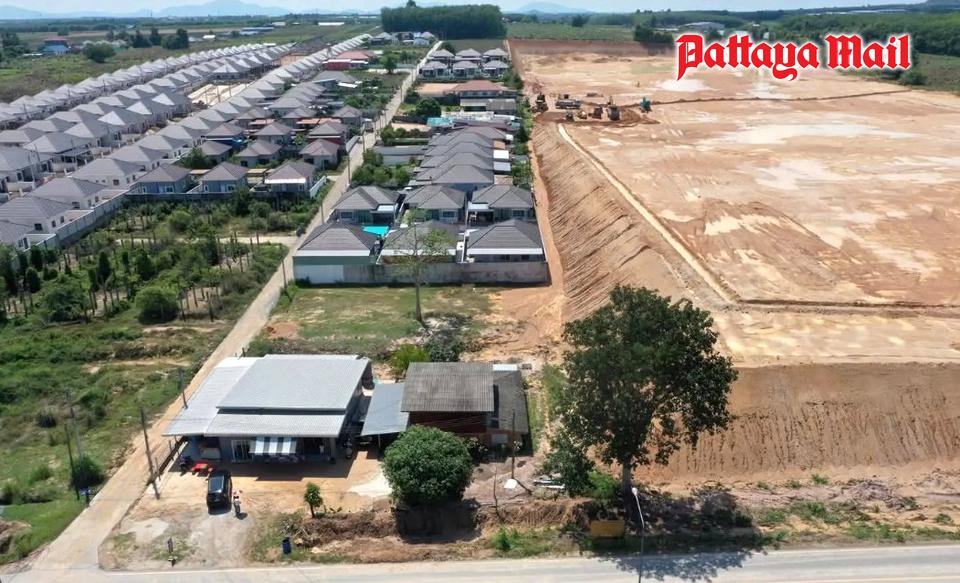
PATTAYA, Thailand – Amidst the quiet cassava plantations and the sprawling landscapes connecting Chachoengsao, Chonburi, and Rayong, a radical transformation has taken place over the past few years. What were once peaceful agricultural fields have been carved into massive construction sites, some spanning 500 to 1,000 rai. On these plots, industrial warehouses and factories have risen at a pace that defies logic, driven by land prices that have skyrocketed to a staggering 7 million THB per rai a figure far beyond the reach of local investors.
But today, this landscape of ambition is facing a fierce storm a nationwide crackdown on “Nominee Shareholders.” The shadow empires that once operated in the dark are now being exposed as monuments to greed, teetering on the brink of abandonment.
The rise of the “Zero-Dollar” industrial ecosystem
In the early stages, these foreign capital groups moved with a calculated strategy. They avoided the official industrial estates under the Industrial Estate Authority of Thailand (IEAT), where regulations are strict and costs are transparent. Instead, they targeted “Non-IEAT” zones, using Thai nominees to circumvent ownership laws.
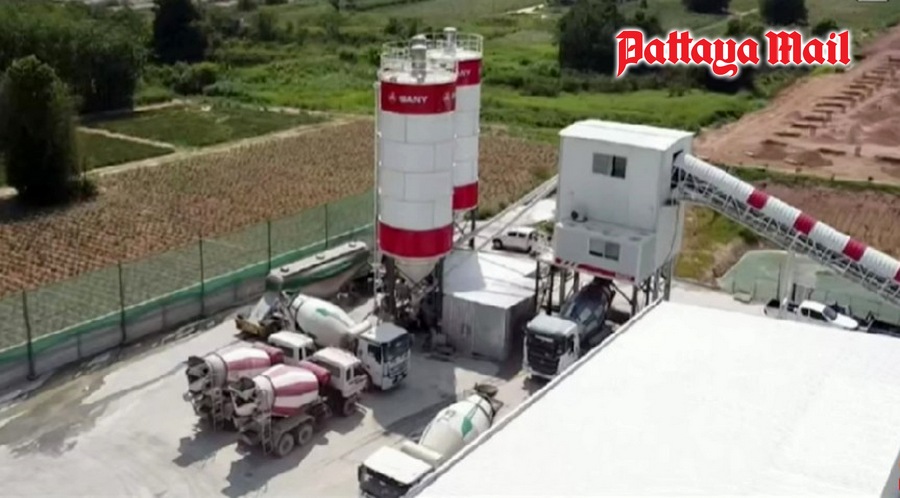
Their goal was to establish what has been dubbed a “Zero-Dollar Industrial Ecosystem.” By driving land prices up to 7 million THB per rai, they created an artificial scarcity. Within these private walls, they built an entirely closed loop construction materials were shipped from China, Chinese contractors managed the sites, and the facilities were registered as “warehouses” to bypass environmental regulations and Factory License (Ror.Ngor. 4) requirements—despite being secretly outfitted for heavy manufacturing.
An enclave of foreign labor, the invisible Chinatown
What locals see today is the birth of an “Independent State” within Thai borders. The area surrounding these projects has morphed into a mini-Chinatown, adorned with foreign-language signage and shops catering exclusively to their own. The most striking and troubling aspect is the labor force. These sites do not hire from the local Thai community. Instead, they operate on a complete import model
- Chinese skilled labor: Foremen, technicians, and machine operators are brought in directly from China, often on tourist or improper visas.
- Migrant underclass: For manual labor, thousands of Myanmar workers are funneled through cross-border brokerage networks, living in closed camps behind factory walls.
- Closed circulation: The money never touches the local economy. Workers eat at Chinese-owned canteens, buy from Chinese-owned shops, and use services within their own network. The wealth circulates entirely within the foreign group, leaving the surrounding Thai community invisible.
The Thai perspective “we gain nothing”
The most painful outcry from locals to the authorities is the realization that Thailand gains nothing from these “Zero-Dollar” operations. While the land was bought at a premium, the long-term cost is devastating
- Lost Tax Revenue: By misreporting factory activity as mere warehousing and using nominees, these groups evade massive amounts of corporate and business taxes.
- Resource Depletion: These factories consume electricity, water, and infrastructure funded by Thai taxpayers, while leaving behind industrial waste and pollution for the community to manage.
- Stolen Opportunity: With every component from raw materials to the labor force sourced from China or Myanmar, Thai SMEs and local workers are reduced to mere spectators in their own home.
The panic sell, an empire scrambling to exit
The tide began to turn as the Department of Business Development (DBD) and anti-money laundering authorities deployed AI to track the financial trails of nominee shareholders. Over 20,000 suspicious companies are now under the microscope, with the EEC as ground zero.
This pressure has turned confidence into panic. The same groups that once aggressively bid 7 million THB per rai are now realizing their assets have become “Time Bombs.” If a nominee link is proven, assets are seized, and illegal factories are shuttered.
We are now witnessing a “Panic Sell” on a massive scale. Land and half-finished warehouses are being dumped onto the market as owners scramble to exit. However, there are few buyers. Legitimate investors are wary of the “legal stain” attached to these properties—illegal zoning, unpermitted buildings, and questionable financial origins.
A costly lesson
Today, the EEC’s outlying areas are left with the scars of unchecked greed. The 7 million THB land has lost its liquidity, and the abandoned warehouses stand as rusting skeletons of a broken dream.
This is more than just a real estate bubble; it is a wake-up call regarding the loss of local economic sovereignty. The Thai people have been squeezed out of the loop by a predatory model that takes everything and leaves only ruin. The challenge now lies with the authorities to uproot this system entirely, before the nation’s most vital economic zone becomes nothing more than a ghost colony for exploitative foreign capital.