
BANGKOK, Thailand – Returning to Bangkok recently after a relaxing week in Hua Hin, I found myself travelling along the final stages of the long-awaited Rama II Highway improvements.
For years, this route has been synonymous with delays, endless construction work and, regrettably, a number of serious accidents. Yet on this journey, it was immediately apparent that the project was finally approaching completion. Fresh road markings stretched ahead, new signs stood prominently in place, streetlights illuminated the route, and the entire highway appeared transformed.
Then I noticed the Cat’s Eyes. Hundreds of them, carefully embedded in the road surface, ready to guide motorists safely through the darkness. That simple observation prompted a question. Given the enormous number of Cat’s Eyes installed on roads around the world, surely the inventor must have amassed a considerable fortune.
Curiosity led me online and, unexpectedly, back to my home county of Yorkshire in northern England. The inventor was a remarkable Yorkshireman named Percy Shaw from Halifax. According to the well-known story, Shaw was driving along a fog-shrouded Yorkshire road in the early 1930s when the reflection of a cat’s eyes caught in his headlights. The gleaming eyes alerted him that he was drifting dangerously close to the edge of the road. That moment of inspiration led him to develop the reflective road stud that would later become known simply as Cat’s Eyes.
He patented the invention in 1934 and founded Reflecting Roadstuds Ltd the following year. Over the decades, variations of Shaw’s original design spread throughout Britain and eventually across the globe. Considering that a single kilometre of roadway can contain dozens of reflective studs, the number installed worldwide over the past ninety years must surely total hundreds of millions.
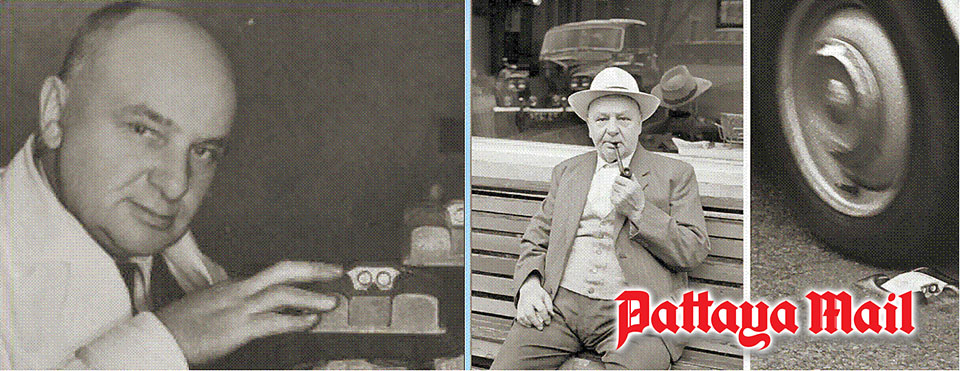
With such widespread adoption, one might assume Shaw became fabulously wealthy. Surprisingly, he did not. When he died in 1976, his estate was valued at approximately £193,500 — equivalent to roughly £1.5 million to £2 million in today’s money. While certainly a respectable sum, it falls far short of the vast fortunes associated with many inventors whose creations became global standards.
Perhaps even more remarkable was the way Shaw chose to live. Descriptions of him portray an eccentric but modest individual. He spent his entire life in Halifax, never married, preferred old woollen pullovers, removed carpets and curtains from his house, and lived a generally frugal existence. Although he owned a Rolls-Royce, he was not known for extravagant spending or displays of wealth. That may be one of the reasons his story remains so compelling.
A practical Yorkshireman identified a problem, devised an elegant solution and, in doing so, helped make roads safer for millions of people. His invention became so commonplace and effective that most drivers rarely give it a second thought.
As I continued my journey towards Bangkok, it occurred to me that one of the final touches on the newly upgraded Rama II Highway owed its existence to a flash of inspiration on a foggy Yorkshire road nearly a century ago. Not a bad legacy for a lad from Halifax.