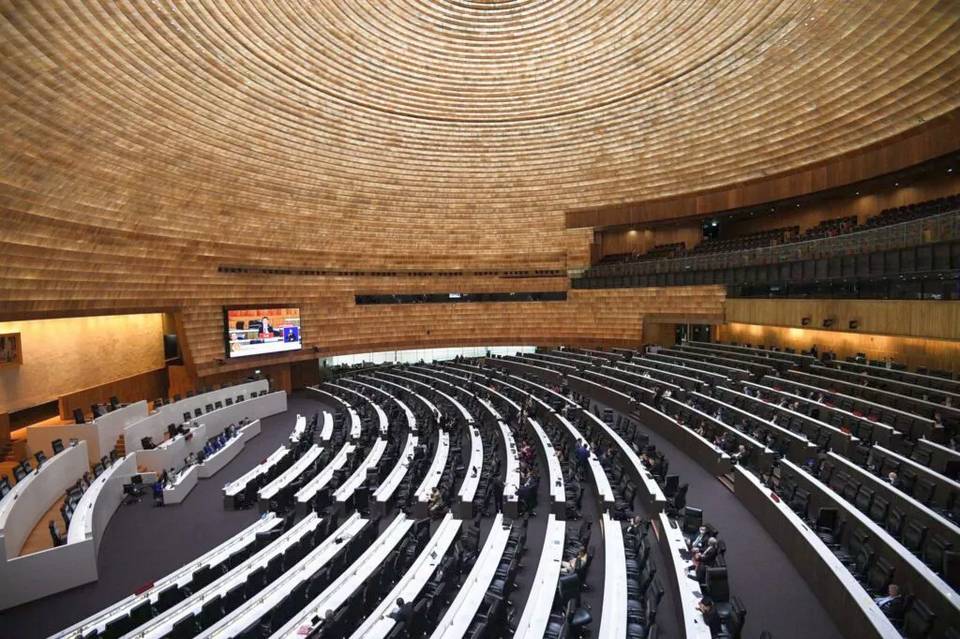
BANGKOK, Thailand – With the fall of prime minister Paetongtarn Shinawatra following the constitutional court ruling, there is no easy answer to Thailand’s constitutional crisis. It is open for the ruling Pheu Thai party to struggle on if it can find enough votes in parliament. It would need the backing of the 143-seat Peoples Party (PP) to guarantee more than half the 500 seats in the assembly.
The problem is that PP wants a general election now or as soon as possible since it senses it would benefit electorally as suggested by public opinion polls. But Thaksin-backed Pheu Thai has lost political ground since the 2023 general election and would likely face voter disillusionment and collapse, even in its traditional northern strongholds. To try and win PP support for an ongoing administration, Pheu Thai has promised to hold a general election not later than 4 months ahead. Many PP seat holders doubt that promise would be honored in a memorandum of understanding.
Another option is for PP to sign up for a deal with the Bhumjaithai party and its leader Anutin Charnvirakul. This would be an unwieldly coalition as Bhumjaithai disagrees with some PP policies. But Anutin has also agreed that a general election can be held early next year. PP parliamentarians are suspicious that, at the last minute, Bhumjaithai could team up with rival Pheu Thai to avoid going to the country. At the 2023 election, PP won the largest number of seats but was frozen out of office in the ensuing deal making.
Since there is no time limit set in law for the negotiations, the political impasse could drag on for weeks and involve smaller parties too. Parliament might suddenly collapse leading to a general election. Some observers warn that another military coup might be in the offing following the precedents in 2006 and 2014. The Thai army sees itself as the guardian of the monarchy and the national interest.
Political instability is already proving to be a drag on Thailand’s efforts to revive its economy which is suffering from domestic debt, disappointing receipts from tourism, Trump‘s tariffs, border conflicts with Cambodia and a near-12 percent decline this year in the stock exchange index. The next few days are likely to set the agenda for the next few months. Thais hope that 2026 will be calmer for south east Asia’s second biggest economy.