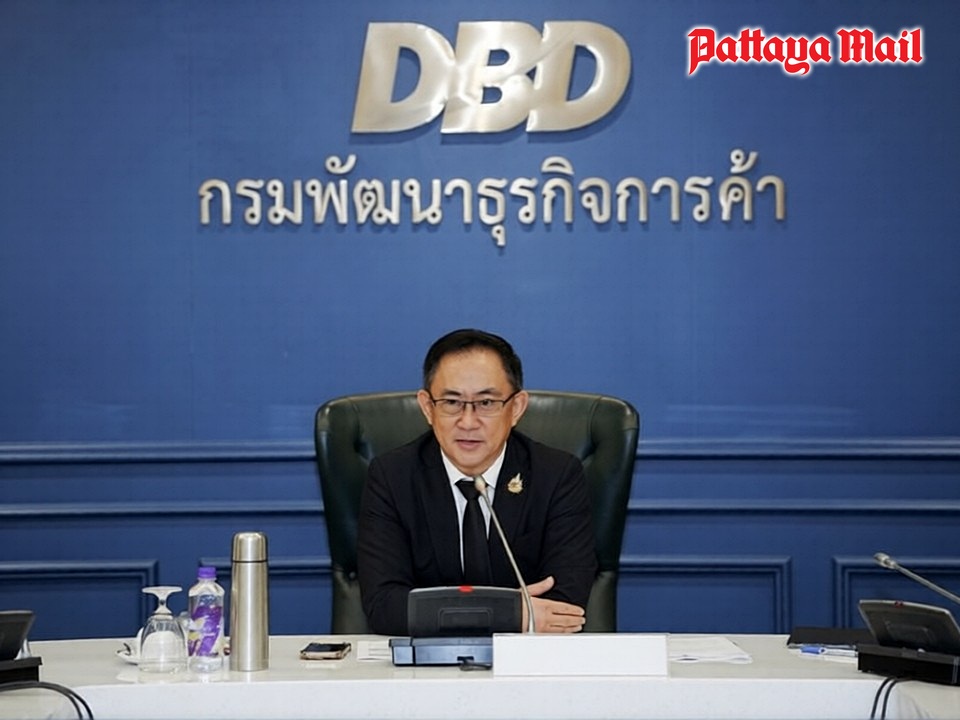
PATTAYA, Thailand – Thailand is entering a new phase in its approach to foreign business regulation. Two recent developments DBD Order No. 1/2569 and the multi-agency enforcement agreement signed on April 29 signal a decisive shift from tolerance to coordinated enforcement. For foreign investors in Thailand, particularly in areas like Pattaya and the Eastern Economic Corridor, this is not just another regulatory update. It is a structural turning point.
From grey zone to direct liability
For many years, the use of nominee shareholders existed in what could be described as a legal grey area. While technically prohibited under Thai law, enforcement was often inconsistent, and many foreign investors relied on structures arranged by intermediaries, agents, or even legal advisors at the time.
That reality has now changed
DBD Order No. 1/2569 introduces a formal declaration requirement at the point of company registration or amendment. Directors and shareholders must now certify that
▪ all shareholders are genuine investors,
▪ share capital has been properly paid, and
▪ no nominee arrangements are in place.
This requirement transforms nominee structures from a matter of interpretation into one of direct legal exposure. It is no longer just about how a structure is designed, but about what individuals formally declare to the authorities.
A surge in uncertainty among foreign investors
On the ground in Pattaya, the impact is immediate. Foreign investors are no longer asking how to structure around the law they are asking whether they are already in violation of it. In recent weeks, there has been a clear increase in requests for urgent legal advice. Many of these inquiries come from long-term residents and business operators who previously believed their arrangements were acceptable.
The most common concerns are
▪ Is my current structure legal?
▪ Is my property secure?
▪ What happens if my company is investigated?
This reflects a clear shift in mindset from complacency to concern.
Property structures under scrutiny
Nominee structures are not limited to business operations. A significant portion has been used in property holding, particularly condominium ownership through company structures designed to bypass foreign ownership limits. These arrangements are now under increasing scrutiny. As enforcement intensifies, the risks extend beyond corporate compliance to the security of the underlying asset itself. This has direct implications for both the real estate market and investor confidence.
EEC and large-scale land issues
At a larger scale, similar concerns are emerging in the Eastern Economic Corridor (EEC), where large land acquisitions sometimes ranging from hundreds to over a thousand rai have been linked to complex or non-transparent structures. The issue is not foreign investment itself, which remains essential to Thailand’s economic growth, but whether such investment is conducted within a clear and lawful framework.
Enforcement without alternatives?
The April 29 agreement between 21 government agencies marks the beginning of a more coordinated enforcement phase.
However, an important question remains
Are legal alternatives keeping pace with enforcement? At present, many of the solutions foreign investors have long sought such as clearer ownership frameworks or long-term legal certainty in asset holding remain limited or underdeveloped.
This creates a structural imbalance
▪ Non-compliant structures are being dismantled
▪ But practical alternatives remain limited
Without addressing this gap, there is a risk that the system may be perceived as restrictive rather than enabling.
The way forward
Thailand’s direction toward stronger enforcement is understandable and necessary. Improving transparency and addressing misuse of legal structures are important steps forward. However, enforcement alone is not enough. To remain competitive, Thailand must also provide clear, practical, and accessible legal pathways for foreign investors. The goal should not only be to eliminate problematic structures, but to replace them with more sustainable and transparent alternatives. If this balance can be achieved, Thailand has the opportunity to strengthen its position as a credible and stable destination for foreign investment in the years ahead.