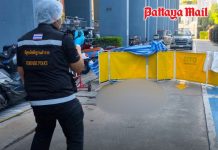
BANGKOK, Thailand – Between 14 and 15 January 2026, Thailand experienced major losses from two serious crane-related accidents occurring within less than 48 hours. The first incident took place in Nakhon Ratchasima province, when a crane from a high-speed rail construction project collapsed onto a special passenger train that was passing through the area. The incident resulted in at least 32 fatalities and more than 60 injuries. Many of the victims were ordinary passengers with no connection to the construction site, yet they were exposed to life-threatening risks from activities that should have been subject to the highest levels of safety control.
Just one day later, a similar incident occurred on Rama 2 Road, where a crane and concrete beams from an elevated roadway construction project collapsed onto an active traffic lane. The collapse caused additional deaths and injuries. Images of concrete debris and steel structures crushing vehicles on one of the country’s main highways became a stark reminder that construction-related risks in Thailand are not confined to workers within project sites, but extend directly to members of the public going about their daily lives.
These two incidents were not isolated events. Rather, they form part of a recurring pattern of accidents associated with large-scale construction projects in Thailand, particularly infrastructure projects involving public roads and transport systems. Rama 2 Road, in particular, has long been cited as a problem area, with repeated construction-related accidents over several years. These have included crane collapses, snapped slings, falling concrete beams, and structural components dropping onto vehicles and road users, resulting in multiple deaths and injuries throughout the prolonged construction period.
A closer examination of the two recent cases shows that Italian-Thai Development (ITD) was reported as the main contractor for both the Nakhon Ratchasima rail project and the Rama 2 elevated road works. This has raised concerns about how contractor accountability is addressed in Thailand, especially when large companies involved in national-level projects experience multiple serious accidents without clear consequences for their long-term business standing or future access to public contracts.
Under the current regulatory framework, contracting authorities are legally permitted to propose the blacklisting of contractors who fail to comply with contractual obligations. However, in practice, no contractor has yet been blacklisted specifically as a result of a serious construction accident causing loss of life. This gap has meant that enforcement remains largely reactive, focusing on responses after incidents occur rather than preventing risks at a systemic level.
Following the most recent tragedies, the Thai government has accelerated efforts to introduce a “Contractor Rating Book” system. This system is intended to track and score construction companies, particularly in relation to safety performance. Companies would face point deductions for negligence leading to accidents, and poor safety ratings could result in restrictions on their ability to bid for future government projects. The initiative reflects an attempt to shift procurement practices away from a primary focus on price and technical capacity toward a broader assessment that includes long-term risk management and safety responsibility.
Comparable systems have been in place in other countries for many years. In the United States, the Occupational Safety and Health Administration (OSHA) has the authority to investigate crane accidents and impose penalties on contractors. In one example from New York City, OSHA fined a contractor more than USD 155,000 for violations of safety regulations following a crane collapse. Beyond financial penalties, safety violations are recorded as part of a company’s safety profile, which can directly affect its eligibility for future projects and its reputation within the procurement system.
In the United Kingdom and across much of Europe, the Health and Safety Executive (HSE) enforces strict safety standards for the installation and operation of cranes. Companies that fail to comply may face severe civil and criminal penalties, as well as mandatory compliance with standards such as BS EN 14439. Requirements typically include pre-work inspections, site-specific risk management plans, and continuous reporting and monitoring throughout the construction process.
International experience demonstrates that construction safety is treated not as an optional cost, but as a core component of corporate capability and credibility. Rating systems and strong legal enforcement ensure that a single accident does not end with compensation alone, but has lasting implications for a company’s future operations.
The crane collapses in Nakhon Ratchasima and on Rama 2 Road therefore serve not only as individual tragedies, but as a warning that Thailand’s construction safety framework still contains significant gaps in oversight, risk assessment, and contractor accountability. Strengthening legal enforcement and implementing an effective Contractor Rating system may represent an important first step toward reducing accumulated risks and preventing similar losses from recurring in the future.