PATTAYA, Thailand – There is a certain tension in the air one that doesn’t announce itself with headlines, but quietly seeps into the daily arithmetic of life. Across continents, governments are beginning to question a long-held assumption Was GDP ever the right measure of prosperity? For decades, rising GDP was treated as a proxy for success. Higher income per capita meant progress. Growth meant improvement. But today, a different reality is emerging one that feels far more personal than any macroeconomic indicator. Because while incomes have risen in many parts of the world, so too has the cost of simply existing.
A six-figure salary that once signaled comfort now barely sustains stability. Housing costs stretch beyond reason. Healthcare once a public safety net has become a waiting game with a price tag. Even the most basic necessity, like bottled water, can feel disproportionately expensive. The paradox is stark: people are earning more, yet living less. Quality of life, it turns out, does not scale linearly with income.
The Turning Point: When People Start Moving, Not Just Thinking
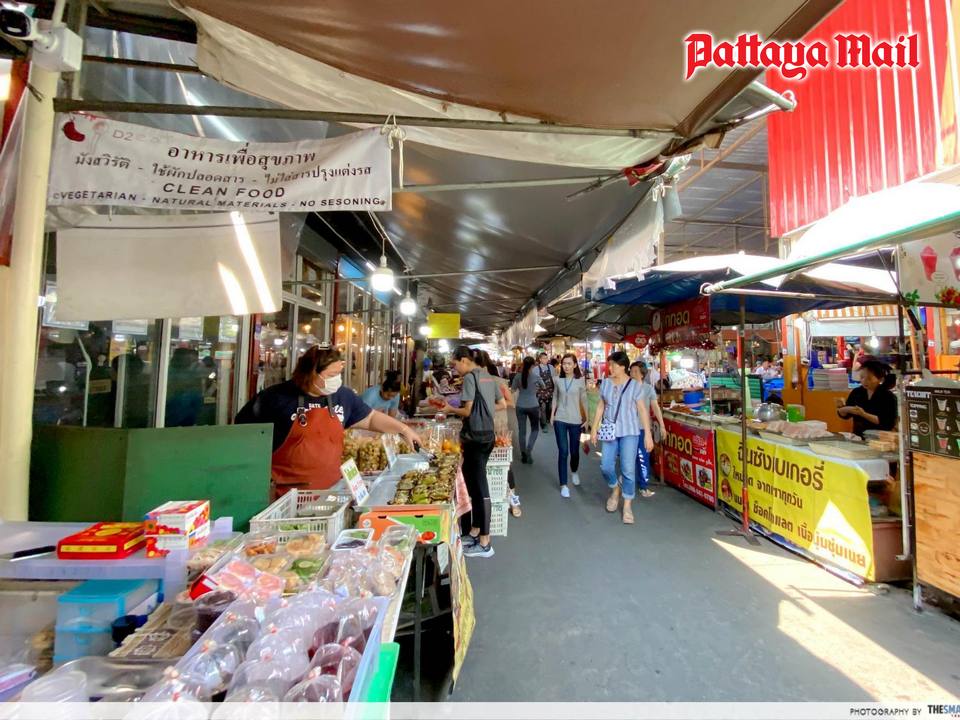
In this environment, behavior begins to shift. People are no longer just questioning system they are relocating away from them. And this is where Thailand quietly enters the conversation not as a headline, but as a lived experience. For many who arrive, Thailand is not just a destination. It becomes a realization. Here, money behaves differently. It stretches. It breathes. It regains meaning. Daily life is not a negotiation with inflation, but a rhythm that feels proportionate. Meals are accessible, healthcare while not free is efficient and immediate, and the overall cost of living allows for something increasingly rare in developed economies: financial dignity. But the story goes deeper than affordability.
The Unexpected Variable: A Society That Works Without Over-Engineering
One of the most surprising observations for many foreigners is this Thailand is not a country where English is widely spoken compared to global hubs. By conventional standards, this should create friction barriers to integration, inefficiencies in communication. And yet, the opposite happens. Thailand functions. Not perfectly but harmoniously. There is an unspoken infrastructure at play: cultural adaptability, social tolerance, and an intuitive understanding of coexistence. Foreigners do not need perfect language alignment to find belonging. Systems may appear less rigid, but they are often more forgiving and in many ways, more human. It is a different kind of efficiency. Not engineered but evolved.
Rethinking “Wealth” From Accumulation to Sustainability
What Thailand represents, increasingly, is a shift in the definition of wealth. Not wealth as accumulation but wealth as sustainability. The ability to live well without overextending. The ability to access services without systemic friction. The ability to participate in an economy that has not priced out its own people or its guests. This is not accidental. Thailand’s economic structure rooted in domestic consumption, tourism, and a deeply embedded informal economy has created resilience. While not immune to global pressures, it has not fully surrendered to the hyper-financialization seen elsewhere. And as global systems begin to strain under their own complexity, this kind of balance becomes not just attractive but strategic.
The Baht: Strength Beyond Speculation
What is particularly remarkable is how this translates into currency behavior. The Thai Baht does not derive its strength from aggressive global positioning or speculative dominance. It is not a currency driven by ambition it is a currency supported by equilibrium. A steady inflow of tourism. A consistent base of foreign residents.
Strong reserves and controlled financial policies. These elements create something rare in today’s volatile environment: organic strength. The Baht is not trying to be powerful it simply is.
After the Strait: A New Economic Geography
In a world increasingly shaped by geopolitical disruptions where key routes like the Strait of Hormuz face uncertainties the global economic map is being redrawn. Supply chains are reconsidered. Capital flows are rerouted. Investors and individuals alike are searching for stability not just in markets, but in places. Thailand, quietly but steadily, is positioning itself within this shift. Not as a replacement for global financial centers but as an alternative model. A place where economic participation does not require systemic exhaustion. A place where capital can reside, not just circulate. A place where life and economy are not in constant conflict.
Conclusion: The Silent Advantage
Thailand does not declare itself as the future of global economics. It doesn’t need to. Because its advantage lies precisely in what others are beginning to lose balance. In a world where wealth has become abstract, Thailand offers something tangible. In a world where growth has become aggressive, Thailand offers something sustainable. And in a time where people are no longer chasing opportunity, but redefining it, Thailand stands not as an escape but as an answer. A quiet one. But increasingly, the most powerful kind.