PATTAYA, Thailand – Thailand’s beaches are among the most beautiful in the world, drawing millions of visitors each year. While the waters are generally safe for swimming, snorkeling, and diving, travellers are reminded to take extra care during certain times of year when venomous jellyfish and other marine animals may be present. Incidents in Pattaya occur very rarely.
Jellyfish in Thai Waters
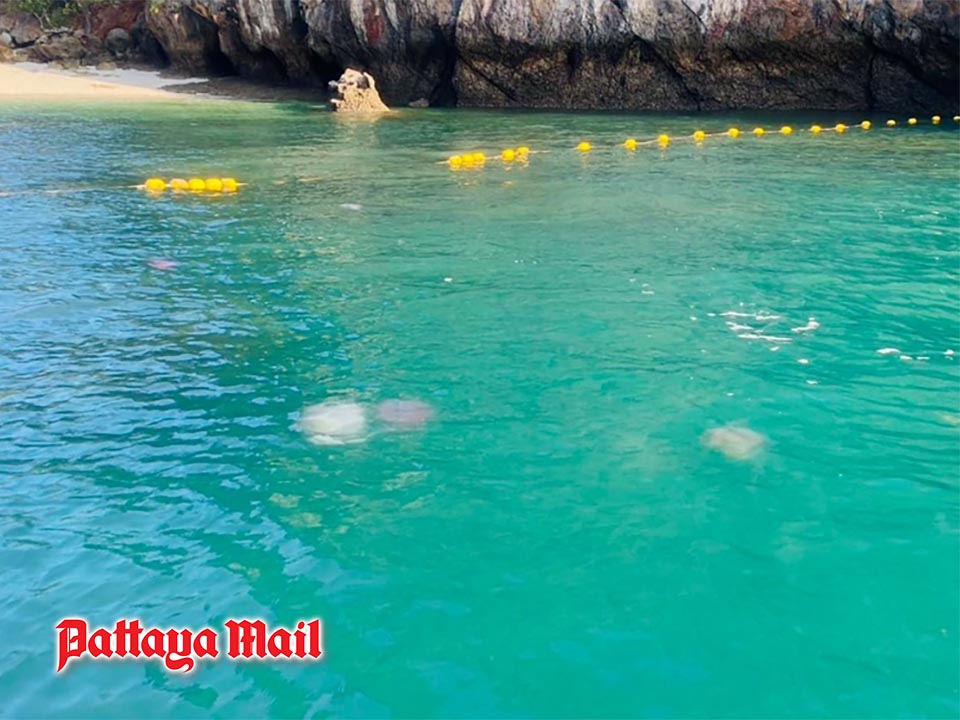
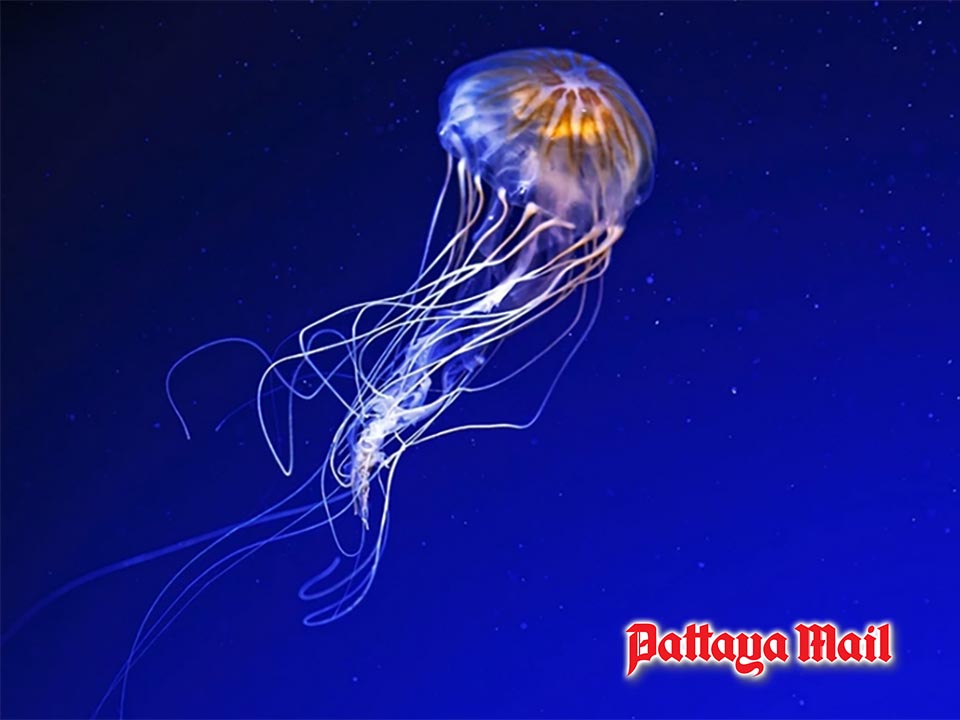
Several species of jellyfish can be found seasonally in Thailand. Most are harmless, but some – such as the Box Jellyfish – can pose a serious risk. They are more commonly seen during the monsoon months, when winds and currents bring them closer to shore.
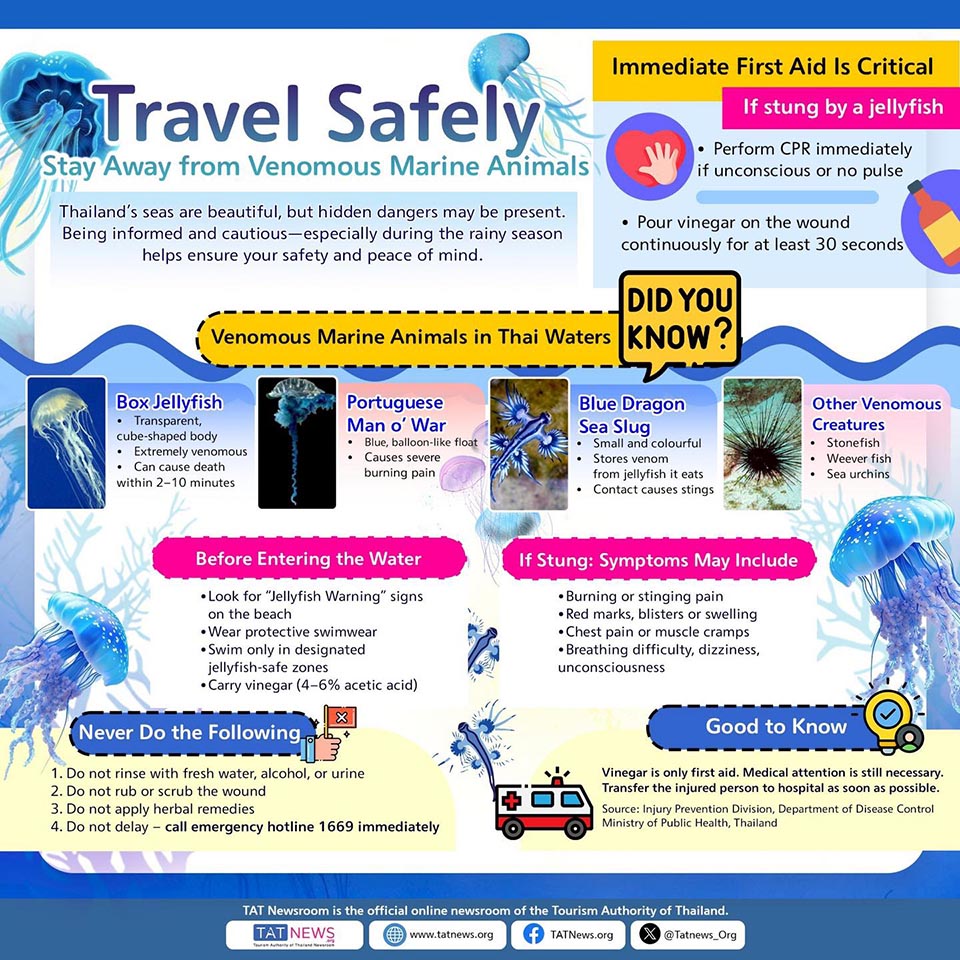
In addition to jellyfish, swimmers should be mindful of other venomous sea creatures occasionally found in Thai waters. These include the Bluebottle (a type of Portuguese man o’ war with a balloon-like float), the striking but dangerous Blue Dragon sea slug which accumulates jellyfish venom from its prey, as well as creatures such as stonefish, weever fish, and sea urchins.
Preventive Measures
Beach resorts across Thailand have stepped up efforts to keep visitors safe. Warning signs are posted where necessary, and First Aid stations are available along many popular beaches. In some areas, protective nets are installed, though this is not possible everywhere due to coastal conditions.
Visitors are strongly advised to follow posted notices and the advice of lifeguards or local operators. Avoid swimming in the sea after heavy rain, at night, or outside of designated safety zones marked by buoys. Protective swimwear such as rash guards, lycra suits, or long-sleeved clothing can reduce the risk of being stung. Even jellyfish stranded on the beach can still deliver a painful sting, so it is best not to touch them.
What To Do in Case of a Jellyfish Sting
Though incidents are very rare, it is important to act quickly and calmly if a sting occurs. Remove the injured person from the water and call the national emergency hotline on 1669. Keep the victim as still as possible to limit the spread of venom. Do not rub the wound or wash it with fresh water, as this can worsen the effects.
Vinegar should be poured over the affected area for at least 30 seconds. Hotels, beachside restaurants, and dive operators are required to keep bottles of vinegar on hand, but it is advisable for visitors to carry their own. If the person shows signs of severe pain, confusion, chest discomfort, breathing difficulties, or changes in skin colour, seek medical attention immediately. If the victim loses consciousness, CPR should be performed until medical help arrives.
Areas Where Caution Is Advised
While most beachgoers will never encounter jellyfish, there have been occasional reports of Box Jellyfish sightings in certain coastal zones. These include parts of Krabi (Ko Lanta, Hat Nopparatthara – Mu Ko Phi Phi National Marine Park), Phuket (Nam Bo Bay), Phetchaburi (Hua Hin and Cha-am), Chumphon (Ko Tao), Surat Thani (Ko Samui, Ko Pha-ngan), and Trat (Ko Mak and Ko Kut). These areas remain popular and well-managed for safety, but visitors should stay aware of local conditions during the rainy season.
Final Advice
While the chance of being stung by a venomous jellyfish in Thailand is very small and incidents occur very rarely, awareness and caution can ensure peace of mind when enjoying the sea. Always check for local notices, know the nearest First Aid station, and take simple precautions before entering the water.
Thailand’s marine environment is rich and diverse, and with sensible care, visitors can continue to enjoy its warm waters safely.