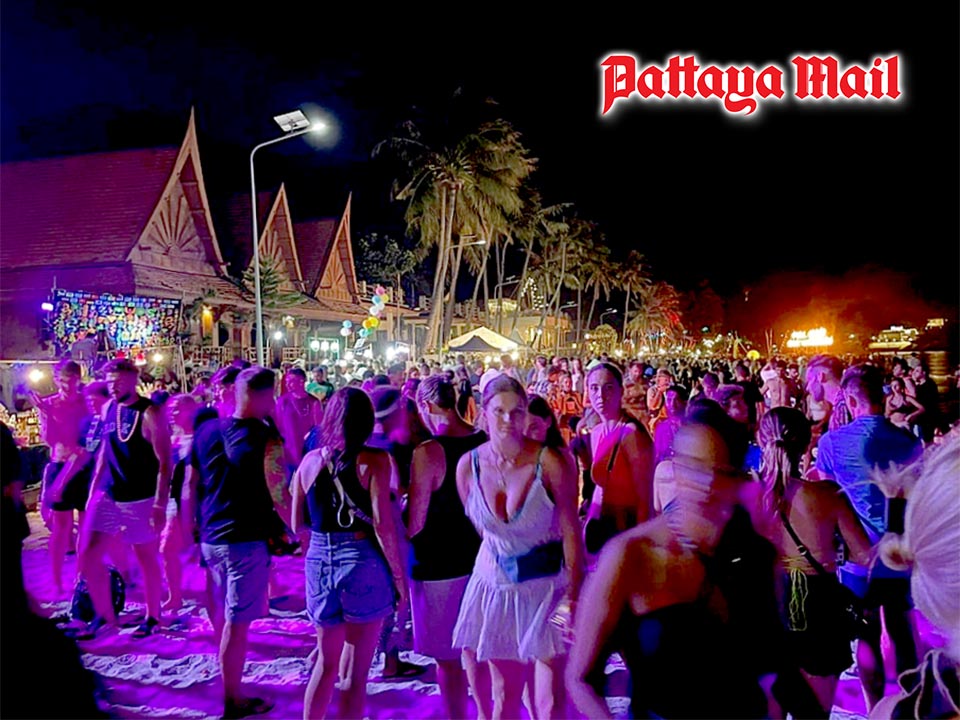
KOH PHANGAN, Thailand – On the surface, Koh Phangan, located in Surat Thani in the Gulf of Thailand, still looks like the dream it has always sold to the world—turquoise waters, laid-back beaches, and a rhythm of life that feels far removed from the mainland. But for those of us who actually live here, the picture has become more complicated.
I’ve watched the island change over the past few years. What was once a seasonal flow of tourists has slowly shifted into something more permanent. More foreigners are no longer just visiting—they’re staying, building businesses, forming communities, and in some cases, reshaping parts of the island in ways that feel unfamiliar to locals.
To be clear, this isn’t about blaming all foreigners. Many integrate well, respect Thai culture, and contribute positively to the local economy. Some have become part of the community in the best way possible. But there is also a growing concern about a smaller group whose behavior feels different—more assertive, sometimes dismissive of local norms, and occasionally operating in legal gray areas.
You hear stories. Businesses quietly run through Thai nominees. Informal “rules” appearing in certain areas, as if parts of the island are being privately managed. Social circles forming that feel closed off, almost like parallel communities. None of this is always visible to tourists—but for residents, it’s hard to ignore.
What worries many locals isn’t just the presence of foreign investment—it’s the imbalance. When outside capital flows in without clear regulation, local businesses struggle to compete. Prices rise. Spaces change hands. And slowly, people begin to feel like strangers in their own home.
There are also everyday tensions. Noise complaints. Cultural misunderstandings. Occasional disputes that leave locals feeling disrespected. These might seem small on their own, but over time they build into a deeper unease.
And yet, the real issue isn’t nationality. It never has been.
The issue is enforcement.
If laws around business ownership, land use, and behavior were applied consistently and transparently, much of this tension would ease. Clear rules, fairly enforced, would protect both locals and responsible long-term visitors. Without that, uncertainty grows—and with it, frustration.
Koh Phangan is still a special place. That hasn’t changed. But the question many of us quietly ask now is whether the island can hold onto its identity as it evolves—or whether it risks becoming something shaped more by external forces than by the people who have always called it home.
Because in the end, it’s simple: anyone is welcome here. But living in someone else’s home comes with a responsibility—to respect it, not redefine it.