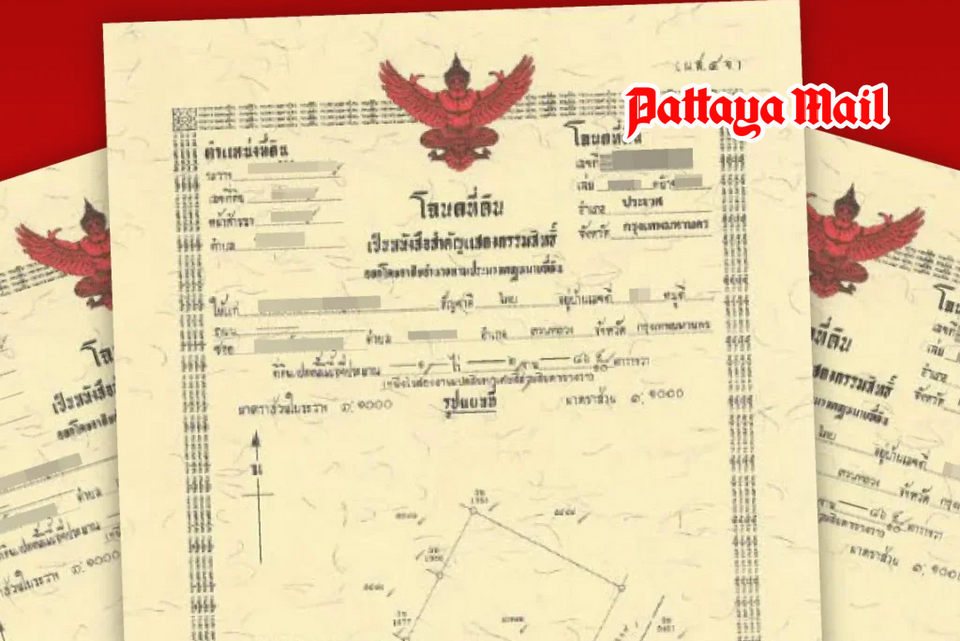
PATTAYA, Thailand – Following the 23-agency integration to combat Nominee structures, another crucial mechanism employed by the Thai government to ensure transparency and regulatory compliance is the Land and Building Tax (Property Tax). This is no longer just an annual fiscal obligation but serves as a “Critical Database” verifying the actual usage and the true identity of asset holders.
1. Property Tax as an Investigative Tool
In this era of data connectivity, Property Tax acts as a significant indicator of irregularities
▪ Misdeclaration of Land Use – If a Nominee company declares a property for “Residential Use” (to benefit from lower rates) but actually utilizes it for commercial rentals or foreign business operations without a Foreign Business License (FBL), this discrepancy will be cross-referenced between local authorities, the Revenue Department, and the Department of Business Development immediately.
▪ Vacant Land Tax as an Enforcement Driver – For land held via nominees for speculation without utilization, the government imposes a progressive tax rate that increases by 0.3% every three years. This escalating cost exerts immense financial pressure on legacy nominee structures, forcing them to disclose their true status or liquidate.
2. Consistency Between Wealth and Tax Declaration
The core of the Tax Planning strategy at Victor Law Firm is “Consistency”
▪ Property Tax payments made by a company must be recorded in the financial statements and must align with the company’s actual recognized income.
▪ If a company reports minimal income yet holds high value assets and pays significant property taxes, the Revenue Department will scrutinize “Subsidies” or “Shareholder Loans” from abroad. This triggers audits into Withholding Tax and Foreign Sourced Income obligations discussed in our previous articles.
3. Strategic Asset Management for Compliance
As legal advisors, we recommend Expats and investors consider the following:
▪ New Appraisal Cycles – Regularly monitor the Treasury Department’s appraisal values to accurately forecast annual tax budgets.
▪ Primary Residence Exemptions – For foreigners holding condominiums in their own names, utilizing house registration (Tabien Baan) to claim tax exemptions (for properties under 50M THB) must be done strictly according to Department of Provincial Administration regulations.
4. Conclusion Transparency as the Ultimate Value
The synergy between “Nominee Crackdown” and “Property Tax Enforcement” demonstrates the Thai government’s dual focus on revenue collection and the elimination of illicit ownership. Complex evasion methods of the past are now becoming financial risks that far outweigh any perceived benefits.
Victor Law Firm Pattaya provides expert consultancy in structuring asset ownership for maximum Tax Efficiency while ensuring full legal compliance, allowing you to hold real estate in Pattaya sustainably and securely.