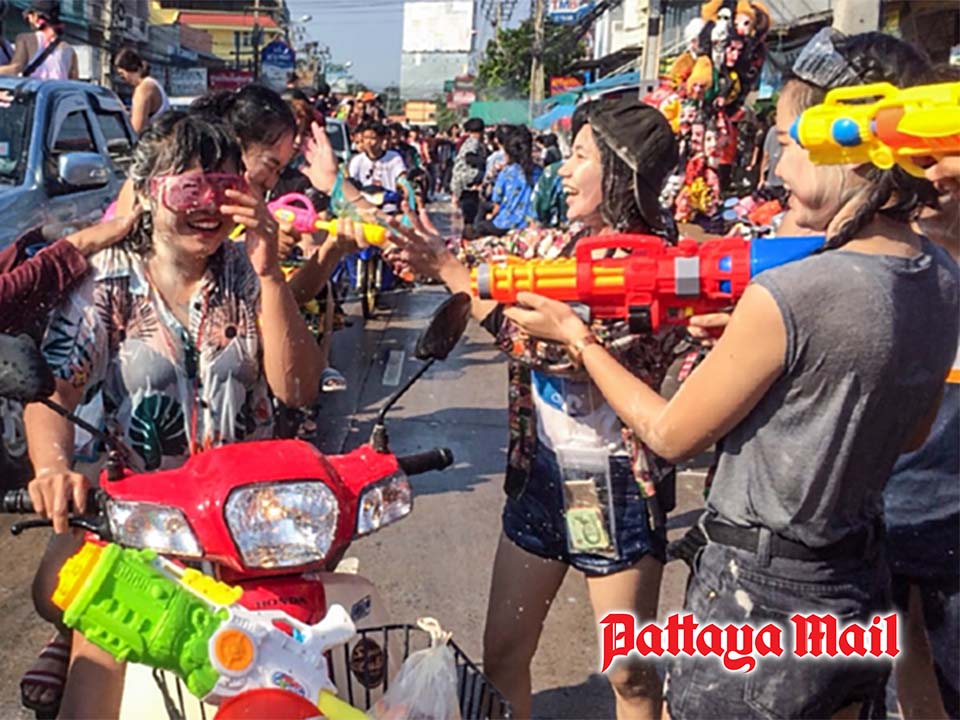
PATTAYA, Thailand – As extended Songkran celebrations continue across Pattaya, debate is intensifying over whether the festival has drifted too far from its cultural roots into what many describe as a prolonged period of street chaos.
While Songkran remains one of Thailand’s most recognized traditions, in Pattaya it has increasingly become a drawn-out urban event that stretches over many days, with some saying it can last up to a week or more in key tourism zones. Residents and long-term visitors argue that what was once a cultural celebration now feels more like an endurance test through constantly wet streets, traffic disruptions, and alcohol-fuelled activity spilling into public spaces.
Opinions shared in local forums and expat discussions show a clear divide. Some accept the water festivities as part of the city’s tourism identity, while others say participation should be strictly voluntary and clearly separated from everyday life.
One long-term resident suggested a simple visual system to distinguish participants from non-participants, saying, “How about if you wear a flowered shirt you can get wet. But otherwise no.”
Others argue that without clearer boundaries, daily life becomes difficult during the festival period, with some choosing to stay indoors for days at a time rather than navigate unpredictable water play in public areas.
Road safety remains one of the most serious concerns raised. Motorcyclists in particular report sudden and forceful water impacts while riding through major roads, creating dangerous situations.
One rider described being hit directly in the face by a large bucket of water while travelling at around 80 km/h on Sukhumvit Road in Pattaya, saying, “At that speed and that amount of water it was like getting kicked in the face/chest. If I was an inexperienced rider or didn’t have a full face helmet I would have crashed for sure.”
Critics say that while authorities often focus on drunk driving during Songkran, less attention is given to the risks of water being thrown at moving vehicles, especially on high-speed roads where visibility can be instantly lost.
Another concern frequently raised is that enforcement and public discussion often overlook these incidents. As one forum contributor noted, “This ‘water in the motorcyclists face’ is a big problem… and ironically, it’s usually blamed on motorcyclists for driving drunk, but even sober drivers can find themselves unable to respond.”
There is also growing support for stricter organization rather than a complete ban. Many suggest designated water-play zones where celebrations can take place safely, while keeping main roads, highways, and transport routes free from disruption. Others believe the festivities should end at sunset and be limited in duration, particularly in densely populated tourism areas.
Some residents recall that before recent years, a more balanced system appeared to exist, with clearer separation between celebration zones and normal city movement. However, they feel that in recent editions, particularly in tourist-heavy districts, the scale and intensity have expanded significantly.

Concerns are also being raised about perception among visitors. While Songkran continues to attract short-term tourists and nightlife crowds, some argue that the current environment may discourage repeat travellers and long-term visitors who prefer a more predictable and safe urban experience.
As one commenter put it, “I don’t know any farangs who like this festival… first time it’s a novelty, but not anymore. I avoid it completely and stay home.” Others warn that extended disruption may even affect tourism sentiment, with fewer visitors willing to endure long periods of daily disturbance.
At the centre of the discussion is the broader identity of the festival itself — whether it should remain an open street-wide celebration or evolve into a more structured event that balances cultural tradition with safety, order, and tourism sustainability.
Ultimately, the debate around Songkran in Pattaya reflects a growing tension between celebration and control, with many calling for clearer boundaries before the “fun” becomes an unacceptable risk.