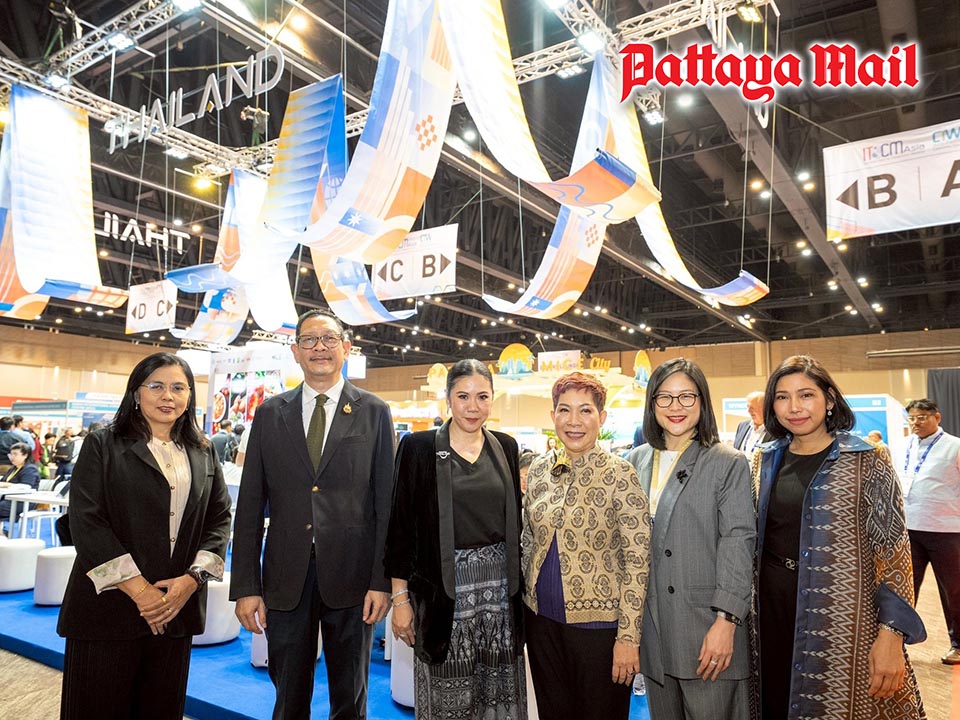
BANGKOK, Thailand – Thailand’s Meetings, Incentives, Conferences and Exhibitions (MICE) sector has entered a decisive new phase. After weathering the disruption of the pandemic years, the industry is no longer focused solely on recovery. The emphasis has shifted toward resilience, value creation and long-term competitiveness.
At the centre of this transition is the Thailand Convention and Exhibition Bureau (TCEB), which in recent years has recalibrated the country’s MICE strategy. Now under the leadership of Supawan Teerarat, the key question for 2026 is no longer whether Thailand can host world-class events — it clearly can — but how effectively the sector can function as a national economic lever in an increasingly competitive, sustainability-driven global market.
A strategic reset, not a return to the past
Thailand’s MICE sector once relied heavily on scale: large congresses, mass exhibitions and incentive groups attracted by price competitiveness and hospitality. While these strengths remain, TCEB’s current roadmap reflects a more balanced approach, prioritising yield, knowledge transfer and regional dispersion.
Post-pandemic demand patterns favour shorter lead times, hybrid formats and highly curated experiences. In response, Thailand has repositioned itself not merely as a host destination but as a platform for measurable business outcomes across sectors such as healthcare, technology, sustainability and the creative economy.
This recalibration aligns with broader national objectives, ensuring that MICE activity contributes directly to economic diversification, innovation and skills development.
Leadership transition and institutional continuity
Following the conclusion of Chiruit Isarangkun Na Ayuthaya’s tenure — a period marked by structural reform, international alignment and stronger sustainability standards — the priority now is continuity.
TCEB’s institutional framework, partnerships, bidding capability and destination management expertise are sufficiently mature to sustain momentum. The focus has shifted from building systems to executing policy, coordinating stakeholders and delivering measurable outcomes — in short, a change designed for growth.

Infrastructure as a competitive advantage
Thailand’s advantage lies not only in its service culture but also in the depth of its infrastructure. Bangkok remains the primary regional hub, supported by a mature ecosystem of convention centres, hotels and transport connectivity. Flagship venues such as the Queen Sirikit National Convention Center have undergone extensive modernisation, reinforcing the capital’s position in the global bidding landscape.
Equally important is the expansion of MICE activity beyond Bangkok. Cities including Chiang Mai, Phuket, Pattaya and Khon Kaen are increasingly positioned as specialised hosts, each offering distinctive value propositions aligned with wellness, culture, sport and regional trade.
This decentralisation supports provincial economies while enhancing Thailand’s appeal to organisers seeking differentiated destinations.
The role of hospitality in MICE success
Thailand’s hospitality sector remains a cornerstone of its MICE competitiveness. Internationally recognised hotels, purpose-built resorts and experienced operators underpin the country’s reputation for reliability and service excellence.
Properties such as Shangri-La Hotel Bangkok, the Royal Cliff Hotels Group in Pattaya and the former Royal Garden Resort Pattaya (now part of Anantara Hotels & Resorts) illustrate how integrated resorts have long supported conferences, incentives and exhibitions.
Purpose-built facilities — notably the Pattaya Exhibition and Convention Hall at Royal Cliff — alongside Bangkok’s major convention venues such as Bangkok International Trade and Exhibition Centre and IMPACT Arena, were early indicators that Thailand understood MICE requires dedicated infrastructure, not simply hotel ballrooms.
Sustainability moves from concept to requirement
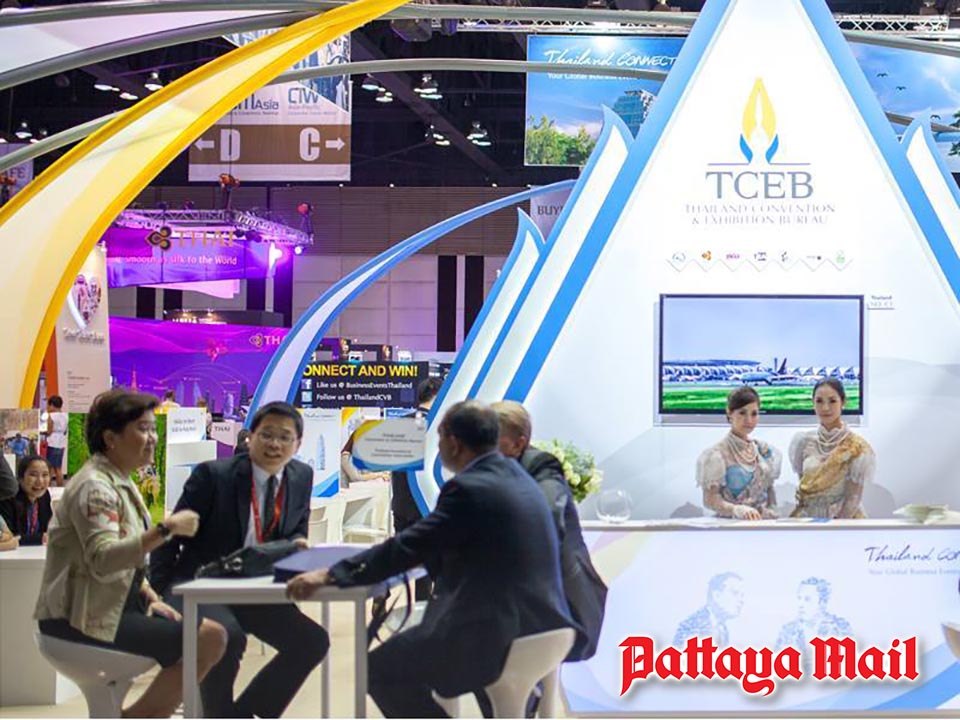
Sustainability is no longer a differentiator — it is an expectation. TCEB policy increasingly embeds environmental and social responsibility into bidding criteria, venue certification and event design.
From carbon measurement to community engagement, Thailand’s MICE roadmap mirrors evolving global standards while retaining local relevance. This alignment is essential if the country is to remain competitive against emerging regional rivals investing heavily in green infrastructure and digital capability.

Economic impact and the road ahead
By 2026, the MICE sector is expected to contribute not only through delegate numbers but through higher per-capita spending, longer stays and deeper engagement with Thai industry and academia. The strategic objective is impact rather than volume — a shift consistent with global best practice.
Thailand’s enduring strength lies in its ability to combine efficiency with warmth, scale with creativity, and policy with partnership. With a clear strategy, experienced institutions and a proven hospitality base, the country is well positioned to ensure that its MICE sector delivers lasting value well beyond 2026.
 About the Author
Andrew J. Wood is a British-born travel writer, former hotelier and tourism consultant who has lived in Thailand since 1991. With more than four decades of experience across leading hotel groups in Asia and Europe, he writes extensively on tourism strategy, sustainability and the MICE sector across the Asia-Pacific region.