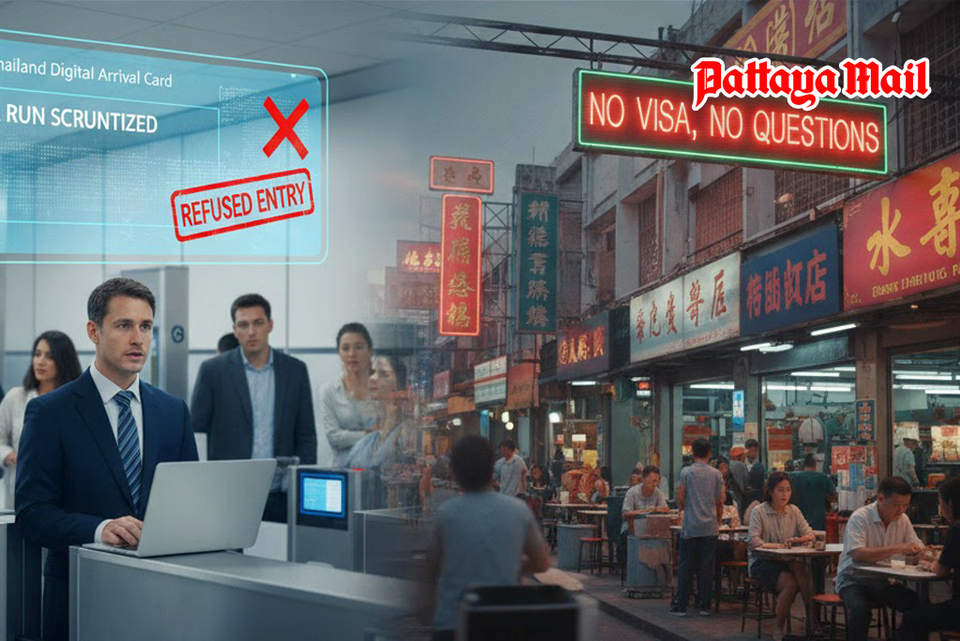
PATTAYA, Thailand – By the end of 2025, Thailand presents a curious contradiction. The country is tightening its grip on some foreigners while quietly waving others through the door. On paper, this is about visas. In reality, it is about who is questioned and who is not. Visa Runs Scrutinized, Questions Asked For many expats, the message from Thai Immigration has become unmistakable. Visa runs are no longer routine. Visa exemption entries are limited typically no more than two per calendar year. The Thailand Digital Arrival Card (TDAC) now allows officers to see travel history, patterns of stay, and intent at a glance.
Digital nomads working online while holding tourist status are increasingly flagged. Some are refused entry. Others are “advised” that their lifestyle no longer matches their visa. Thailand is not closing its borders. But it is clearly saying, long term stay now requires clarity, consistency, and the right paperwork. At the Same Time, No Visa, No Questions While this is happening, Thailand has expanded visa free entry for Chinese nationals, primarily to stimulate tourism and economic activity. Again, on paper, visa-free entry does not grant the right to work. Everyone understands this at least legally.
But reality on the ground tells a different story. In areas such as Huai Yai, Nikom Phatthana, and Bo Win, questions are no longer whispered they are openly asked. Factories operating largely in Chinese. Restaurants with Chinese only signage. Chinese only staff recruitment for service roles. Entire commercial zones functioning as if work permits are optional. No raids. No visible enforcement. No apparent concern.
A Chinatown without a declaration
There has been no official announcement. No zoning plan. No policy paper. Yet parts of Thailand are rapidly becoming de facto Chinatowns, not through culture, but through absence of enforcement. This is not a complaint about nationality. It is a question about standards. Why is a digital nomad answering emails from a laptop scrutinized, while large-scale, physical, revenue-generating work appears untouched? Two Systems, One Country Expat communities notice these things quickly. When TDAC flags a retiree for one visa run too many, but factory floors filled with undocumented labour remain invisible, the issue is no longer immigration policy.
It becomes a rule of law issue
Thailand seems to be highly efficient at regulating those who are easy to see, easy to question, and easy to process. Less so with those who are politically sensitive, economically useful, or inconvenient to confront.
Expats are not asking for privilege
Most expats are not asking for special treatment. They are not demanding open borders or relaxed rules. They are asking for something far simpler, One system. One standard. Applied to everyone. Because a country that enforces the law selectively does not create security it creates uncertainty.
The question Thailand has yet to answer
Thailand remains an attractive country to live in. That has not changed. What has changed is the sense of balance. When doors are opened wide for some, while walls quietly rise for others, people begin to ask not whether Thailand is welcoming but whether it is consistent. And for expats deciding where to build their lives, consistency matters more than hospitality slogans ever will.