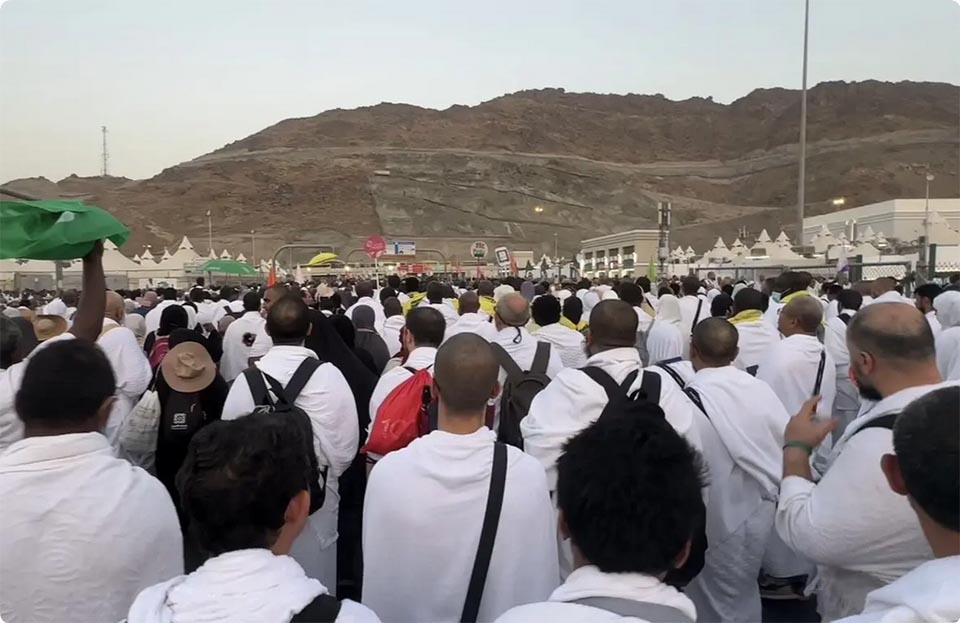
MINA, Saudi Arabia – Muslim pilgrims from around the world, including Thai pilgrims, have begun performing the “stoning of the devil” ritual at the Jamarat Bridge in Mina after departing from Muzdalifah, marking one of the major rites of the annual Hajj pilgrimage. Pilgrims threw seven pebbles at Jamarat al-Aqabah, the largest of the three stone pillars, in a ritual symbolizing the rejection of evil and temptation. Following the stoning ritual, pilgrims traveled to Mecca to perform Tawaf al-Ifadah, circling the Kaaba at Al-Masjid al-Haram. The ritual is considered one of the essential pillars of Hajj. Many pilgrims also performed Sa’i, walking between the hills of Safa and Marwah, particularly those undertaking Hajj al-Tamattu’, who had not previously completed the rite.
Due to the large number of pilgrims participating in the rituals, both Tawaf al-Ifadah and Sa’i required several hours to complete. Many pilgrims also joined the congregational prayers throughout the rituals. Although performing Tawaf al-Ifadah on the 10th day of Dhul Hijjah is recommended, pilgrims may complete the ritual on subsequent days of Hajj. After completing Tawaf al-Ifadah and Sa’i, pilgrims are fully released from the state of ihram, and all associated restrictions are lifted. Pilgrims gathered for Maghrib prayers inside and around Al-Masjid al-Haram as the main rites of Hajj drew to a close, leaving only the farewell circumambulation, known as Tawaf al-Wada’, before departing Mecca. (NNT)