
PATTAYA, Thailand – Road safety concerns in Pattaya’s nightlife areas have resurfaced after a widely circulated online clip appeared to show a confrontation between a delivery rider and a foreign pedestrian walking in the roadway.
The footage shows a rider, who was reportedly carrying a passenger, reaching out and hitting an Indian male tourist on the head, after the tourist was seen walking in the middle of the roadway and not moving aside for oncoming traffic.
The incident, reportedly taking place around 3:00 a.m. on April 10, in Soi Phettrakun, North Pattaya, has drawn public attention and renewed debate over pedestrian safety and traffic discipline in busy entertainment districts.
While the clip has not been independently verified, it has sparked wider discussion about a recurring issue in Pattaya—pedestrians walking on active roadways during peak nightlife hours.
Local conditions in North Pattaya show that entertainment zones regularly experience mixed traffic at night, with vehicles, delivery riders, and large numbers of tourists moving between restaurants, bars, and accommodation areas. In some cases, pedestrians are seen walking within road lanes due to crowded sidewalks, limited footpath space, or obstructed walkways caused by street furniture and business extensions.
Some observers say these conditions may contribute to pedestrians choosing to walk along road edges, increasing the risk of close encounters with vehicles, especially during peak nighttime hours.
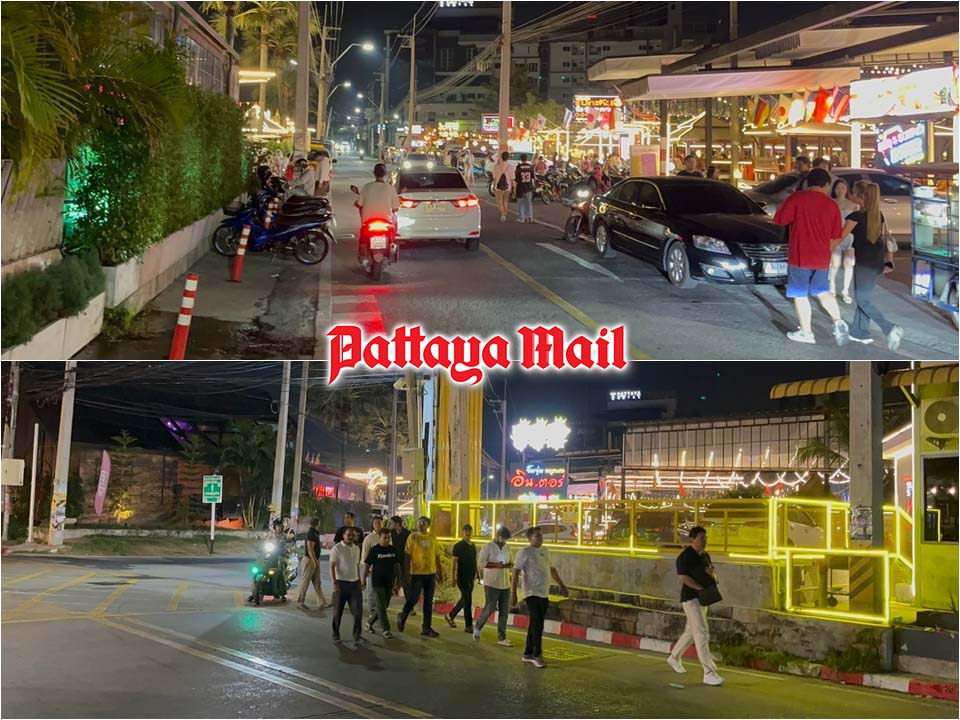
A local motorcycle taxi rider, aged 66, said some foreign tourists occasionally walk in the roadway despite traffic movement, creating potentially dangerous situations. He added that warnings such as horns or verbal alerts are sometimes ignored, increasing the risk of accidents.
However, he also noted that tourists from different nationalities behave differently, and awareness of local traffic conditions varies widely.
The situation has highlighted broader urban management challenges in balancing nightlife tourism with pedestrian safety, particularly in high-density entertainment areas.
Local stakeholders and observers have suggested that improving pedestrian infrastructure, clearing obstructed walkways, and strengthening traffic-flow management could help reduce risks. There are also growing calls for city authorities to review walkability and safety measures in key tourist zones, with suggestions that municipal planning should better accommodate the volume of night-time pedestrian movement.
Authorities are expected to continue emphasizing road safety awareness ahead of the upcoming Songkran period, when both pedestrian and vehicle activity typically increase significantly.